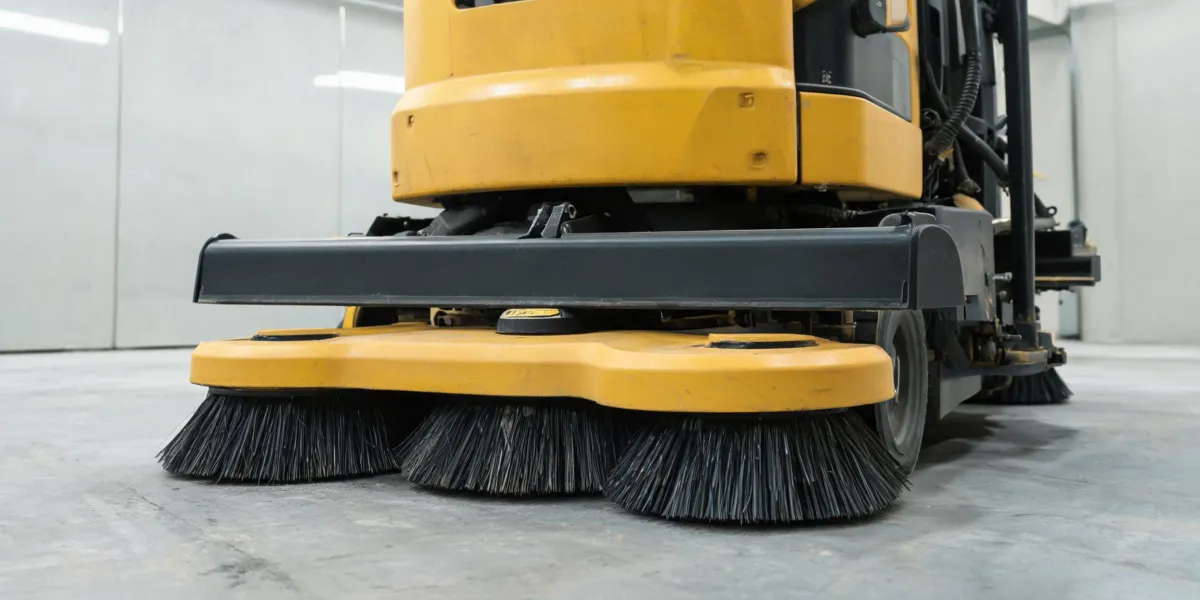
The Morning the MAG HD Quit
September 2023. 5:47 AM. I was standing in a 42,000-square-foot distribution center in Milwaukee, staring at error code E-04 on our Factory Cat MAG HD floor scrubber. A puddle of gray water was spreading across the concrete. Jeremy, our night-shift operator, just looked at me and shrugged.
I've been managing floor equipment orders for industrial facilities in southeastern Wisconsin for eight years. I've personally made—and documented—seventeen significant mistakes, totaling roughly $23,000 in wasted budget. This one hurt worse than most.
The MAG HD is the workhorse of our fleet. Two shifts a day, five days a week, twelve months a year. When it goes down, everything slows. The floor stays dirty. The night crew complains. And I get calls at 6 AM.
My first thought was simple: find someone to fix it before the day shift starts.
My second thought was the expensive one: skip the Factory Cat dealer. Any competent repair tech can handle this.
That second thought cost us $4,200.
The "We Fix Everything" Trap
I called a general equipment repair contractor—one of those places that advertises servicing "all brands" of industrial cleaning equipment. The guy on the phone was confident. Friendly, even.
"Yeah, we work on Factory Cat all the time," he said. "We'll save you the dealership markup. Probably get it done cheaper."
His quote came in at $1,800. The Factory Cat-authorized service in Milwaukee quoted $2,400. I went with the cheaper option.
He arrived two days later (not same-day, which is what I actually needed). He replaced a pump. Cleaned out the lines. Fired it up. It ran. The error code cleared.
I paid the invoice. $1,800. Done.
Ten days later, the MAG HD died again.
What Went Wrong
The aftermarket pump looked almost identical to the OEM part. Almost. But the tolerances were off—slightly different impeller clearance, slightly softer seals. Under the MAG HD's operating pressure, it pushed debris into the motor housing instead of keeping it out.
The general repair tech put a band-aid on a broken bone. We just didn't know it yet.
When I called him back, his response was predictable: "That's a separate issue. Nothing to do with our work."
And technically, he was right. We had no documentation. No part numbers. No verification that anything he installed was actually compatible with our model. He'd given us a handwritten receipt and a phone call that ended with "call us if anything else comes up."
We were stuck.
The Real Diagnostic for Factory Cat MAG HD
I finally called the authorized Factory Cat service team in Milwaukee. A technician came out. He was methodical. First thing he asked: "Do you have the Factory Cat MAG HD parts manual?"
I didn't.
He pulled one up on his tablet. This one is important: the MAG HD is a big machine. It's not the same as the Factory Cat Mini HD, and it's not the same as a floor scrubber tool you'd find at a hardware store. Parts aren't interchangeable just because they fit.
The technician walked me through the damage. He showed me the correct pump assembly number. He showed me what the aftermarket pump should have looked like. The difference was subtle—but at 200 PSI, subtle differences cause compounded failures.
He also mentioned that his team handles dust collector mini units too—and that those have their own unique parts manual that the general repair guys never bother to reference.
That's when it clicked. I wasn't paying for repair labor. I was paying for knowledge—knowing which parts actually work, which ones fail, and why.
Repair cost: $2,600. More than the dealership's original quote, because the first attempt had damaged additional components.
Crunching the Numbers
Let me lay out what this mistake actually cost:
- First repair (wasted): $1,800
- Second repair (correct): $2,600
- Total repairs: $4,400 for a problem that should have cost $2,400
- Downtime: 11 days across two incidents
- Overtime labor for manual floor cleaning: ~$730
The $600 I "saved" on the original quote ended up costing us $2,000 extra.
But the money isn't the worst part. The worst part is that I knew better. I'd seen this pattern before—not with floor scrubbers, but with general equipment. I'd written a note in my own file: "Never let a generalist touch specialized machinery unless they can produce the manual."
I ignored my own advice.
"The vendor who said 'this isn't our strength—here's who does it better' earned my trust for everything else."
What I Do Now
After the third rejection in Q1 2024—a separate issue on a different unit—I created our pre-check list. It's simple, but it's saved us from making this mistake again:
- All Factory Cat equipment gets OEM parts and Factory Cat-authorized service. No exceptions.
- Before any repair, verify the technician has access to the correct parts manual. For the Mini HD, it's a different manual than the MAG HD. Different models, different specs.
- Document every part number used. If something fails within 90 days, we compare.
- If a vendor says "we fix everything," ask them what they don't fix. The answer tells you more than the sales pitch.
We've caught 11 potential errors using this checklist in the past 18 months. Not all were expensive. But each one was avoidable.
And honestly, I've started asking a different question when I evaluate repair partners: not "can you fix this?" but "what happened last time you saw this model?"
Specialists have stories. Generalists have promises.
Why I'm Sharing This
I'm not a Factory Cat salesman. I'm a facility manager who made an expensive mistake because I thought I could save a few hundred dollars. If you're running a facility with industrial floor equipment—especially in the Milwaukee or Wisconsin area—learn from my error.
The value of specialized repair isn't the labor rate. It's the accumulated knowledge that comes from working on the same machines, with the same parts, day after day. A generalist has to reinvent the wheel every time. A specialist already knows the wheel's torque spec.
Total cost of ownership isn't just the repair invoice. It includes downtime, rework, and the hidden cost of doing it twice.
I keep my list taped to the wall of our maintenance office. It's a reminder that cheaper isn't always less expensive—and that the right expert is almost always worth their price.
Pricing referenced from service invoices dated September–October 2023. Verify current rates with your local Factory Cat service provider, as parts and labor costs may have changed.

Leave a Reply