Scrubber and sweeper uptime

Factory Cat support for scrubber and sweeper uptime

Use this page as a practical support hub for route data, service notes, documentation, and machine readiness. Track parts, schedule service, and keep every scrubber and sweeper in your fleet running between shifts.
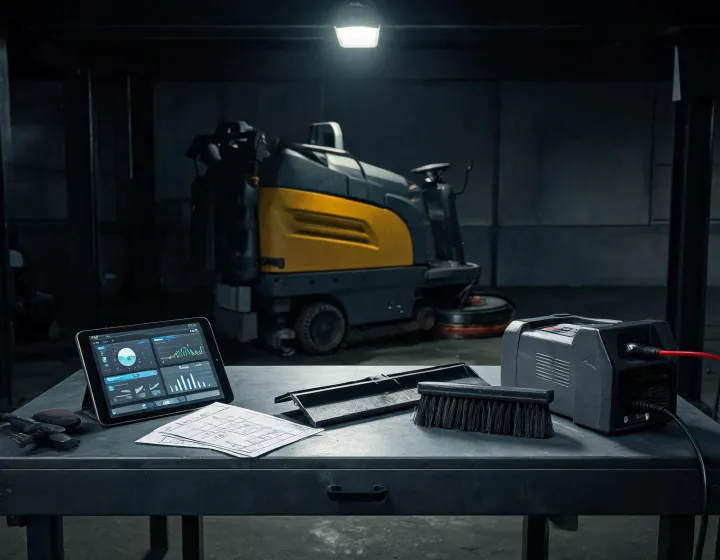
Factory Cat support dashboard and machine service notes
Support close to the route

Keep support data close to the machine route

Route hoursTrack weekly runtime against water fills, charge cycles, and operator handoff notes.Review monthly
Wear partsRecord squeegee, brush, pad, filter, and battery observations before performance drops.Stock critical kits
SymptomsSeparate streaking, low recovery, dust escape, poor turning, and charger concerns into distinct tickets.Reduce guesswork
ResponsePrioritize machines that cover loading docks, production lanes, and public-facing floors.Protect routes

The dashboard is written for supervisors who need support information to be actionable during a shift. A floor machine rarely fails in isolation; symptoms appear through operators, route timing, consumable wear, water handling, and storage habits. By keeping those details together, a team can decide whether the next move is a part, a process change, a battery check, or a deeper service conversation. The goal is to avoid a vague complaint becoming a machine replacement discussion before the simple variables are reviewed.

Support files

Download-style resources to request

Response sequence

From floor note to support action

1

Capture the route

Record where the symptom appeared, what the machine was doing, and whether the floor condition changed that day.

2

Check the consumables

Review visible wear, debris buildup, water flow, tank seals, and charging behavior before escalating the issue.

3

Compare operator notes

Look for differences between shifts, including fill habits, brush changes, and end-of-day cleaning routines.

4

Request the next step

Send the machine class, route details, and symptom notes so support can focus on likely causes quickly.

Fix-it trade-offs

The common support debates, with both sides shown

Most support decisions are a trade between speed, cost, and downtime. Factory Cat keeps both options visible so a facility chooses with its own constraints in mind rather than defaulting to the most expensive move.

Replace the part vs. recondition it

Swapping a worn squeegee, brush, or filter is fast and predictable but adds parts cost on every cycle. Reconditioning or rotating blades stretches the budget yet risks uneven results and a second visit. High-uptime routes usually replace on schedule; lower-priority areas can run the cheaper path.

In-house service vs. dealer callout

An in-house tech handles routine wear quickly and cheaply, but deep electrical, drive, or recovery faults can exceed shop tooling and void assumptions about root cause. A dealer callout costs more and may wait on scheduling, while bringing the right diagnostics. The split point is whether the symptom is a consumable or a system.

Stock spares vs. order on demand

Holding squeegee, brush, and battery kits on the shelf protects critical routes from a single failure, at the cost of tied-up inventory. Ordering on demand frees that cash but exposes a route to lead time exactly when a machine goes down. Seasonal peaks tip this toward stocking the few parts that strand a route.

Maintain the old battery vs. replace the pack

Careful charging extends a pack and defers a large spend, but a tired battery quietly shortens every route and masks itself as a runtime complaint. Replacing the pack restores coverage but is a real capital cost. Tracking charge cycles, not guesswork, tells a team which call is honest.

Support boundaries

What this support hub cannot do

Turn the service note into a clear next step.

Use the inquiry form to send route details, machine class, and the symptom your operators are seeing.

Request Support Review