-
Step 1: Confirm the Model and Intended Use Before You Look at Price
-
Step 2: Run the Factory Cat Serial Number Lookup the Right Way
-
Step 3: Verify Hours, Battery, and Charger Against the Serial Record
-
Step 4: Inspect the Sweep Dust Collector and Debris Path
-
Step 5: Test the Drive, Steering, and Brakes Under Load
-
Step 6: Pull Error Codes and Match Them to the Manual
-
Step 7: Price the Parts, Service, and Downtime Before You Buy
-
Common Mistakes to Avoid
-
Final Note
If you are sourcing a ride-on floor scrubber in Brookfield, WI — or anywhere in the Upper Midwest — and a used Factory Cat 34 sweeper for sale shows up on your radar, do not start with the hour meter. Start with the paperwork and the serial plate. I have been a quality and brand compliance manager for a commercial equipment distributor for four years. I review roughly 80 refurbished machines per quarter, and I rejected 18% of first deliveries in 2024 for issues that a 20-minute check would have caught.
This checklist is for facility managers, distributors, and maintenance leads who want to verify a used Factory Cat before money changes hands. It also applies if you are cross-shopping a China floor scrubber or another brand and want to compare apples to apples. It is not a repair manual. It is the practical sequence I use when a Factory Cat serial number lookup needs to match the machine, the manuals, and the parts list.
There are seven steps. Do them in order. (note to self: print this and keep it in the truck.)
Step 1: Confirm the Model and Intended Use Before You Look at Price
Before you chase a Factory Cat 34 sweeper for sale, write down what the machine actually needs to do. A 34-inch rider is a different animal from a walk-behind scrubber, and a sweeper is not a scrubber. If your floor is mostly sealed concrete with light dust, a sweeper with a sweep dust collector may be enough. If you are dealing with oil film, coolant, or food-grade residue, you need scrubbing and recovery, not just sweeping.
Ask the seller for the model number, serial number, battery type, charger voltage, and whether it is a sweeper, scrubber, or sweeper-scrubber. If they cannot answer, that is not a red flag by itself — some sellers are brokers — but it means you need to do more verification later.
Checkpoint: You can state in one sentence what the machine will clean, how many hours per shift, and who will service it.
Step 2: Run the Factory Cat Serial Number Lookup the Right Way
The serial plate is the machine's birth certificate. On many Factory Cat 34 sweepers, it is on the left rear frame or near the operator compartment, but locations vary by production year. Take a photo of the plate, then compare it to the number in the seller's listing and any service records.
For a Factory Cat serial number lookup, use the OEM parts manual or dealer portal when possible. A web search can get you close, but model-year and serial breaks matter. I have seen two 34 sweepers with the same model number use different brush drive parts because of a mid-year change. (this was back in Q1 2024, and it cost us a two-week return.)
If the seller says the serial plate is missing, faded, or 'not important,' slow down. A missing plate makes parts lookup harder and can complicate resale. Some distributors can still help, but you will pay in time. I am somewhat skeptical of any listing that will not show the serial plate.
Checkpoint: You have a photo of the serial plate, the model number, and a parts diagram that matches the serial range.
Step 3: Verify Hours, Battery, and Charger Against the Serial Record
Hour meters fail. Battery dates lie less often. Look for date codes on the batteries and the charger. On a used Factory Cat 34, a set of lead-acid batteries can be a $1,500 to $3,500 replacement depending on voltage and amp-hour rating. I am not 100% sure what current pricing is in every market, but the range is fairly wide.
Ask for the last charge cycle test. If the seller cannot provide one, plan to load-test the batteries yourself or bring a technician. A machine that runs 20 minutes and dies is not a deal — it is a project.
Checkpoint: Battery date codes, charger voltage, and a load test result or a plan to test before payment.
Step 4: Inspect the Sweep Dust Collector and Debris Path
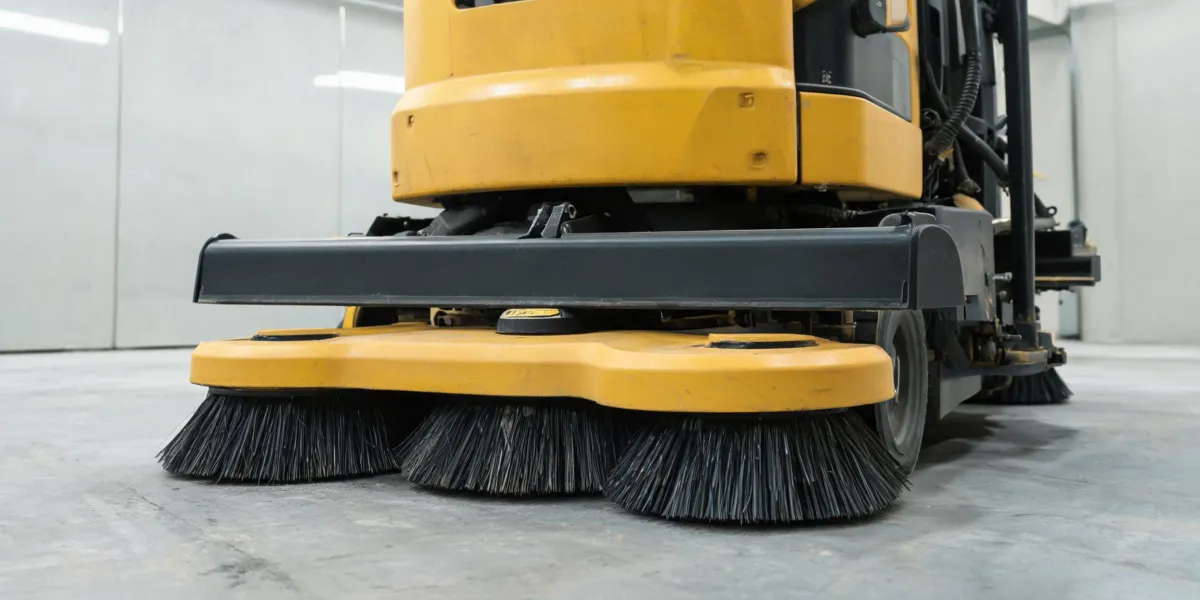
This is the step most buyers skip. The sweep dust collector — sometimes called the dust filter box, hopper, or vacuum housing — tells you how the machine was treated. Open it. Look for cracks, missing gaskets, clogged filters, and rust through the seams. If the collector is packed with fine dust and the filter is collapsed, the machine has been used in a high-dust environment without maintenance.
I only believed the 'check the dust collector first' advice after ignoring it once and finding a cracked housing on a machine we had already paid to ship. When I compared two used 34 sweepers side by side — same year, same indicated hours — I finally understood why the dust collector matters more than the hour meter. One had a clean, intact housing and a recent filter. The other had a cracked weld and a bypassed vacuum hose. The second one looked fine from ten feet away. It was not fine.
Checkpoint: Collector housing is intact, filter is present and not torn, hoses are connected, and the debris path is clear.
Step 5: Test the Drive, Steering, and Brakes Under Load
Do not just drive it in a circle on smooth concrete. Put weight on it. If you can, run it with a rider and a full hopper. Test forward and reverse, low and high speed, and emergency stop. Listen for gear whine, clunking, or delayed engagement.
For a ride-on floor scrubber in Brookfield, WI, winter can be hard on machines that sit in unheated warehouses. Cold gel batteries, cracked hoses, and brittle plastic covers are common. A machine that works in July may fault in January. If you are buying in the off-season, ask how it was stored.
Checkpoint: No fault codes on the display, brakes hold on a ramp or incline, and steering returns without play.
Step 6: Pull Error Codes and Match Them to the Manual
Factory Cat machines often store error codes that a seller may not mention. Pull the codes before you negotiate. Some codes are minor — low battery, parking brake, seat switch. Others point to controller, motor, or charger issues that can cost four figures.
I still kick myself for not documenting a controller fault on a trade-in. If I had photographed the display and written down the code, we would have had grounds to renegotiate the delivery fee. Instead, we ate the cost and the machine sat for three weeks waiting on a part.
Checkpoint: You have a photo or written list of every active and stored code, plus the manual page that explains each one.
Step 7: Price the Parts, Service, and Downtime Before You Buy
A Factory Cat 34 sweeper for sale at a low asking price is not a bargain if the nearest dealer is six hours away. Check who supports the machine in your area. If you are in Brookfield, WI, you are in a reasonable radius for several Midwest industrial equipment distributors, but confirm parts availability for your serial range.
If you are also considering a China floor scrubber, compare total cost the same way: base price, shipping, tariff or customs delays, parts lead time, battery compatibility, and service documentation. The lowest quote is not the lowest total cost. I would rather spend 10 minutes explaining options to my team than deal with a mismatched machine later.
Checkpoint: You have a written parts list for the first-year wear items, a service contact, and a downtime estimate.
Common Mistakes to Avoid
1. Trusting a verbal promise about the serial number. Get it in writing or a photo. If the plate does not match the listing, walk away or renegotiate.
2. Skipping the dust collector. A clogged or cracked sweep dust collector can turn a sweeper into a dust spreader. Open it before you pay.
3. Assuming low hours equals low wear. A machine with 800 hours in a foundry can be rougher than one with 2,000 hours in a grocery store. Condition beats the meter.
4. Forgetting freight and batteries. On a used rider, freight can run $500 to $1,500 depending on distance, and batteries can double the real cost. Get quotes before you commit.
5. Not checking local support. For a ride-on floor scrubber in Brookfield, WI, a local technician can be worth more than a $500 discount from an out-of-state seller.
Final Note
An informed buyer asks better questions and makes faster decisions. If you are evaluating a Factory Cat 34, start with the serial number lookup, then work through the checklist in order. It takes about an hour. It can save you a month of parts delays and a budget conversation you do not want to have. (mental note: add battery load test to the standard form.)

Leave a Reply