-
Who this checklist is for
-
Step 1: Pull the original spec sheet—not just the invoice
-
Step 2: Match the eMotor floor scrubber voltage and plug
-
Step 3: Inspect Factory Cat parts packaging and OEM labeling
-
Step 4: Check the floor cleaning and polishing machine's squeegee, brush, and pad driver
-
Step 5: Verify error code history and manual revision
-
Step 6: Test the charger and battery date codes (the step most people skip)
-
Step 7: Photograph everything before you sign the BOL
-
Common mistakes I see every quarter
Who this checklist is for
I'm a quality and brand compliance manager at an industrial equipment distributor. I review every Factory-Cat machine and parts order before it reaches our customers—roughly 240 items a year. In our Q1 2024 audit, I rejected about 8% of first deliveries because of spec mismatches, missing manuals, or wrong voltage configurations. That's not a knock on any one vendor. It's just what happens when you're moving industrial floor scrubbers and sweepers at scale.
If you're receiving a floor scrubber in Denver, a pallet of Factory Cat parts, or an eMotor floor scrubber for a facility in the Midwest, this 7-step checklist is what I run before I sign anything. It takes about 15 minutes. The first time it catches a wrong squeegee or a missing error-code sheet, you'll be glad you did it.
Step 1: Pull the original spec sheet—not just the invoice
Invoices are for accounting. Spec sheets are for quality. I can't tell you how many times a customer sent me an invoice that said '34' and a spec sheet that said '34 XR.' Those are not the same machine. For Factory Cat sweepers, the model number is only half the story. You need the serial number, the build date, and the voltage/phase configuration.
Checkpoint: Does the spec sheet match the quote, the purchase order, and the physical machine? If any of those three disagree, stop. Don't unpack. Call your rep and get a written confirmation before you touch the pallet.
Step 2: Match the eMotor floor scrubber voltage and plug
This is where Denver deliveries get interesting. A lot of Denver-area facilities run 208V or 480V three-phase, but some older buildings still have 240V delta. If you ordered an eMotor floor scrubber and it shows up with a NEMA 6-50 plug instead of a hardwired 480V connection, you've got a $3,000 electrician visit staring at you.
Checkpoint: Photograph the nameplate. Compare the voltage, phase, and amperage to your facility's panel schedule. Then check the plug or hardwire leads against the manual. If it's wrong, note it on the Bill of Lading before the driver leaves.
Step 3: Inspect Factory Cat parts packaging and OEM labeling
Factory Cat parts are not all created equal. Some are genuine OEM. Some are 'OEM equivalent.' Some are just... close. I've had suppliers send me a squeegee blade that fit a 34 but not a 34 XR because the mounting holes were 3/8 inch off. The box said 'fits Factory-Cat.' The fine print said 'universal.'
Per FTC guidelines (ftc.gov), advertising claims must be truthful, not misleading, and substantiated with evidence. That means if a supplier says 'OEM equivalent,' they should be able to show you the spec sheet that proves it. If they can't, treat it as a red flag.
Checkpoint: Look for the Factory-Cat part number on the label, not just the description. Check the quantity. Open one box and inspect the finish. If the part has a casting mark that looks like it was made in a different mold, take a photo and ask questions.
Step 4: Check the floor cleaning and polishing machine's squeegee, brush, and pad driver
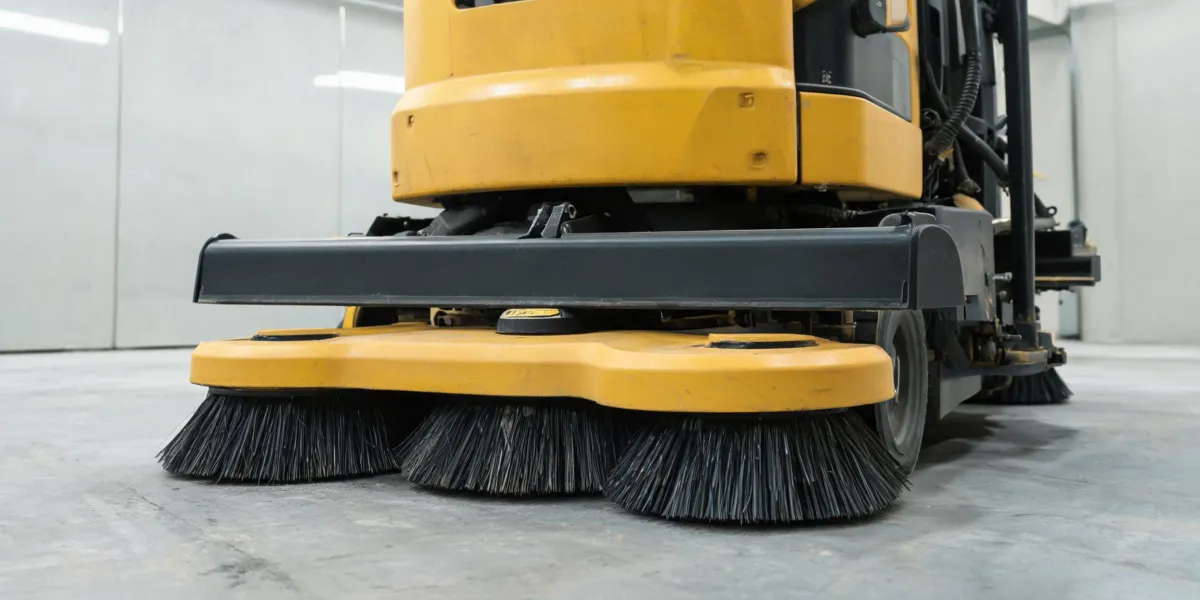
A floor cleaning and polishing machine is only as good as its contact points. I've seen machines arrive with the wrong squeegee angle, a brush that was 1 inch too short, and a pad driver that wobbled out of the box. Those are all things you can catch in 90 seconds if you know what you're looking for.
Checkpoint: Lay the squeegee on a flat surface. The blades should touch evenly. Spin the brush by hand—no wobble, no grinding. Mount the pad driver and check for runout. If you don't have a dial indicator, a ruler taped to the deck works fine.
Step 5: Verify error code history and manual revision
Factory Cat machines have error code support, and that's a big deal. But it only helps if the manual matches the firmware. I've received machines with a 2022 manual and a 2024 control board. The error codes don't line up. You end up chasing a ghost.
Checkpoint: Ask for the manual revision number before delivery. When the machine arrives, power it up and check the controller firmware version. Cross-reference it with the manual's revision page. If they don't match, request the correct manual in writing.
Step 6: Test the charger and battery date codes (the step most people skip)
This is the one that gets ignored. Everyone checks the machine. Almost nobody checks the charger and batteries. I learned this the hard way after a batch of eMotor floor scrubbers showed up with batteries that were already 18 months old. They worked fine for three months, then failed. The warranty clock had started the day the battery was manufactured, not the day we received it.
It took me 4 years and about 900 deliveries to understand that the 10 minutes I spend on date codes before signing the BOL saves more money than any negotiated discount. Now I check every charger's firmware label and every battery's date sticker.
Checkpoint: Find the date code on each battery. Compare it to the delivery date. If it's older than 6 months, ask for a written warranty extension or a replacement. Check the charger's output voltage with a multimeter. If you don't have one, ask the driver to wait while you grab it.
Step 7: Photograph everything before you sign the BOL
I have mixed feelings about rush deliveries. On one hand, they keep customers happy. On the other, they're where 80% of my quality problems show up. I compromise with a mandatory photo check on every rush order. It's a no-brainer.
Before you sign the Bill of Lading, take photos of: the pallet label, the machine serial plate, the voltage nameplate, any visible damage, and the packing slip. If there's a problem, write 'subject to inspection' next to your signature. That one phrase has saved us from eating a $14,000 rework bill more than once.
Checkpoint: Your photo roll should have at least 6 images per machine. Date-stamp them. If the driver won't wait, note the refusal on the BOL and email your rep immediately.
Common mistakes I see every quarter
- Signing a clean BOL for a partial delivery. If the pallet is missing a box, write it down. 'Short one squeegee' is enough.
- Assuming 'OEM equivalent' means OEM. It doesn't. Ask for the spec sheet. If they can't produce it, don't accept it.
- Skipping the manual check. A machine without the right manual is a machine you can't troubleshoot. That costs more than the manual itself.
- Waiting until the machine is installed to test it. Test it on the dock. The dock is your last chance to reject it without a return freight fight.
Bottom line: prevention over cure isn't a slogan. It's a math problem. Five minutes of verification beats five days of correction. If you've ever had a delivery go sideways, you know exactly what I mean. So next time you're staring at a Factory-Cat delivery in Denver or anywhere else, run the 7 steps. Your future self will thank you.

Leave a Reply