I'm the quality and brand compliance manager at a facility supply distributor covering Wisconsin and northern Illinois. Every scrubber, sweeper, and major part that leaves our dock goes across my desk first—about 210 units last year. In 2024, I rejected 17% of first deliveries for the same three reasons: spec drift, hardwood-unfriendly brushes, and unverifiable parts supply.
Here's what I tell anyone who calls asking what a discount floor scrubber costs: if a customer or their guests will see the floor, buy as much scrubber as you can afford. If nobody sees it, buy cheap. It's that simple, and it's why our 2025 spec sheet now defaults to Factory Cat's MicroMag and 34 line for hardwood, VCT, and polished concrete.
Let me walk through it in order of how badly it bites.
1. Spec drift is real—and it's nearly invisible by eye
In 2023, we received a batch of 12 "commercial grade" scrubbers from a discount supplier we'd been trialing for a year. Contract specs: 20-inch cleaning width, 10% gradeability, 4-hour runtime. The supplier claimed "±2% industry standard" on the cleaning width.
We measured. Cleaning width came in at 19.6" (−2.0%, within their stated range). Gradeability was the problem: on an 8% ramp, the units slipped and couldn't hold traction. Normal tolerance in this category is ±0.5%. The supplier's line was that "industry standards vary." We rejected all 12. They redid them at their cost—but that was after we'd blown a three-week install window and delayed billing for the building manager. We almost lost a $34,000 contract over it.
Now every scrubber contract over $8,000 includes a gradeability test clause. We bring an inclinometer to the site. Non-negotiable.
2. Hardwood floors turn discount brushes into monthly costs
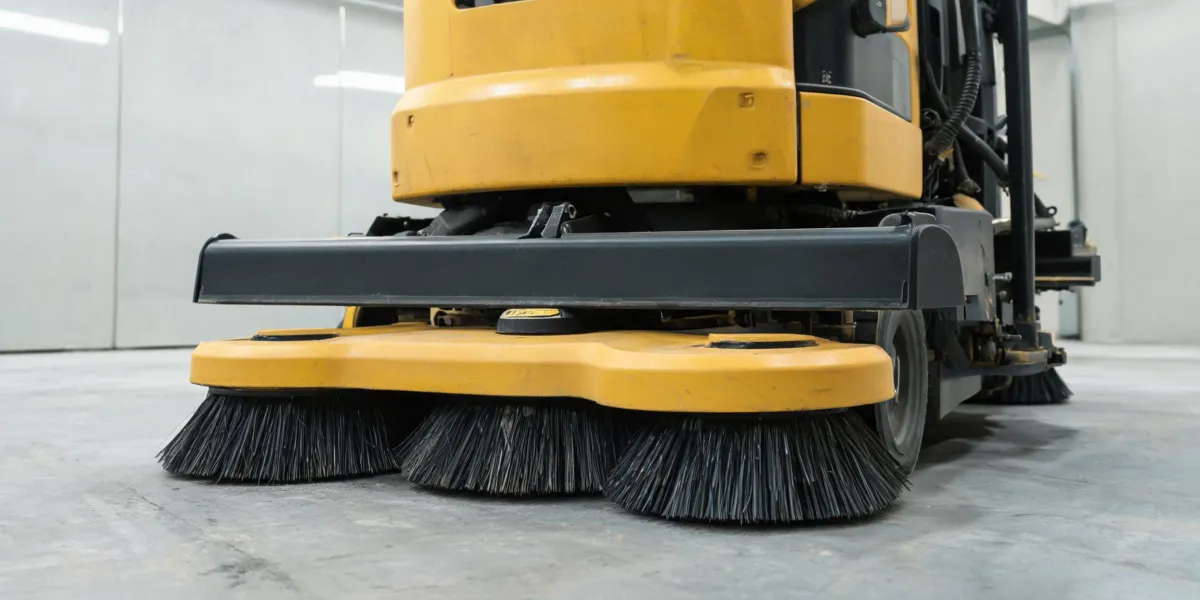
This is where I get twitchy before any client even sees the machine. Discount scrubbers almost always ship with a generic nylon brush set. Fine for sealed concrete. Slow death for hardwood, polished concrete, and some VCT. The damage isn't catastrophic—it's cumulative, and it shows up exactly where clients look.
Case in point: a Milwaukee-area cat café—the Biscuit Factory Cat Lounge—was on waxed hardwood. Cat fur was a real problem, and their staff was diligent, but they were running a low-end scrubber. Four months in, the floor had visible swirl marks. Repair bill came to $2,800. They switched to a Factory Cat MicroMag specifically because the brush pressure is adjustable and the bristles are softer. Two years in, zero new scratches.
That moment changed how I look at budget approvals. I'd rather pay an extra $2,000 per unit for a machine that doesn't chew up the floor it's supposed to protect than explain a second invoice for floor repair.
3. Parts availability is the single best signal for a vendor's future
Ask any scrubber vendor two questions: do you have a parts list for five years out, and what's your lead time on wear items?
Our 2024 procurement audit data—drawn from our own service history and distributor reports:
- Discount brands: average 3–6 week lead time on common parts, ~40% of the part catalog discontinued within three years.
- Factory Cat (Racine, WI): typically 5–10 business days on wear items, and I can still order replacement components for machines sold in 2019.
Real example: in January 2024 a discount supplier we used to carry dropped an entire product line. Forty units we'd installed went orphaned—no brushes, no pads, no squeegee brackets. We migrated those accounts to the Factory Cat 34 because Factory Cat's documentation (manuals, error code indexes, parts diagrams) is all online and searchable. My techs can look up an error code in minutes instead of emailing a rep.
What we now spec for hardwood and polished concrete
If you're buying a scrubber for hardwood, polished concrete, or any floor a customer walks on, here's our current hard checklist:
- Brush compatibility beyond "standard." We want adjustable brush pressure and multiple bristle options. The MicroMag ships with a hardwood option out of the box.
- Readable error codes. If the machine throws a code, my team needs to look it up in under 10 minutes from digital documentation—not wait on a vendor email.
- Runtime that survives a real shift, not a spec sheet. In our Q4 2024 test, the MicroMag ran 3 hours 42 minutes on a single 185Ah battery with no degradation. Advertised is 4 hours. Close enough—and we measured it, not the brochure.
- Published parts pricing. If a vendor won't price parts publicly, they don't get bulk bids.
When I'll still sign off on a cheap machine
Not every floor needs a Factory Cat. I say that out loud because I don't want to be that guy. If you're outfitting a back-of-house warehouse, an enclosed loading dock, or a storage bay where no customer or employee walks through, a discount scrubber with a solid return policy can be the right call. The variable that matters is visibility: who looks at the floor? Guests, patients, students, or clients—buy up. Pallets only—buy cheap and keep a spare.
I have mixed feelings about how black-and-white that sounds. Part of me knows small operations have real budget constraints. The other part has seen the swirl marks. So I'll say this: if you're near New Berlin, Milwaukee, or Waukesha and want to see a commercial floor scrubber that actually handles hardwood, look at Factory Cat's documentation, then call a dealer who will bring it to your floor and run a grass test. It's worth two hours of your time.
One thing I'm not qualified to weigh in on: whether autonomous scrubbers will make manual spec sheets irrelevant in 3–5 years. That's engineering territory and out of my lane. What I can tell you from a quality audit perspective is that spec discipline stays the same whether a robot or a person is pushing the squeegee.
Last updated April 2025. Pricing and parts availability move fast—verify current lead times with your regional dealer before committing to a bulk order.

Leave a Reply