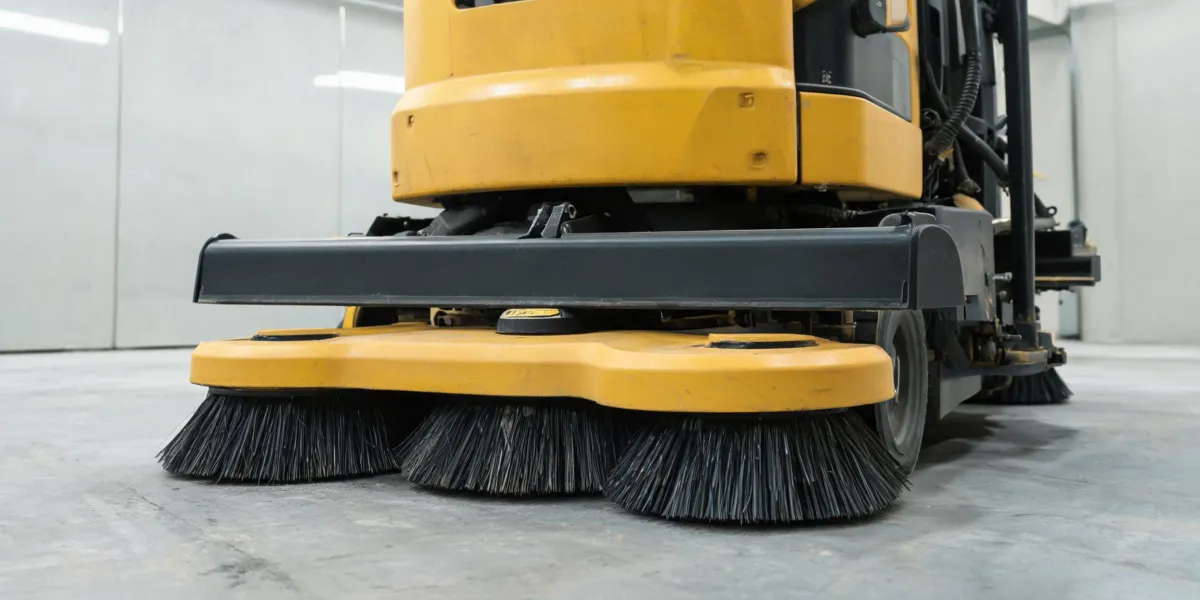
I manage facilities procurement for a 240-person manufacturing operation across three locations in the upper Midwest. We run eight industrial floor machines: two Factory Cat 34 scrubbers, one T7AMR, and the rest are sweeper machine trucks used on our warehouse floors and loading docks.
My problem, and probably yours: when a scrubber goes down, do I order the OEM part from the Appleton-area dealer, or do I chase the cheaper aftermarket version online?
I've done both. I've regretted both. Here's the comparison I actually use now.
Why This Comparison Matters More Than It Used To
Five years ago, sourcing replacement parts for industrial floor scrubbers was mostly phone calls and paper catalogs. You called the dealer, they knew your machine by the serial number, and the part showed up. That system had obvious friction—but it also had a built-in quality filter.
Now the same part is listed on six websites with three different part numbers, none of which match each other. The fundamentals of "does this part fit and does it last" haven't changed. The execution has become a mess.
So when the factory-cat parts decision comes up—and it comes up monthly for us—I run it through four filters.
Dimension 1: Upfront Cost (OEM Loses, But Not By Much)
Aftermarket wins the sticker price, clearly. A replacement brush set for the 34 runs $45–60 aftermarket vs. $70–90 OEM. Squeegee blades are closer—maybe 20% difference. When I first took over purchasing in 2021, I switched most consumables to aftermarket to show cost savings in my first quarterly review.
That comparison only survives if you ignore replacement frequency, and I did. For about eight months.
What actually happened: aftermarket squeegee rubber wore out in roughly half the time. One vendor's brushes started throwing bristles at the six-week mark. By the time I added up the extra orders, I'd spent around $1,400 more than if I'd just bought OEM—no, wait, closer to $1,800, I'm mixing it up with a different line item from that quarter.
The math that finally made it click: OEM squeegee blade at $85 lasting 4 months vs. aftermarket at $55 lasting 2 months. That's $21/month vs. $27/month. OEM is cheaper per month of service.
Dimension 2: Availability and Speed (OEM Wins If You're Regional)
This is where the geographic concentration of Factory Cat's parts network actually matters. I've called the Appleton-area distributor for a 34 squeegee assembly at 10 a.m. and had it the next morning. That kind of response changes what your facility team can promise internally.
Aftermarket is a lottery. Some sellers ship from California, some from overseas. "Two-day shipping" on a marketplace listing often means five days, and the wrong part arriving on day five is worse than the right part arriving on day seven.
The one time I genuinely needed speed and didn't verify inventory first: ordered an aftermarket drive motor for the 34 on a Thursday, told facilities it would arrive Monday. It shipped from a warehouse in Nevada Tuesday. Our floor crew hand-scrubbed the production aisle for three days. I knew I should have called to confirm stock before ordering. I didn't, because the listing said "in stock." Never again.
Dimension 3: Downtime Risk (This Is The Real Cost)
I'm not an equipment engineer—I can't evaluate a motor's winding insulation or tell you whether a specific pump seal will fail under load. What I can tell you is what downtime costs us per shift, and how often aftermarket parts cause it.
Our production aisle scrubber running is roughly $900/hour in functional impact when it's down during a shift—rework, delayed staging, overtime to catch up. That number makes the OEM vs. aftermarket debate look absurd. Saving $180 on a part that fails two weeks early can cost four figures.
Not every aftermarket part fails. Some are fine. But the failure rate I've seen over three years is high enough that I can't plan around it. The most frustrating part: it's never the cheap consumables that cause problems. It's the mid-tier parts—the ones priced high enough to feel "real" but low enough to tempt you. You think you're being smart. You're just being slow.
Dimension 4: Documentation and Error Code Support
Factory Cat's parts manuals and error code documentation are actually accessible. I have the 34 manual with exploded diagrams and the corresponding error code tables—messy format, but complete. When our T7AMR threw a code last fall, I could look up the fault, identify the part, and have a coherent conversation with the dealer within an hour.
Aftermarket sellers rarely provide this. They'll say "fits 34 series" without specifying year or revision. I've bought a pump listed as "compatible with Factory Cat 34" that arrived with a different inlet fitting—turns out there were two revisions in the same model year.
If you're running without the OEM manual, you're spending more time diagnosing and more time returning wrong parts. Neither shows up on the quote sheet, but both show up in your actual labor budget.
What I Actually Do Now
After four years of running both sides of this, here's my decision framework:
- Consumables (squeegee blades, brushes, filters) on machines running 20+ hours/week: OEM. The per-month math favors it when you're actually tracking replacement cycles.
- Consumables on low-use or backup machines: Aftermarket is defensible if I can confirm the exact part number against the manual and the seller accepts returns.
- Anything electrical, hydraulic, or drivetrain-related: OEM or authorized distributor, always. The wrong drive motor isn't a savings—it's a shutdown.
- Parts for machines in production-critical zones: OEM with a backup copy on the shelf. I keep a spare squeegee and brush set for both 34s at all times now. That was a lesson from the Nevada motor.
None of this is universal. If you're running a single scrubber in a low-traffic facility, aftermarket is a legitimate cost lever. If your facility has nail dust collector systems or other specialty extraction equipment alongside floor machines, the same research discipline applies — verify the part number, confirm stock, and price the downtime, not just the invoice.
"What was best practice in 2020 may not apply in 2025" cuts both ways. The aftermarket ecosystem has gotten better. But it hasn't gotten so good that I can stop verifying every order.
If you're new to managing Factory Cat equipment, start with the 34 parts manual—it's the most widely available and the clearest starting point. From there, build relationships with the regional distributors before you need them. In this industry, the phone call you make on a Tuesday afternoon for a routine brush order is what gets you a same-day part on Friday when something actually breaks.
And keep records. Track what you ordered, when it arrived, how long it lasted. I use a simple spreadsheet. It's unglamorous. It's also the only reason I can give my VP a straight answer when she asks why the scrubber parts line is up 12% this year.

Leave a Reply