The February air in our fabrication plant was cold, but not as cold as the look on our maintenance lead's face when he told me the "reconditioned" sweeper had thrown its chain for the third time in four months. I didn't need the repair estimate to know where this was heading. I'd already seen the pattern.
I'm the procurement manager at a 140-person steel fabrication company in Indiana. I've overseen our maintenance equipment budget—just over $140,000 annually—for the past six years. I track every invoice, every breakdown, every hour of labor spent on equipment we own. And in Q1 of 2024, I got a masterclass in why upfront price is the least reliable number on a purchase order.
Where It Started
Our old combination sweeper-scrubber had run past its useful life. The unit was a decade old, the dealer that sold it to us had dropped the line, and parts were a scavenger hunt across three different suppliers. Knowing we needed to replace it, I did what I do with every purchase: built a spreadsheet, gathered quotes, compared numbers. The problem was, I compared the wrong numbers.
I reached out to several national equipment providers and two local dealers. Quotes landed in familiar territory—solid combo sweepers ran $12,000 to $15,000. Then I found something else. An online equipment liquidator listing a "reconditioned ride-on sweeper" with scrubber attachment for $8,200. It was described as "lightly used" with "minor cosmetic wear." The photos looked clean. The price sat 40% below my lowest dealer quote.
That felt like responsible procurement. My boss would love me. I could put the savings toward other facility upgrades.
I didn't realize I was ignoring the one thing every experienced facility manager had told me at some point: the upfront price is the beginning of the cost story, not the end of it.
The Part Where It Falls Apart
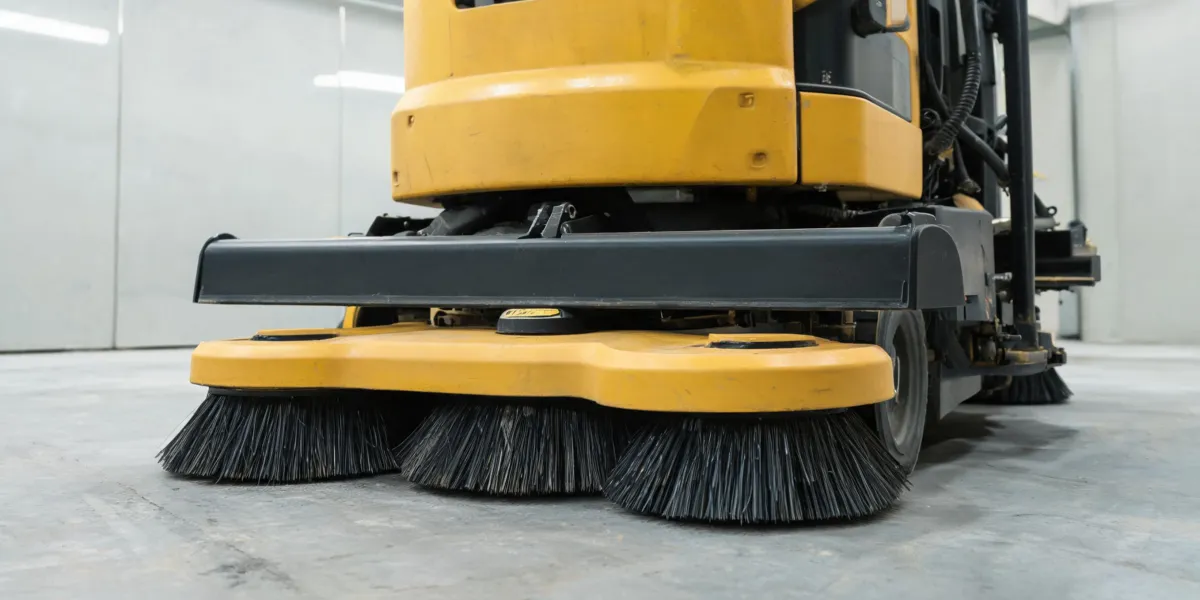
The unit arrived in late January 2024. I say "unit" because "machine" implies something more solid than what came off that truck. The photos had been generous. The scarifier brushes were worn past spec, one wheel motor leaked hydraulic fluid slowly enough that nobody noticed until the drip pan filled up, and the control board had clearly been repaired before—sloppily. I called the liquidator. They pointed to the "as-is" line in the contract and reminded me that "reconditioned" means different things to different sellers.
To be fair, they offered to sell replacement parts. That's when it got worse.
The machine's model was an older import, and the parts compatibility chart made zero sense. The manual referenced wiring for a completely different model. The error codes—what few appeared on the display—weren't documented anywhere. Each breakdown meant calling the liquidator's parts desk, waiting for them to guess at what might fit, ordering it, and getting parts delivered anywhere from three days to three weeks later.
The big failure happened in February—the chain finally threw, mangling the brush housing in the process. The repair estimate: $1,700 in parts and 12 labor hours for two of our maintenance techs. I sat down with my spreadsheet and calculated the real numbers:
- Initial purchase: $8,200
- Replacement parts over five months: $1,800
- Maintenance labor: $2,400
- Downtime from three breakdowns: roughly 24 hours of lost cleaning coverage
At that point, we were at $12,400 and climbing. The machine still wasn't running right. What I mean is, we hadn't even reached the worst month of the year—the months when the plant floor gets heaviest use and the cleaning schedule can't afford a single gap. The "deal" was vanishing right there in the spreadsheet.
The Call That Changed the Direction
Here's the thing: I almost stuck with it. The sunk cost narrative is real—I kept telling myself the next repair would be the one that got it running right. I went back and forth for two weeks between ordering more parts and walking away entirely. Fixing it felt responsible. Walking away felt like admitting I'd made a $12,400 error.
What finally pushed me over the edge was a call with a fellow facility manager at a plant in Virginia. She told me her Virginia floor scrubber purchase went wrong the same way ours was heading—bought cheap from an online seller, spent six months patching a machine that should have been retired. Her team eventually switched to a Factory Cat combo unit, and she mentioned the support operation in Greenfield, WI, where the ride-on sweepers are backed by actual documentation and a parts inventory that makes sense.
I called a Factory Cat floor scrubber dealer serving our area the next morning. And the conversation went differently than any equipment call I'd had in months. The dealer asked about our facility layout, what debris we tracked in from the plant floor, how many shifts we ran. When I mentioned the broken machine, he didn't try to pitch me a filter. He just said, "Yeah—that's the thing about orphaned equipment. If no one's standing behind it, you're the warranty."
Look, I get why people go with the cheap option—budgets are real, and the difference between $8,200 and $13,500 can buy a lot of other things. But that dealer shared support materials most manufacturers would rather not show: a complete parts list with diagrams, error code documentation, service manuals that actually matched the machine, and a stock of the components that normally fail first. He walked me through the Aztec line—their mid-size combo unit with the same sweeper-scrubber functionality I needed for our Indiana floor space.
We didn't buy that same day. The two-week binary struggle between repairing the old machine and cutting my losses had taught me something: I needed to see the story end to end before signing.
What We Actually Did
We purchased the Factory Cat combo floor sweeper-scrubber and had it shipped to our Indiana plant. The difference in experience was almost embarrassing in how obvious it was. The machine arrived with the manual still shrink-wrapped in the crate. The error codes on the display matched the documentation. When we needed one small part in our first month—a connection fitting—the dealer had it on a truck the same week.
Did it cost more? Yes. The purchase price was about $13,800 with the scrubber kit. But the total cost of ownership—accounting for parts, labor, and downtime—makes the cheap machine look absurd in hindsight. Here's the number that matters:
The "cheap" sweeper cost roughly $15,900 over eight months. The Factory Cat will cost about $16,200 over its first two years, and it's actually working. By year three, the gap becomes a canyon.
Don't hold me to the exact long-term math—I've simplified the labor rate to keep my CFO off my back—but the direction of the trend is unmistakable.
The Lessons I'd Pass Along
I'm not writing this to convince anyone to buy a specific brand. I'm not a salesperson and I have no interest in being a factory representative. I'm sharing this because the few things I learned in 2024 changed how we evaluate every piece of maintenance equipment now, and if you're sitting on a similar decision, it might save you the headache I had.
1. Ask about parts before you ask about price
Every salesperson will tell you their machine is built to last. Not all of them can show you a parts diagram with a phone number for the person who actually stocks that part. We now weight parts availability at 20% in our equipment evaluation scorecard.
2. Documentation is part of the product
Manuals that match the serial number, wiring diagrams, and readable error codes aren't luxury features. They're how your maintenance team keeps the machine running without vendor call-outs. During our 2023 spending audit, unclear documentation was a factor in nearly a third of our repair delays.
3. The dealer is the warranty
I used to think "warranty" was a piece of paper. In the industrial equipment world, it's a phone number and a relationship. Factory Cat's dealer network helped us before we bought anything—free advice, open documentation, no pressure. That's not magnanimity. It's how they build long-term accounts. But it worked on me, and I'm okay with that.
4. Compare total cost, not sticker price
Per FTC guidelines (ftc.gov), advertising claims need to be substantiated with evidence. I'd argue buyers should apply the same standard to equipment quotes: don't accept a price as the total cost until you've verified parts pricing, failure rates, and the labor hours required to service the unit. Our purchasing template now includes a five-year cost projection with two breakdown scenarios built in.
The machine we replaced cost us more than the "expensive" dealer quote we originally passed on. Not because it was uniquely defective—nobody misrepresented it in writing—but because I bought a piece of equipment based on what I saw first, not what I'd own over time. That's not a mistake you make twice when you're tracking every invoice.
If you're in a similar spot—comparing factory cat ride on sweepers out of Greenfield, WI, searching for floor scrubber dealers in your state, wondering whether the Aztec floor scrubber line actually holds up, or trying to justify a combo floor sweeper-scrubber to a skeptical finance team—I hope this gives you a framework that goes beyond the price tag. The machine that costs less today almost never costs less tomorrow.

Leave a Reply