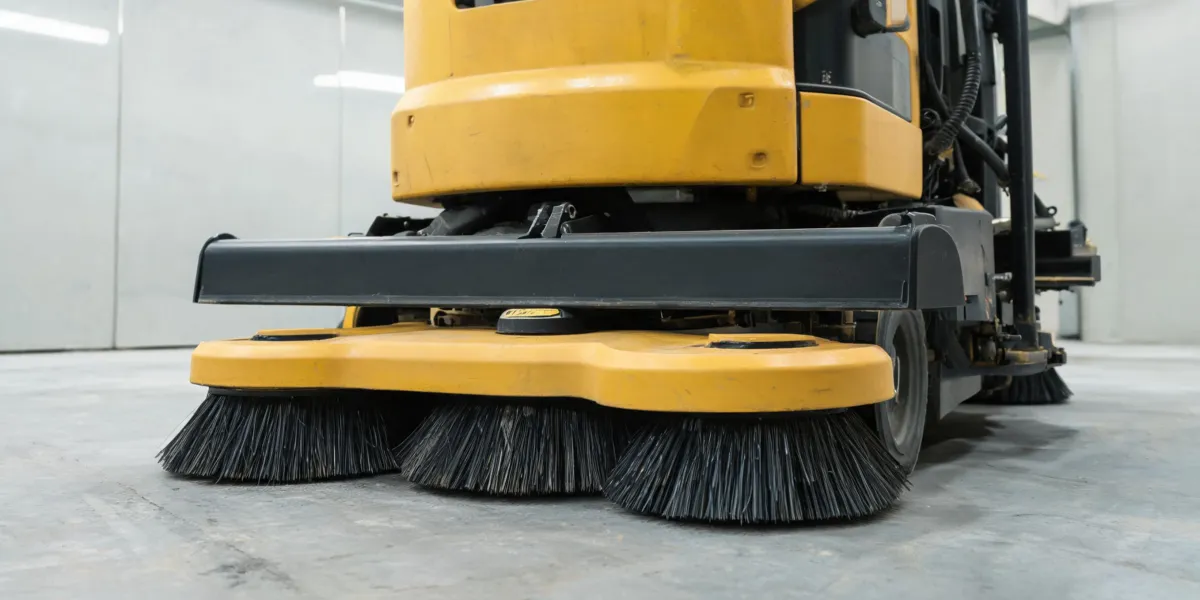
I handle maintenance purchasing for two industrial buildings in Wisconsin. I've been ordering floor scrubbers, sweepers, and repair parts for eight years now—and I've made (and kept a list of) 14 significant mistakes, totaling roughly $18,000 in wasted budget. This article is basically that list, turned into a pre-order checklist.
Here's the thing: there isn't one 'best' Factory Cat machine. A 45,000 sq ft warehouse and a restaurant kitchen are not the same problem. The right answer depends on your floor, your labor, and how many hours you're going to run the equipment. So instead of giving you a universal recommendation, I'll walk through three common situations.
The three situations that change every equipment decision
- Small areas, kitchens, and tight spaces — under about 10,000 sq ft, dry debris or food soils, narrow doorways.
- Large open industrial floors — 25,000 sq ft or more per shift, long run times, open aisles.
- Parts and batteries for a machine you already own — not a machine purchase, but a repair purchase.
If you're not sure which bucket you're in, the self-test at the end will settle it.
Scenario A: Small floor sweeper or floor scrubber for kitchens?
If you're searching 'floor scrubber kitchens', you're probably seeing a lot of equipment that's way too big. A kitchen or cafeteria has tight corners, tables, and doorways that a ride-on scrubber can't handle. But that doesn't automatically mean a small floor sweeper is the answer.
A small floor sweeper is a dry-debris machine. It works great on dust, crumbs, and light dirt. I use one in our packaging area when the floor is dry. But if you run it over a kitchen floor with grease film or sticky food residue, the brush grinds the grease into a thin layer that's harder to scrub later.
The reverse is also true: using a scrubber on a dry, dusty floor turns the dust into mud and clogs the squeegee. That mistake cost us $450 in new squeegee blades and a 2-day cleaning delay.
So for kitchens specifically:
- Only dry debris: buy a small floor sweeper. It's cheap, light, and doesn't need a big battery bank.
- Grease, oil, or food spills: buy a compact walk-behind scrubber. The floor needs scrubbing, not just sweeping.
- Both conditions: go with the compact scrubber. A scrubber can handle dry debris if you sweep first, but a sweeper can't handle grease at all.
Scenario B: Large open floors and the Factory Cat XR
When I compared a walk-behind scrubber with a Factory Cat XR side by side in one of our warehouses, I finally understood why 'smaller is easier' is the wrong lens for big floors. The walk-behind cleaned well, but it took an entire shift and needed a mid-shift charge. The XR finished the same area in about half the time and still had charge left.
If someone types 'factory cat xr' into a search bar, they usually mean a ride-on scrubber for a large plant. That's exactly what the XR is for. It makes sense when you're cleaning roughly 25,000 sq ft or more per shift. Under that, a walk-behind is often faster in tight spaces, because a rider has to find room to turn around.
The other side of the XR coin is service. A big machine isn't something you can easily ship for repairs. When I search for 'factory cat floor scrubber parts brookfield', I get a short list of actual local distributors with phone numbers, not a dozen mystery listings. Our distributor in Brookfield, Wisconsin stocks common wear parts like squeegees, filters, and brushes. We've had parts in our hands next-day instead of waiting a week. If you're not in that service area, ask the dealer about parts lead times before you buy.
One more thing about the XR: don't assume every error code is a major failure. According to the troubleshooting section in our Factory Cat manual, a loose battery connector can trigger an error code. I once saw that error, panicked, and called a service tech. It turned out to be a 10-minute reconnection. Five minutes of reading the manual would have saved that call.
Scenario C: Replacement parts and floor scrubber batteries for sale
This is the scenario where I have the most scar tissue. In September 2022, I ordered four 'floor scrubber batteries for sale' from an online supplier because the price per battery was about 30% below our usual source. I checked voltage and amp-hour rating. I didn't check physical height, terminal layout, or charger compatibility.
The batteries arrived about 1.5 inches taller than the old ones. The compartment lid wouldn't close, and the cables didn't reach without bending sharply. Return freight on industrial batteries is expensive. The original mistake cost me $1,240. Actually, the full pain was closer to $3,200 once freight, restocking fees, and a rush order from a local supplier were included.
I only believed the phrase 'check specs before ordering' after ignoring it and paying that bill. Now the checklist is: voltage, amp-hours, physical dimensions, terminal type, and charger profile. In that order. Clearance is a deal-breaker; if the compartment won't close, the price doesn't matter.
The surprise wasn't that the online supplier came with problems. It was that the local supplier's supposedly high quote was only $180 more than the online price once delivery and core disposal were included. When I compared the two side by side, the local option was the better deal. I didn't see that coming.
If you're in this scenario, don't type 'floor scrubber batteries for sale' and buy the first listing. Write down the model number of your machine, open the battery compartment, and measure everything. If you're not comfortable doing that, call someone who knows the machine.
The same logic applies to parts. Generic brushes and filters can fit, but the bristle material and filter media may be different. We order Factory Cat-specific parts and check them against the parts diagram. If a listing doesn't include the manufacturer's part number, that's a red flag. In a hurry, we call the Brookfield distributor and ask them to verify the part number. It takes five minutes and prevents a lot of rework.
How to know which scenario you're in
Grab the floor plan and answer four questions:
- What is actually on the floor? Dry dust and loose debris? A small floor sweeper is enough. Grease, food soils, or oil? You need a scrubber.
- How many square feet are you cleaning per shift? Under 10,000: compact walk-behind. Over 25,000: a Factory Cat XR or similar ride-on. In between: get a demo and time it.
- Are you buying a machine, or parts for an existing one? If parts, switch from 'what machine should I buy?' to 'what part number do I need?'
- Do you know your battery specs? If the phrase 'floor scrubber batteries for sale' is doing all the work, you're heading toward my September 2022 mistake. Voltage, Ah, dimensions, terminals, charger—verify them all.
The 12-point checklist I now keep in a binder has caught 47 potential ordering mistakes in the past 18 months, and I conservatively estimate it's saved us about $8,000 in avoided rework. Some catches were small, like the wrong squeegee hardness. One was big: a battery bank that would have left our XR dead for a week.
Bottom line: the most expensive equipment is the equipment you buy twice. Five minutes of verification beats five days of correction. Take it from someone who has the purchase orders to prove it.

Leave a Reply