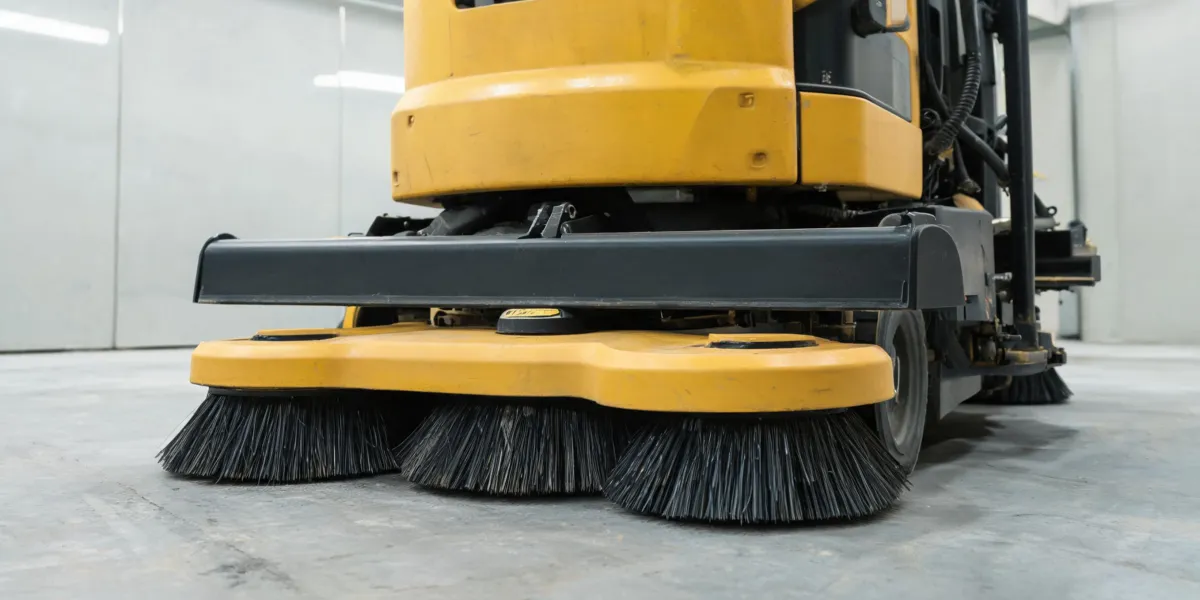
When a floor scrubber dies mid-shift, the first question is almost always the same: "What's the fastest way to get it running again?"
In my six years coordinating floor scrubber repairs for commercial facilities, I've triaged over 300 rush orders. And I can tell you: the fastest fix is rarely the right fix. I've watched generic scrubber floor brushes wear unevenly, "compatible" parts seize up, and general repair techs turn small problems into large ones. The pattern is so consistent that I've built my entire approach around avoiding it.
Here's what I mean. The scrubber isn't just a cleaning tool. It's the machine that puts the finishing touch on a facility's appearance—the last thing a client sees before they judge whether a building is well managed. So when it fails, you're not making a maintenance decision. You're making a brand decision.
The cheapest part you can install is the one that fails in front of your client. When that happens, you're not paying for a replacement part. You're paying for a second impression.
The $74 "Saving" That Turned Into an $1,800 Problem
In March 2024, a facility manager called me 36 hours before a corporate safety inspection. Their Factory Cat XR scrubber was leaving swirl marks on the warehouse floor. The machine itself was fine. The brush—a "premium compatible" model sourced from an online retailer three months earlier—had worn unevenly and its bristles were splaying.
The generic brush cost $68—maybe $64; I'd have to check the purchase order. Either way, the factory-cat replacement was $142. They saved about $74 in March. By May, the brush was leaving marks on every pass. The inspection didn't fail them, but the appearance note went in the file, and the client who toured the warehouse quarterly noticed the streaks.
Fixing it cost roughly $1,800: expedited shipping, re-labor, an extra crew hour to re-polish the affected areas. That's the best-case scenario. I should add that this facility had already burned through two generic brushes that quarter before calling me. I've seen worse—including a facility that lost a contract renewal because their "new" floors looked older than they were.
Availability Is a Quality Metric
The conventional wisdom is to shop around for parts, compare prices, and buy when the numbers work. My experience with hundreds of rush-part orders argues otherwise. Availability is part of quality.
You can buy a generic brush online and wait six days. Or you can buy a factory cat part from a Milwaukee distributor and have it in hand in a day or two. When a scrubber is already down, the cost of the part is basically a rounding error compared to the cost of downtime. A $60 discount on a brush means nothing if the machine sits idle for two extra days.
I ran this math with a client who needed a dust collector mini filter before a weekend deep-clean in a food processing area. The aftermarket filter was $24 plus two-day shipping. The OEM filter was $41, stocked locally, available Thursday morning. The client nearly chose the $24 option to protect the parts budget. We ran the numbers: the scrubber was already parked, labor was already scheduled, the weekend clean slot wouldn't wait. The $17 difference was irrelevant compared to explaining to corporate why the production floor wasn't ready.
And when shipping genuinely matters, the official rates are worth remembering. According to USPS (usps.com), as of January 2025, a First-Class Mail large envelope costs $1.50. That covers small items—filters, gaskets, small replacement pieces—with 2-3 day delivery. But the point is simple: fast delivery of the wrong part is worse than the right part in hand. That's why my go-to list is short and specific, and why factory cat parts availability near the job site matters more than a slightly lower price.
A Fast Repair Is Worthless If the Repair Is Wrong
Here's the part I didn't understand until it cost us. Back in 2023, we had no formal verification process for emergency repairs. A client in Bowling Green, KY had a scrubber that kept jamming. A general maintenance contractor replaced the pad driver with a part that "almost fit." It worked for 11 hours before seizing, and it took the motor mount with it. $400 of damage on top of a failed repair—plus a client who lost confidence in everyone involved.
The third time a wrong part showed up at a job site, I built a spec-verification checklist and made it mandatory for every rush order. It wasn't glamorous. But it stopped the most expensive mistake in this industry: making assumptions under time pressure.
That's also why I send clients to floor scrubber repair service in Bowling Green KY when the job needs a specialist. Technicians who know the Factory Cat lineup—the XR, Magnum, Micro HD, the 34 series—catch problems that a general repair tech won't. When I'm triaging a rush repair, I'd rather drive 30 extra minutes to someone who knows the machine than save an hour and lose credibility.
But What About Budget?
Let me address the objection every facility manager is thinking: budgets are real. I've been the person deciding between a $68 brush and a $142 brush while the CEO waited for an answer. I'm not saying every facility should buy the premium version of every part every time. If you're maintaining a light-duty sweeper in a back hallway, buy based on the right calculation.
But here's what I've learned from 300+ rush orders: when a part claims compatibility with a Factory Cat machine, that claim should hold up. Per FTC guidelines (ftc.gov), claims need evidence. A lot of "compatible" parts I've seen didn't meet the standard.
The same standard applies to the floor itself. A streaked floor makes a factual claim about your facility—that it isn't well managed. No maintenance budget line item captures the cost of that impression. The floor is the one surface your clients see every single time they visit. What it says about you matters.
Bottom Line
I've stopped recommending generic parts for commercial scrubbers, and not because I'm trying to inflate anyone's maintenance budget. I've watched facilities save $40–$80 on a scrubber floor brush, then spend $1,800 explaining why the floor looked bad. I've seen a $17 filter decision delay a food plant deep-clean. I've seen a rushed repair by a generalist turn a small issue into a $400 equipment failure.
The pattern is consistent: when quality is treated as optional, the client notices. And the client's impression is the one thing you cannot expedite, discount, or substitute.
Factory Cat sweepers and scrubbers are built to last. The parts and repair decisions you make around them should match that standard. That's the conclusion I've reached after 300+ rush orders and six years of watching what actually works.
The floor you present is the statement your facility makes. Make sure the part underneath it backs that up.

Leave a Reply