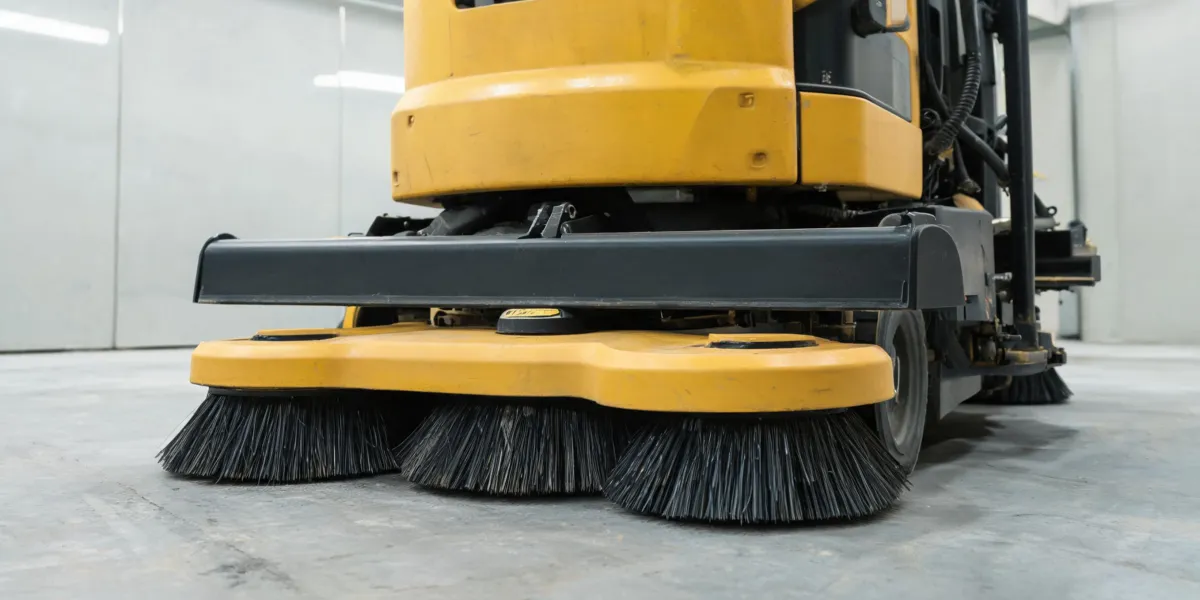
It was 3:47 PM on a Thursday in March 2024 when the call came in. I remember the time because I was packing up to leave, and I almost let it go to voicemail. Good thing I didn't.
The caller was a floor scrubber company in Miami—small, four employees, two machines, and a name I didn't recognize. He'd bought his Factory Cat XR walk-behind at an auction nine months earlier, so he wasn't in our system. The machine had thrown an error code mid-shift at a shopping plaza he'd been contracted to clean every night for the past three years. He gave me the code, the model, and his diagnosis. He was pretty sure it needed a new control board.
Pretty sure. That phrase still makes me wince, because it's usually wrong.
I asked for the serial number. On the XR line, it's stamped on the frame near the right rear wheel—you have to crouch and look under the recovery tank. He read it off. I ran the factory cat serial number lookup.
Here's what most people misunderstand about serial number lookups: they think it's just for confirming the model or checking the warranty. But the lookup pulls the complete service record for that specific machine, including production revisions, prior repairs, and notes from previous work orders. That's what saved this job.
The lookup showed his machine was from a 2016 production run, and it had a history that went back further than his ownership. The error code (34, a control board voltage fault) pointed to a new control board. The board was in stock at our Wisconsin warehouse. Standard ground shipping to Miami was four to five days. He didn't have four days.
"I've got floor scrubber jobs every night this week," he said. "Not just at the plaza—two other retail clients. If I miss the plaza, the property manager has a penalty clause. Three strikes and I'm out. That contract is about $36,000 a year for me. I can't risk it."
Overnight shipping from Wisconsin to Miami was an extra $175 on top of the $380 board. I could hear the hesitation in his voice. He runs a small operation. $175 is not nothing when you're a four-person crew in a crowded market, bidding against bigger companies that can absorb equipment downtime. I told him what I'd tell anyone: run the numbers on the alternative. One missed night isn't just the $600 job. It's the penalty, the trust, and eventually the contract. He let out a breath. "Ship it. Overnight."
This is the part where I almost made the mistake.
While I was waiting for his callback, I pulled the machine's history again. Something didn't sit right. The error code was in the record from a 2023 repair—a third-party shop had replaced the control board under a fleet warranty claim from the previous owner. But when I looked at the parts order for that repair, the board they installed was from a different model line. Same physical connector, similar design, different firmware mapping. The machine had run with that mismatched board for eleven months before failing again. And the likelier root cause was a chafed wire in the main harness—the reason the original board had died in the first place.
If I'd shipped just the board, it would have arrived, the crew would have installed it in a couple of hours, and it probably would have failed again within a month. Same chafed wire. Same voltage fault. Another missed night. Maybe that third strike.
When he called back, I told him to hold on. "I need to add a harness and a connector pigtail to that order." He asked why. I explained the history. He went quiet for a second. Then: "So if I'd ordered the board like I was going to, I'd be in this same spot next month?"
Yes. Exactly.
The kit—control board, harness, pigtail, overnight shipping—came to about $710. It left Wisconsin that evening and landed in Miami by 10:15 the next morning. That was later than I wanted and earlier than the mall opened.
At 10:40, my phone rang. It was him. "Where is it?" I said overnight; he heard "on my dock at breakfast." I had to walk him through the tracking info: out for delivery, in his city. He went quiet. Then: "So it's coming today, right?" Yes. It came at 11:05. His crew had it installed by 2:30. The machine ran through the weekend without a single fault.
That call changed how I handle every rush order since. The conventional wisdom says an emergency parts request is about shipping speed—get the box on the truck, pay for the fast lane. In practice, I've found that the most important step is verification. The serial number lookup tells you what's been done to that machine. And that changes which part you send.
He still calls us for parts. A few weeks ago, a used factory cat floor scrubber showed up at our Sheboygan location—an XR walk-behind retired by a property management company in Milwaukee that upgraded to a rider sweeper. We went through it: new squeegee, fresh pads, replaced a cracked wheel cover. Listed at $4,800. I told him about it as a backup for his Miami routes. He's not ready to spend that this month, and I didn't push. Small doesn't mean unimportant. It means smart.
One side note from that same week: we arranged a walk-behind floor scrubber rental in Wisconsin for a plant manager in Oshkosh while his machine went through a clutch rebuild. A rental at $145 per day covered the gap for three days. Not every emergency is an overnight part. Sometimes it's a rental until the repair is done.
What 200+ rush orders taught me
I've processed a lot of urgent parts requests in my years in this industry. Three patterns stand out:
- The serial number lookup is not a formality. Even when the customer knows the model by heart, the lookup reveals production revisions and service history that change the part decision. A few extra minutes once saved a $36,000 contract. I'll never skip it.
- Overnight means "shipped overnight," not "guaranteed by breakfast." We're careful about how we phrase commitments. FTC advertising guidelines (ftc.gov) require claims to be substantiated, so we don't promise delivery windows we can't verify. That's not just legal caution—it's practical. Set the right expectation on the front end.
- A rush order is a trust test. When someone pays $175 extra for speed, they're trusting you not to send the wrong box. The part number has to match the machine's history, not just the model name.
A caveat
This experience was from March 2024. Part prices, shipping rates, and rental fees change—verify current numbers before you budget. And this approach worked for us because we had a specific machine with a documented history. If you're dealing with a different model or a different market, your mileage may vary.
But the core discipline is the same: check the serial number. Look at the history. Then ship the right thing. In my experience, it's the cheapest insurance you'll get.

Leave a Reply