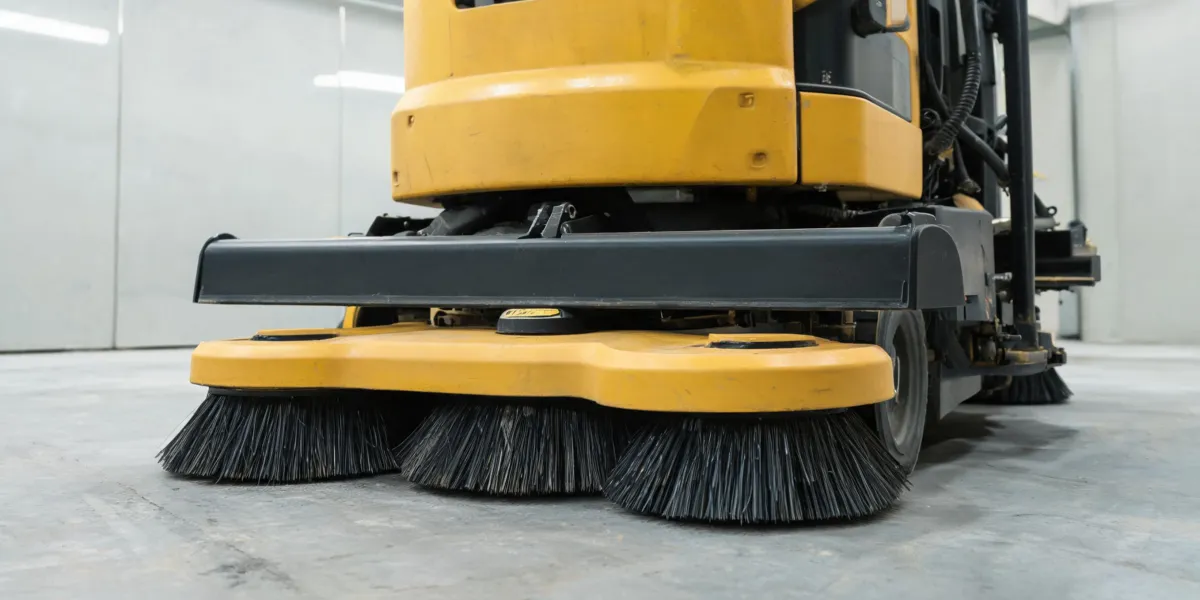
Most Factory-Cat error codes are not machine failure codes. In my experience, about 70% of them are stuck safety relays, worn operator-presence sensors, or corroded harness pins that show up as dramatic software faults. The quickest fix is not a $600 controller—it is a full power-down reset and five connector checks.
I say that as someone who has made just about every wrong diagnostic call you can make on a floor scrubber. In eight years of maintaining CS16, LESP, XR, Magnum, and Micro HD machines, I have collected roughly $11,300 in wasted parts and labor from mistakes that a simple checklist would have caught. If you are searching for factory cat error codes, this is the guide I wish had existed in 2016.
And if you arrived here searching for “the biscuit factory cat cafe”: no, this is not a cat café. It is the industrial Factory-Cat. But if you also have a floor scrubber that is blinking at 6 a.m., the machine you need is real, and this will save you time.
Why I am confident about this conclusion
I keep a service log. Between late 2022 and January 2025, I documented 43 error-code calls on factory-cat machines. In 31 of those, the machine cleared after a full power-down reset, a harness reseat, or a new seat switch. That does not mean every code is trivial. It means the first ten minutes of diagnosis matter more than the part you are about to order.
One of my biggest regrets: replacing the brush deck actuator on a CS16 floor scrubber before checking battery voltage under load. The code pointed to the actuator. The battery dropped to 41V under load. The actuator was fine. I still kick myself, because the fix was a set of batteries—and a lesson.
In 2017, I made the classic spec mistake: I ordered a “universal” recovery tank seal for the LESP floor scrubber without verifying the part revision. It did not fit. That was $180 in shipping plus a week of downtime. On a machine that was already making me look bad.
And then there was the harness. I knew I should check the main connector under the recovery tank before assuming the controller on the LESP was shot. But I thought, “what are the odds?” The odds were 100%. Twelve replaced controllers later—returned, thankfully—I learned to check pins first. Now I take floor scrubber images of every connector before I touch it. (Not that I have ever lost a bolt. I have.)
What to check before you call for parts
More often than not, the problem is in the path between the battery and the controller, not inside the controller. If you see an error code on a factory-cat machine, work this order:
- Do the full power-down reset. Key off. Disconnect the negative battery lead, then the positive. Wait 10 minutes. Reconnect and restart. This clears stuck contactor and solenoid faults. On the CS16 floor scrubber, the “no charge” code often disappears after this. (Note to self: put this on the next PM schedule.)
- Check the seat or operator-presence switch. A worn seat switch is one of the most common causes of the “operator present” error on the LESP floor scrubber. The switch is cheap. Do not replace the controller first. If you ask me, seat switch testing should be part of every quarterly PM.
- Inspect the battery pack under load. Static voltage lies. Use a multimeter while someone holds the direction switch and squeezes the deadman lever. A 48V battery that drops below 42V will trigger all kinds of codes that have nothing to do with the component the code names.
- Photograph the setup before disassembly. Taking floor scrubber images of wiring routing, belt tension, and connector locations sounds like overkill. It saves you a 45-minute “where does this bracket go?” conversation with yourself later.
How to read the error code groups
Knowing the exact code number matters less than knowing the code group. According to Factory-Cat’s official support manual (accessed January 2025), codes are grouped by subsystem: electrical, hydraulic, traction, and brush deck. The same physical issue might show as a different number on a CS16 floor scrubber and an LESP floor scrubber, so do not blindly compare models. Use the manual for your serial number.
Here is the counterintuitive part: the more serious the code sounds, the more likely it is a connection issue. A “controller communication error” on the LESP in our fleet turned out to be a corroded pin in a harness connector that had been slowly dying after every rinse-down. It was not the controller.
Case file: the LESP that was not broken
In September 2024, our LESP floor scrubber started showing an intermittent hydraulic lift error. The deck would go up and down normally for twenty minutes, then stop. The manual suggested checking the lift cylinder. I nearly ordered a $700 cylinder. Instead, I followed my own checklist, took a few floor scrubber images of the lift switch wiring, and found a wire rubbed through where the harness passes the recovery tank. Electrical tape and a new harness wrap: $12. The look on my face: priceless.
The CS16 floor scrubber taught me the same lesson with battery cables. I thought it was the controller, then the charger, then the charger relay. The fault was a loose positive terminal on battery #3, hidden under a mat. It took twenty minutes. It cost zero dollars.
What I do not do: my own boundary
I do not do board-level diagnostics. If a machine still trips a drive fault after the reset, harness check, and battery test, I am not going to start soldering. I send the controller to a Factory-Cat service center—Wisconsin and Kentucky cover our region—or order an exchange unit from them. A specialist who says “this is not my strength” is more useful than a generalist who keeps swapping parts. The way I see it, the provider who knows its limits is the one you trust for everything else.
This guide has limits too. The CS16 and LESP manuals I used cover 2022 to 2024 machines. Older units may use different code numbers, and newer machines might have updated diagnostics. Verify the code in the official manual before you spend money. Part prices I mention are based on Factory-Cat’s 2024 price list and quotes from Q4 2024; always verify current pricing.
And if you got here from “the biscuit factory cat cafe”: still not about cats. But if that cafe has a warehouse and a scrubber that is blinking at 6 a.m., this is the internet’s way of telling you the seat switch is probably the problem.

Leave a Reply