-
There's No "Best" Floor Scrubber. Only a Best Fit.
-
Scenario 1: You're Scrubbing Hardwood Floors
-
Scenario 2: You're Cleaning a Large Industrial Facility
-
Scenario 3: You're Shopping for a Pre-Owned Floor Scrubber
-
Scenario 4: Walk-Behind Floor Sweeper Service: The Decision That's Already Made
-
How to Tell Which Scenario You're In
-
Bottom Line
There's No "Best" Floor Scrubber. Only a Best Fit.
When people ask me what floor scrubber they should buy, they expect a model number. I'm not going to give one, because the answer depends on your floor, your labor, and your service access. That's not a dodge—it's a quality issue.
I'm a quality and brand compliance manager at Factory Cat. I review every machine before it reaches a customer—roughly 250 units a year. In Q1 2024, I rejected 4% of first deliveries for pad driver alignment problems. So I'm not the person who tells you to buy something just to keep a warehouse moving.
When I first started, I assumed the biggest, fastest machine was the obvious choice. Three returned machines later, I realized I was looking at the problem backwards. The floor decides the machine. The budget decides the condition.
Here's the short version before we dig in:
- Hardwood floors or an adaptive-reuse space like a café → compact walk-behind scrubber, low moisture, soft pad.
- Large industrial floor → high-capacity rider, like the Factory Cat GTR series, if you have open space and shift-based cleaning.
- Tight budget → pre-owned floor scrubber can work, but only with a documented service history and realistic total-cost math.
- You already own a walk-behind sweeper → service and parts availability matter more than the next new machine.
Scenario 1: You're Scrubbing Hardwood Floors
Hardwood is where floor scrubber requirements get tricky. Put a stiff brush on a hardwood floor with too much down pressure and you'll see the scratches before lunch.
Take a spot like The Biscuit Factory Cat Lounge. I use it as an example because it's the kind of space that makes a generic "buy this scrubber" recommendation useless. The floors are hardwood, the layout is full of corners, and the clientele is cats—which means the cleaning process has to be safe for animals and leave no puddles behind.
For a hardwood floor scrubber, look for:
- Low-moisture operation. Excess water is the enemy of wood.
- A soft scrubbing pad, not an aggressive brush.
- Adjustable brush pressure. You want to be able to turn it down.
- A chemical that's labeled safe for sealed hardwood—and for animals, if you're running a cat lounge or a pet-friendly business.
If the space is under 5,000 square feet, a compact walk-behind scrubber that you can test on your actual floor is the kind of machine I'd recommend. It's easier to maneuver around tables, cat trees, or display racks. And always dry-sweep before you scrub, because grit trapped under a pad will damage any hardwood finish.
Leaving a little clean, dry floor behind you is the goal. Put another way: if a cat can walk across after you're done without leaving wet paw prints, you're using the right process.
Scenario 2: You're Cleaning a Large Industrial Facility
If your daily cleaning area is 50,000 square feet or more, a walk-behind scrubber is going to eat labor hours. That's not a moral failing—it's math.
This is where the Factory Cat GTR series comes in. It's built for wide, open industrial spaces where a rider machine can make a full shift of cleaning manageable. In a separate Q1 2024 audit, a facility with 70,000 square feet of warehousing cut their overnight cleaning crew from three people to one after moving from walk-behinds to a rider machine. Let me rephrase that: they didn't just save labor—they got more consistent finish and fewer missed aisles.
But the GTR isn't for everyone. If your aisles are under 8 feet wide or your floor is full of racking and tight turns, a narrower walk-behind machine will actually finish faster because it doesn't have to make so many extra passes to get into corners. The rider earns its keep on open concrete, not in a maze.
As of April 2025, our service documentation for the GTR series includes error codes and component diagrams, which is one of those things you'll only appreciate when something stops working. And if you're buying a 1,000-pound machine, you want a service network that can talk you through the diagnostics.
Scenario 3: You're Shopping for a Pre-Owned Floor Scrubber
I have mixed feelings about pre-owned floor scrubbers. On one hand, a used machine can get you into a much better class of equipment for half the price. On the other, I've inspected pre-owned units that looked fine in photos and arrived with worn pad drivers, weak batteries, and no maintenance log.
Here's something vendors won't tell you: there is no uniform grading system for used scrubbers. "Reconditioned" can mean anything from new brushes to a photo and a prayer.
A pre-owned floor scrubber only makes sense if you're honest about total cost. The purchase price is just the ticket to get on the ride. Add in batteries, immediate parts, downtime, and training. Say a used machine is $6,000 and the new equivalent is $12,000, but the used one needs $2,500 in batteries and $1,200 in wheels and squeegees before it's work-ready. The difference is a lot smaller than it looked.
What I advise: ask for a service record. If the seller can't show you that, assume the machine is being sold because the previous owner couldn't fix it. In our own service network in Wisconsin and Kentucky, we tag every machine we work on with an error-code history. That record is worth more than a fresh paint job.
Does this mean you should never buy a pre-owned Factory Cat? No. It means check the service log before you check your bank account.
Scenario 4: Walk-Behind Floor Sweeper Service: The Decision That's Already Made
Sometimes the best purchase is no purchase at all. If you already own a walk behind floor sweeper, the question might not be "Which one should I buy?" but "Why is mine down?"
A walk-behind floor sweeper is a simple machine in theory. In practice, it lives on the first line of dirt, so it gets abused. Dust, debris, and battery maintenance can turn a minor issue into a week of downtime.
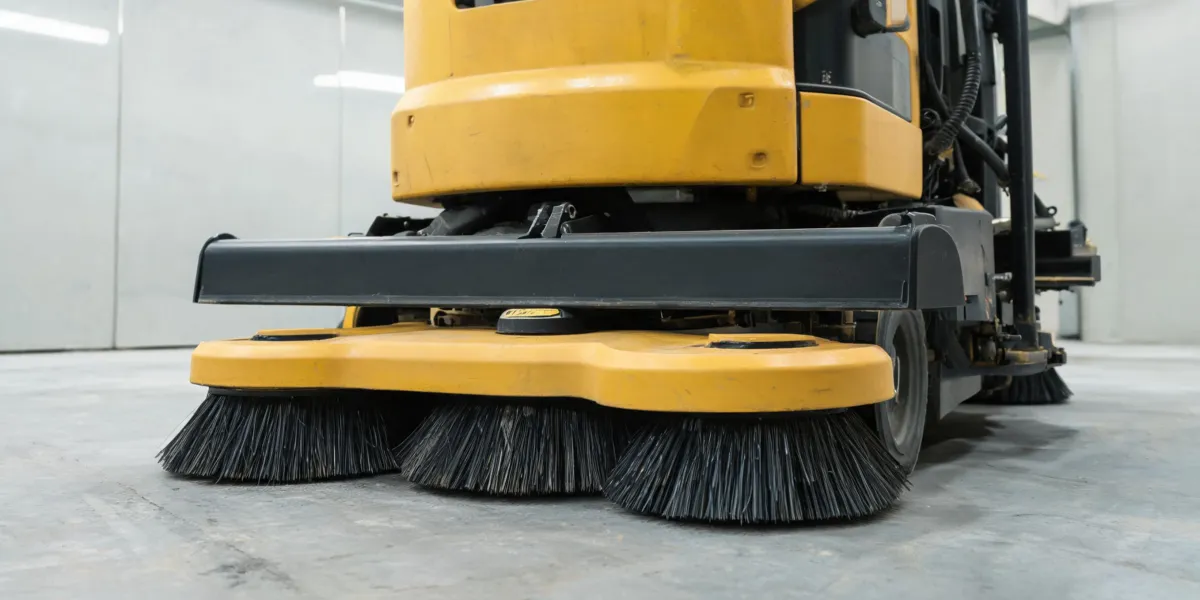
This is where service matters more than the brand sticker. We get calls from distributors, schools, and manufacturing plants across Wisconsin and Kentucky. The most common fix isn't a new machine—it's a walk behind floor sweeper service check: filters, side brushes, squeegees, and battery connections.
What most people don't realize is that a service check can also catch problems before they become expensive. In Q4 2024, one facility brought in a walk-behind sweeper for a broken broom switch. The technician found a worn motor brush housing that would have cost them $2,800 in unplanned downtime if it had failed during the middle of a production week.
If you're picking a new machine, ask the dealer about service before you ask about the price. Will they pull the error codes? Can they get parts in a week? Do they have manuals? If the answer is no, that's a red flag—even on a brand-new unit.
How to Tell Which Scenario You're In
Still not sure? Go through this in order, not by whichever option is on sale.
- What's the floor? Hardwood, tile, or polished concrete? Hardwood means you need a low-moisture compact unit. Sealed concrete allows more machine.
- How many square feet per cleaning shift? Under 5,000: walk-behind. 5,000–30,000: mid-size walk-behind or small rider. Over 30,000: consider a large rider like the GTR.
- What's your building layout? Wide open or narrow aisles? Rider for wide, walk-behind for narrow.
- What's your service situation? Can you get parts locally, and does the manufacturer support error-code diagnostics? If not, that's a liability.
- What does your budget actually include? For a pre-owned floor scrubber, include batteries, repairs, and the risk of downtime.
That last point is where I watched the same mistake cost a facility a lot of money. They bought a used scrubber because it was the cheapest option in the region. It arrived with a cracked hydraulic line, and the replacement part took 10 days to ship. In those 10 days, they spent $1,900 on manual labor and still didn't get the floors as clean. The $3,500 machine ended up costing over $5,400 before it ran one full day. That experience is why I keep a total-cost spreadsheet on every major machine decision.
Base your decision on the floor and the service network first. The price tag matters, but it's not the whole story.
Bottom Line
The right floor scrubber is a decision, not a product. For hardwood floors and adaptive-reuse spaces, that decision is a compact, low-moisture walk-behind. For large open industrial floors, the Factory Cat GTR series is worth a demo. For careful buyers, a pre-owned floor scrubber can be smart—if you can verify the service history. And if you already have a walk-behind sweeper, service should be your priority.
No machine is perfect for every building. A quality checklist is. It took me a few years and a lot of audits to learn that. Hopefully this helps you skip the expensive part.

Leave a Reply