I'm an office administrator for a mid-sized facilities maintenance company in the Midwest. I manage equipment rentals, cleaning machine purchases, and service contracts—roughly $150,000 a year across 12 vendors. I report to both operations and finance, so I'm the one who has to justify why we bought one machine instead of another.
If you've searched for floor scrubber Cleveland or floor sweeper Cleveland lately, you've probably hit the same question I did: do we buy a walk-behind machine, or do we make the jump to a bulk commercial robot floor scrubber? This is a comparison, not a lecture. I've bought both for different buildings, and the answer depends on the building more than the brochure.
What we're actually comparing
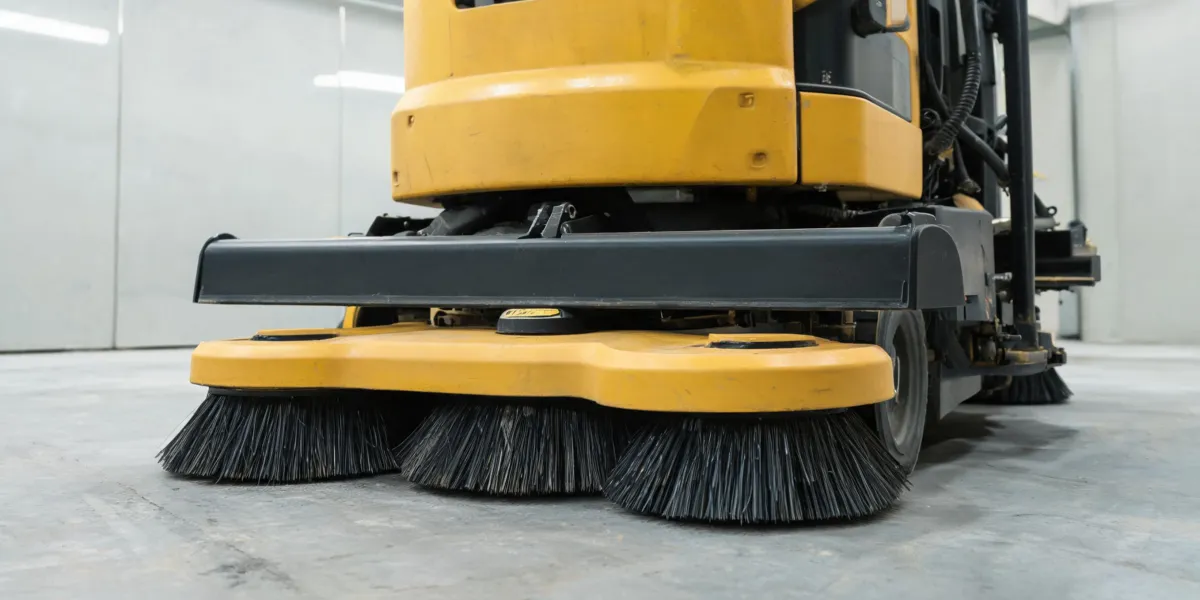
One side is a traditional walk-behind sweeper or scrubber. The Factory Cat lineup—34, XR, Magnum, Micro HD—fits this category. The operator walks behind, steers, and controls the water and chemical flow. The other side is an autonomous robot floor scrubber that maps the facility and cleans on a schedule with minimal staff.
I'll compare them across five dimensions: labor, flexibility, parts and service, total cost, and cleaning quality. I'll give you my opinion at the end, because that's the part most vendor-neutral articles skip.
Dimension 1: Labor and supervision
The obvious advantage of a walk-behind is simplicity. One person walks a line, sweeps, then scrubs. No software to learn, no route mapping. When I ordered our first Factory Cat walk-behind sweepers in Greenfield, WI, I knew training would take about 20 minutes. That was true.
A robot floor scrubber is a different labor deal. It frees your crew for other tasks, but somebody has to set up the map, manage charging, and respond when the robot parks itself because a pallet moved into its path. In my experience, that somebody is usually a lead cleaner or maintenance tech. It's not necessarily less labor hours—it's different labor, with a lot more time in a software dashboard.
What most people don't realize is how much time setup takes. The first month of running an autonomous scrubber includes remapping after you rearrange a warehouse. It's not a one-time setup.
Dimension 2: Tight spaces, corners, and obstacles
Here's where I had to change my thinking. The popular assumption is that a walk-behind is outdated and a robot is more advanced at everything. That's not true.
Walk-behind sweepers and scrubbers are better in tight areas. A Factory Cat Micro HD can pivot in a janitorial closet. It can clean under racks if the operator can reach. It doesn't rely on a map that needs updating every time a stack of boxes moves.
Robotic scrubbers are getting better at obstacles, but they still operate best in wide, repeatable paths—warehouse aisles, big assembly floors, and open garages. The more random clutter you have, the more often the robot stops and asks for help. Put another way: robots love open square footage, not chaos.
For a Cleveland plant with narrow dock areas and shifting inventory, a walk-behind is often the quicker tool. That might sound backward to someone comparing spec sheets, but it's been true in the buildings I've worked with.
Dimension 3: Parts and service
This is the dimension most online comparisons ignore. They compare upfront specs and then pretend both machines arrive fully serviced and forever reliable. Real life doesn't work that way.
Factory Cat parts Milwaukee is a useful search phrase. It's an actual support channel. When a part fails, you can call, verify the part number, and get the replacement shipped. The same applies in the Wisconsin and Kentucky service territory—warehouse staff who know the machines, not a generic call center reading a script.
For a robot scrubber, parts are more specialized. Sensors, charging contacts, wheel hubs, navigation computers—these aren't commonly stocked in a local janitorial supplier's warehouse. You're more likely to wait on a service contractor and a shipping box. The diagnostic tool is a laptop, not your own eyes and a maintenance manual.
One lesson from 2021: I knew I should take a photo of the worn part before calling for a replacement, but I thought, what are the odds of a mismatch? That was the one time the new part didn't line up. The technician had to drive the old part to the supplier anyway. Now I take photos for every order.
Factory Cat's error code support and manual availability matter more than people think. When I took over purchasing in 2020, I learned to check for documentation before buying any machine. Error codes and manuals mean our maintenance person can troubleshoot before paying for a time-and-materials visit. Robot manufacturers provide support too, but a robot failure often involves software that you can't hack around on a Friday afternoon.
Dimension 4: Total cost, not sticker price
Let's talk numbers, but don't hold me to exact figures. Pricing varies by dealer and bundled service, so take these as planning ranges.
A walk-behind sweeper or scrubber from Factory Cat is typically less expensive upfront than a bulk commercial robot floor scrubber. That was probably true in your last budget cycle. The robot has higher acquisition cost, plus you might need facility Wi-Fi coverage, charging station installation, and a software or service plan. I've seen robot maintenance plans that quietly stack up year after year.
At the same time, the robot can reduce labor hours on large open floors. If you're cleaning 100,000 square feet of empty warehouse every night, the labor savings might justify the higher price. There's no absolute robots-are-cheaper answer.
Here's something vendors won't tell you: the first quote is almost never the final price for ongoing relationships. For walk-behind machines, parts and service pricing is easier to compare. For robots, the terms can include automatic software upgrades and mandatory service visits. Read the small print. I know—not glamorous, but neither is a $700 service call.
Most buyers focus on the machine price and completely miss the support ecosystem behind it. A machine without a manual, error codes, or local parts is just an expensive way to learn that lesson.
Dimension 5: Cleaning consistency
On flat, open floors, a robot wins consistency. It follows the same path, applies steady down pressure, and doesn't get tired. If your main surface is wide aisles and your schedule is predictable, a bulk commercial robot floor scrubber will keep those floors more consistent than a rotating crew of walk-behind operators.
But consistent isn't the same as complete. Walk-behind operators can adjust instantly when they see a stain, a crack, or a pile of debris. A robot only sees what its sensors tell it. If a corner is dirty, the robot doesn't know unless you add it to the program. And if you're sweeping before scrubbing, a walk-behind sweeper handles machine guards and floor drains better than most robots.
For a facility that needs both sweeping and scrubbing, you might be comparing a floor sweeper Cleveland crews run every day with a separate scrubber. The Factory Cat line has multiple models—some sweep, some scrub, some do both. That flexibility matters more to me than the neat concept of one robot does all.
The surprising conclusion
On paper, the robot is the evolution. In practice, the fundamentals haven't changed: cleaning still has to happen in corners, after shifts, around obstacles, and without constant babysitting. That's why I don't think walk-behind sweepers are going anywhere. The execution has evolved—today's machines are easier to service and smarter about battery life—but the operator advantage remains real.
If your facility is mostly open warehouse space with defined aisles, low clutter, and night shift staff who need a break from monotonous cleaning, a robot scrubber might be the right investment. I'd still keep a walk-behind sweeper for the perimeter.
If your facility is like most Cleveland manufacturing plants—mixed surfaces, changing storage, and a maintenance staff that wears ten different hats—I'd start with a Factory Cat walk-behind sweeper or scrubber. Pair it with Factory Cat parts Milwaukee access if you want faster replacement shipping. That's the setup I trust when I can't be at the building.
What to ask before you buy
Before you sign for either type, ask these questions:
- Ask the robot vendor: How many hours of route mapping and staff training are included? What does the annual service plan really cost after year one?
- Ask for zero maintenance claims in writing. Per FTC advertising guidelines, broad claims need substantiation. No floor machine—manual or autonomous—comes with zero maintenance in real life.
- Ask the walk-behind dealer: Can you get Factory Cat parts Milwaukee? Can you handle repairs in Cleveland, or will we ship the machine away? Local service is what saves downtime.
- Ask for the manual and error code list before you buy. If a vendor hesitates, that's a red flag.
I've bought through a local rep and I've bought from a glossy online sales page. The glossy page is easier. The local rep is easier to live with six months later, when a part number doesn't match and you need someone who knows a gearbox from a drive motor.
My final take
If you're searching factory cat walk behind sweepers greenfield wi or factory cat parts milwaukee, you're probably close to a purchase decision. Good. You've done the keyword-level research. Now do the building-level research.
I'm not against robotic floor scrubbers. I think they'll keep improving, and I expect to buy one eventually. But for my current portfolio of facilities in Cleveland and the repair realities we deal with, walk-behind machines are still the workhorses. The robot is the future. The walk-behind is the now. Buy the machine that fits your building, your people, and your service radius—not the one with the most impressive spec sheet.

Leave a Reply