I manage purchasing for a 120-person industrial facility maintenance company. Processing 60-80 MRO orders annually across multiple vendors, I've learned to spot the difference between a sales pitch and genuine competence. Nothing tests that skill quite like tracking down a parts manual for a discontinued machine.
The Scenario That Sounds Simple (But Isn't)
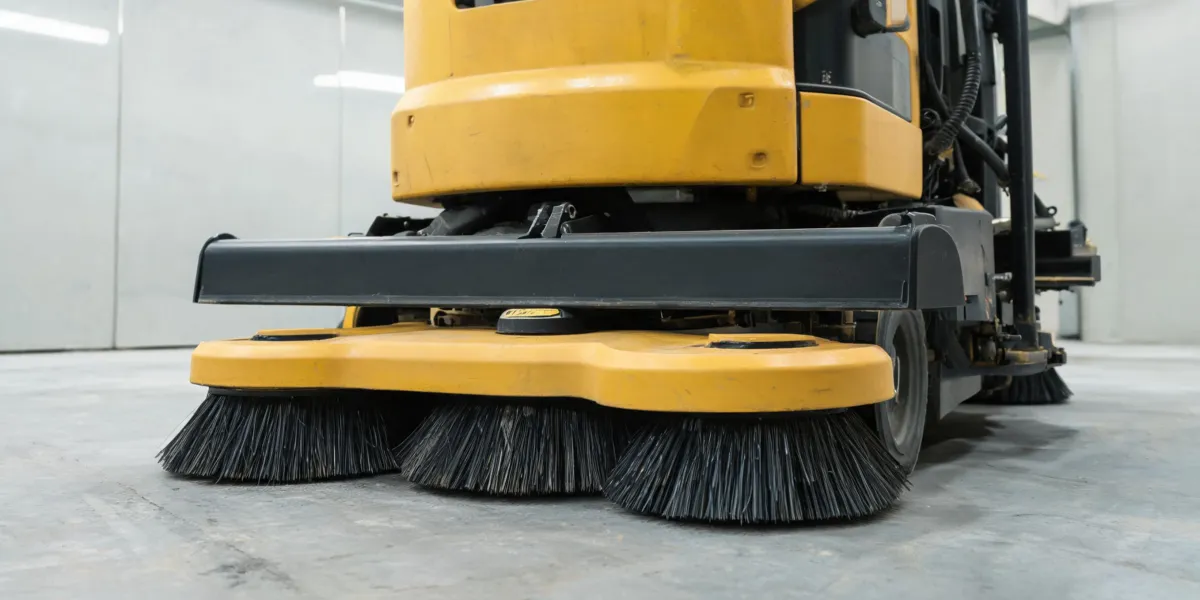
Last quarter, our team took on a new contract cleaning a large warehouse facility. The client's existing equipment included several industrial scrubbers, among them a Factory Cat Magnum. One of our operators flagged an unusual error code and I needed a manual—fast. Not the glossy product brochure, not the operator quick-start guide. The detailed parts manual with exploded views and part numbers. The one that tells you 'this is the bearing assembly, and this is the vendor part number for it.'
Simple, right? Google it.
Not so fast. The Factory Cat Magnum is a workhorse, but it's not a current mainstream model across every distributor. The manual isn't always sitting in a searchable PDF on the first page of Google. Especially not if the machine was purchased under a previous facility management regime or acquired second-hand—which, in the sweeping and scrubbing world, is more common than people admit.
And this is where the real problem starts. Most people assume 'I just need a part number' translates to a 10-minute task. In reality, it can snowball into a multi-hour, multi-vendor headache.
The Deeper Problem: The 'Discontinued Machine' Information Gap
Here's what I realized after dozens of these searches over the years: the issue isn't laziness or bad cataloging. It's a structural information gap in the industrial equipment aftermarket.
When a manufacturer like Factory Cat, or any OEM, launches a new model—say the newer iterations of the Micro HD or the XR series—the marketing focus shifts. Older model support gets buried. Parts manuals for current models are easily accessible. But for the Magnum, or a specific configuration of a Factory Cat Micro HD from a few years back? The documentation can be spread across online repositories, old dealer sites, or stored on a single CD-ROM in someone's filing cabinet. Not ideal. But workable.
What's less obvious is why this gap exists. It's not a conspiracy. It's a resource allocation decision. Manufacturers and large resellers prioritize stocking parts and providing support for their current, high-volume inventory. Supporting every single variant of a twenty-year-old machine line is expensive. They'd rather sell you the new model. I get it. But as a buyer on the ground, that doesn't help me when I have a scheduled downtime window and an error code blinking at me.
The real cost isn't the price of a missing manual. It's the time. The back-and-forth emails. The 'have you tried this other distributor?' phone calls. That time comes out of someone's budget, and in my world, it often comes out of the maintenance department's operational hours.
The Cost of Not Having the Right Information
Let's put numbers to it. I wish I had tracked how much time I've wasted on this stuff. Anecdotally, I'd say a single 'missing manual' search can burn anywhere from 30 minutes to 3 hours. That's time I'm not processing invoices, validating vendor compliance, or sourcing a replacement part for a critical sweep that's down.
Industry benchmark calculations (based on some informal polls in facility manager forums, 2024) suggest a per-unit downtime cost of roughly $75 per hour for a mid-size industrial floor scrubber when factoring in labor and lost cleaning productivity. That means a two-hour search for a part number can effectively cost the facility over $150 in indirect operational drag. And that's conservative—it doesn't include the 'I ordered the wrong part because I guessed the model year' scenario.
I dodged a bullet on that recently. I was confident the intake valve for a driving floor scrubber we had was the same part number as a similar model. Almost clicked 'buy' for a rush order that would have been a 20% restocking fee if wrong. Instead, I spent an hour hunting down the actual serial number and calling a specialist vendor who could confirm. So glad I did. The part numbers were different by a single digit. A lesson learned the hard way, again.
What Actually Works: Embracing Specialist Knowledge
So what's the takeaway? I have mixed feelings about it. Part of me wishes the OEMs just kept all old manuals freely online. Another part knows that's unrealistic for every model they've ever made. The compromise I've found is working with vendors who have deep, not wide, expertise.
This is where my personal view on ‘expertise boundaries' comes in. A vendor who says 'we specialize in Factory Cat parts and manuals for the Magnum, XR, Micro HD, and 34 models, but we don't stock parts for Tennant or Hako' is infinitely more useful to me than the mega-distributor whose website claims to sell everything. The specialist knows the quirks of the Factory Cat Magnum parts manual. They know which revision numbers changed and which ones didn't. They don't waste my time telling me 'this is our standard filter, it should work.' They know the exact part number because they've seen it a hundred times.
For example, when I was looking for availability on a sunbelt floor scrubber rental alternative for a short-term job, the general rental places could offer a machine but couldn't help me with documentation. They just handed me the keys. The specialist vendor I found (not Sunbelt, but a dedicated aftermarket dealer) actually said: 'Look, for a rental, you might be fine with their generic support. But if you need the full OEM manual, we have a copy we can sell you. It's not something we give away free, because we had to pay to acquire it from a retired dealer.'
That honesty earned my trust. The vendor who admits 'this isn't our strength—here's who does it better' is rare and valuable.
A Practical Approach for the Buyer
If you're a facility manager or admin buyer trying to find a factory cat magnum parts manual or any specialized documentation, here's my current workflow:
- Don't start with a generic search. Go straight to a specialty parts supplier for that brand. Search for 'Factory Cat parts' + 'specialist'.
- Provide the serial number, not the model number. The model name (e.g., Magnum, Micro HD) often isn't enough. The serial plate tells the true story.
- Ask about paid documentation. Some vendors have digitized old manuals and charge a small fee ($15-$30). It's cheaper than the time cost of searching yourself.
- Beware the 'universal' part promise. A vendor who says their part fits 'all' models without asking for your serial number is likely a generalist. Be careful.
This gets into territory that's not my specific expertise—the nuances of the actual engineering of the hydraulic systems on the Factory Cat Micro HD. What I can tell you from a procurement perspective is that the workflow above has consistently cut my search time from hours to about 20 minutes. Maybe it's not a huge change, but in a busy workday, it makes a difference. Better than nothing.
Finding the right manual used to feel like a test of my patience. Now I see it as a test of the vendor's honesty. The ones who tell you exactly what they can and can't do are the ones worth sticking with.
And yes, I'm probably going to keep a physical binder of our most-used manuals now. My predecessor left me a messy filing system. Some lessons are learned the hard way.

Leave a Reply