This Isn't a 'One Machine Rules Them All' Article
I've been handling maintenance equipment orders for roughly six years now. In that time, I've personally made—and documented—enough mistakes to fill a small binder. The biggest one? Assuming every facility needs the same kind of floor scrubber.
Back in 2019, I recommended a full-size ride-on scrubber to a small café in Atlanta. The manager asked for something 'industrial grade.' I heard 'big machine.' The result? A 600-lb machine that couldn't turn in their back hallway, noise that scared customers, and a $4,200 restocking fee. That's when I realized: the right answer depends on your floor, your space, and your tolerance for hidden costs.
Below I'll walk through the three most common facility types I've encountered—industrial warehouse, commercial café/retail, and barn/farm—and what actually works for each. Skip to the end if you want a quick checklist to figure out which bucket you're in.
Scenario A: Large Industrial Warehouse / Factory
Typical specs: 5,000+ sq ft, concrete floors, heavy grease or dirt buildup, high daily usage.
Most operators I've worked with in the Atlanta industrial corridor (think around 285 and I-85) default to the largest machine they can afford. That's a mistake if parts availability or error-code support matters. I've seen a $12,000 machine sit idle for three weeks because the dealer didn't stock a simple controller board.
For this scenario, I lean toward the Factory-Cat XR or Magnum series. They're not the most expensive on the market, but the real advantage is that Factory-Cat's parts network in Wisconsin and Kentucky means if a sensor fails on Tuesday, you can have a replacement by Thursday. I learned that the hard way after a $3,200 repair delay with another brand in 2021.
What to watch for with pricing: Don't just compare list prices. Ask for everything that's included—delivery, training, a spare brush set, and whether error-code support is free. The vendor who lists all fees upfront, even if the total looks higher, usually costs less in the end. I've seen buyers save 15-20% just by asking 'what's not included' before signing.
Scenario B: Commercial Café, Retail, or Specialty Space (Including Cat Cafés)
Typical specs: Under 2,000 sq ft, tile or vinyl floors, moderate foot traffic, tight aisles, low noise tolerance.
This is where most people get the wrong machine—I sure did. A floor scrubber for a coffee shop or a boutique needs to be small, quiet, and easy to maneuver. And if you're running a place like The Biscuit Factory Cat Café (yes, that's a real spot near me), noise is critical. Cats spook easily, and a loud scrubber can stress them out for hours.
Our go-to is the Factory-Cat Micro HD or the smaller 34 series. These are walk-behind units that fit through standard doors, operate at roughly 58 dB (well below the 85 dB threshold OSHA recommends for hearing protection), and have adjustable water flow so you don't flood a small space. I once recommended a larger machine to a café owner who wanted 'powerful cleaning'—the result was a puddle that took 20 minutes to dry and a complaint from the barista. Should mention: we hadn't checked the matting type. Rubber mats absorb water differently than tile.
Pricing reality: For a Micro HD, you're looking at $2,500–$4,000 new (verify current pricing; I'm pulling from Q1 2025 quotes). Some buyers try to save by buying a used machine sight unseen—I've seen that backfire when the battery pack was half-dead. Always ask for a demo in your actual space before committing.
Scenario C: Barn, Farm, or Outdoor Storage
Typical specs: Rough concrete or packed earth, lots of dry debris (hay, dust, gravel), no desire for water—just sweeping.
This is the one that trips people up because everyone assumes 'clean floor = scrubber.' In reality, a wet scrubber on a barn floor turns dirt into mud, which then dries into a crust that's harder to remove. I learned that after a $900 mistake in September 2022 where we sent a scrubber to a dairy farm. The owner called me, furious: 'You turned my barn into a slip hazard.'
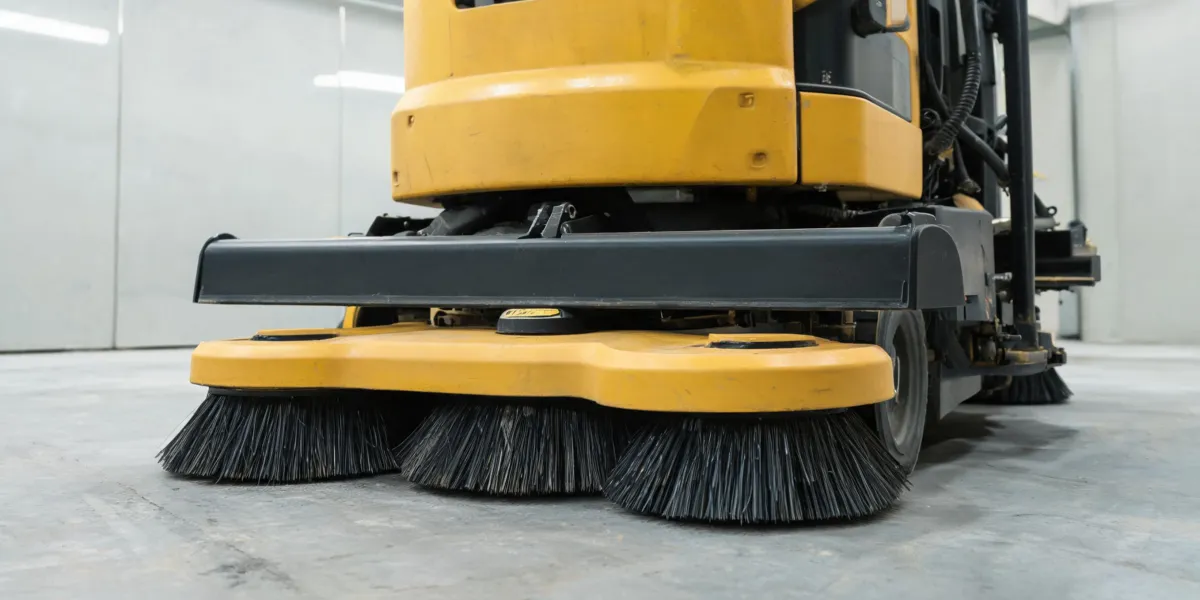
For barns and similar spaces, you need a barn floor sweeper with a durable floor sweeper brush—no water, no chemicals, just mechanical sweeping. Factory-Cat makes a couple of pull-behind and walk-behind sweepers designed for coarse debris. The brush material is key: polypropylene bristles for dry dust, steel-tipped for heavy gravel.
Cost tip: Sweepers are cheaper than scrubbers—typically $800–$1,800. But don't forget to budget for replacement brushes every 6-12 months, depending on how abrasive your floor is. That's a transparent cost most vendors don't mention upfront. So ask: 'What's the expected brush life, and how much do replacements cost?'
How to Figure Out Which Scenario You're In
Here's a quick self-check I give every new client. Answer these three questions:
- What's your floor area? (Under 2,000 sq ft → consider small scrubber or sweeper; over 5,000 → likely a ride-on scrubber)
- What's the primary dirt? (Liquid/grease → scrubber; dry dust/grit → sweeper)
- Who or what will hear the machine? (Employees/customers/cats → keep it under 65 dB; open warehouse → 70+ dB is fine)
If you're still unsure, reach out to a dealer who's willing to talk about what doesn't work for your situation—not just what they want to sell. I've seen too many buyers in Nashville, TN looking for a 'floor scrubber machine for sale' who ended up with something too big or too loud because the salesperson skipped the discovery questions.
Don't repeat my mistakes. Ask about parts availability, noise specs, and all the extra fees before you sign. That's how you build trust—and save thousands.

Leave a Reply