-
First, make sure you're comparing the same class of machine
-
The six checks I use
-
1. Confirm the model from the serial plate, not the paint
-
2. Test the battery under load, not just after charging
-
3. Look under the brush deck, not at the top
-
4. Ask for the error-code history before powering the machine
-
5. Trace the water path from solution tank to squeegee
-
6. Verify parts availability before you negotiate
-
1. Confirm the model from the serial plate, not the paint
-
Common mistakes after the inspection
-
Why this checklist matters
I don't sell used floor scrubbers full-time. I'm the person who checks them before they're allowed into a resale or rental fleet—roughly 180 machines a year, maybe closer to 160 on a slower auction calendar. After enough inspections, the same problems show up: manuals missing, batteries that pass a no-load voltmeter check but sag immediately under load, and repairs made with parts that are close to original but not the right part number. This is the checklist I run on a used walk-behind floor scrubber, whether the decal says Factory-Cat, Tennant, or something else. If you're a buyer in Sheboygan, use it before you drive to a dealer or auction.
First, make sure you're comparing the same class of machine
Search results don't separate categories well. A used walk-behind floor scrubber Sheboygan listing should show scrub brushes or pads, a squeegee, and a recovery tank. If your search history includes 'ice sweeper machine,' read the listing carefully: a sweeper collects debris and ice-melt grit, but it doesn't scrub or extract water. Different jobs. If the unit is a sweeper/scrubber combination, find out from the owner's manual which function was maintained, not from the model name.
And if you got here by typing 'tennet floor scrubber,' no judgment—I know that's usually meant as Tennant. I'm not going to claim one brand beats another in all conditions. I've inspected enough units from several manufacturers to know that every design has a weak spot. This list is about verifying the specific machine in front of you.
The six checks I use
The order matters. The first two checks take five minutes and often tell you whether the rest of the inspection is worth your time. Here is the short version: get the manual, load-test the batteries, look at the deck from underneath, pull the error-code history, trace the water path, and verify parts availability. Now the details.
1. Confirm the model from the serial plate, not the paint
Faded stickers cause a lot of confusion. Look for a metal plate stamped with the model, serial number, and manufacturing date. A side panel that says 'Factory Cat XR' is not proof of which controller or drive motor is inside. On older machines, the painted name may be the previous owner's re-brand or just the wrong decal from a heavy equipment supplier.
Once you have the serial number, get the parts manual. If it's a Factory-Cat GTX, the Factory Cat GTX parts manual is exactly the document I would ask for before travel. (I keep PDFs of these in my files, and I think the diagrams are organized by subsystem, but don't quote me on a chapter number.) The operator manual is useful, but the parts manual is better for an inspection because it shows part numbers and assembly order. If a seller cannot or will not provide one, treat that as a warning sign.
2. Test the battery under load, not just after charging
A fully charged lead-acid pack can read good voltage for the first hour after charge. That's why I don't trust a 'fully charged, ready to test' unit until it has rested six hours without a charger connected. Check the water levels first, then put a load on the pack. If one cell drops sharply, you're not looking at a small negotiation point; you're looking at a battery replacement, and that changes the real cost of the machine.
A machine with a manufacturer charge indicator that shows green is not the same as a load test. Ask the seller to run the scrubber with the brush deck down and the recovery vacuum on for a few minutes. Watch the dash voltage and listen for sudden bogging. If the seller won't allow it, ask why.
3. Look under the brush deck, not at the top
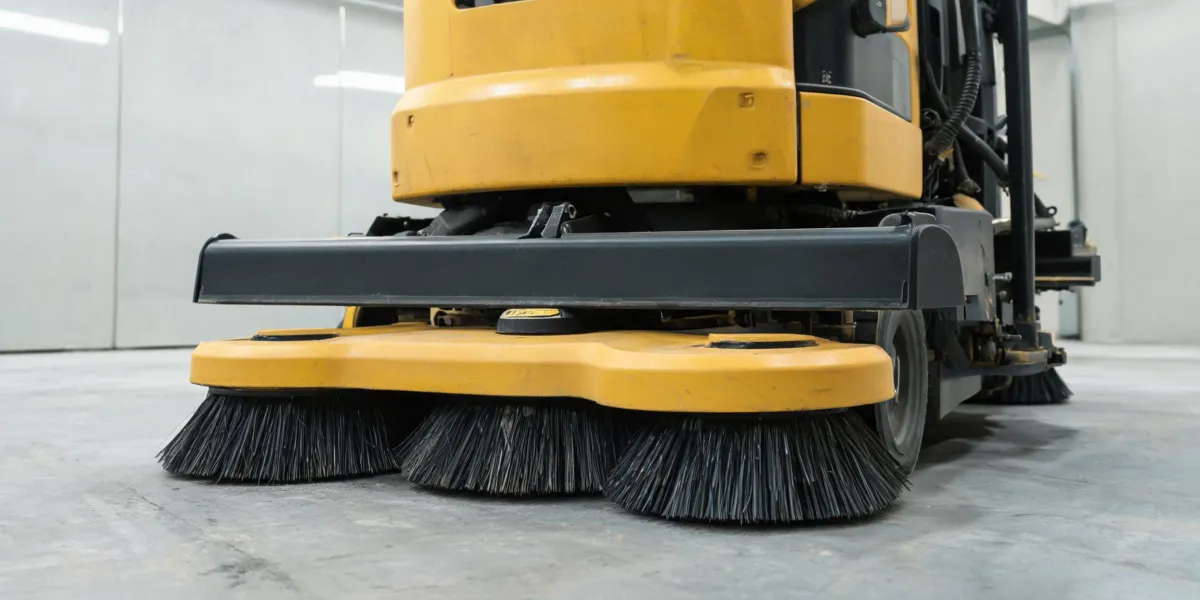
Most used-machine buyers stand over the machine, check the control handles, and press a few buttons. The useful information is underneath. Turn the machine off, disconnect the battery, and block the wheels before you put your head under the deck. Check the brush or pad driver mounts for cracks, bent mounting flanges, and missing fasteners. Check the blade holder on the squeegee for the same thing.
Worn brushes are not a deal breaker—they're consumables. A bent deck, cracked weld by the lift mechanism, or a squeegee with a broken adjustment arm is a bigger job. It may still be a fair deal, but the repair cost should be on the table before you negotiate.
4. Ask for the error-code history before powering the machine
This is the step most people ignore. If the machine has a digital controller, ask whether a fault code has ever been stored and what repair was done. On Factory-Cat units, error-code support is a real advantage, but only if the paperwork tells you what happened after the code. 'We replaced the controller' is not enough. Ask for the old controller or a repair note. An intermittent electrical fault can pass a ten-minute demonstration and then show up halfway through your first shift. Check harness connectors for corrosion, heat damage, and signs of previous splicing.
If the seller does not know what an error code is, or says the display never matters, that's a red flag. It doesn't mean the machine is bad. It means you'll be the one doing the diagnostics.
5. Trace the water path from solution tank to squeegee
The noisiest component on a scrubber is sometimes the only one that works. Before you buy, trace the full recovery path. Remove the recovery tank lid and look inside for cracks, dried-out gaskets, and hoses that were pinched when somebody closed the lid. Check the vacuum hose at the point where it bends, because that is where it cracks. Look at the drain hose cap and the float shutoff.
Then ask about the squeegee blade. A blade that 'looks fine' can still be the wrong blade for that model. If the listing says it has a brand-new squeegee, confirm the part number against the manual. The same problem shows up with pad drivers and filters. It is not about being picky; it's about whether the machine will dry the floor after the first week.
6. Verify parts availability before you negotiate
A used machine is worth whatever its parts availability says it is. I would put that sentence above every buyer checklist. Look up the wear items first: squeegee blades, brushes or pads, filters, hoses, wheel/caster assemblies. If the model is a Factory-Cat XR, the manual should tell you whether it had the option list you think it has. If the seller says 'these fit all of them,' ask them to show the part number and the break-out diagram.
Factory-Cat's parts and service footprint is concentrated around Wisconsin and Kentucky, so for buyers in those regions the local support question may be easy. Outside those areas, ask who stocks parts and how many days a special order takes. There is no universal answer. The seller who can answer that question is worth more than the seller who just repeats 'very reliable machine.'
A used machine without a parts manual is not a bargain. It's a mystery with wheels.
Common mistakes after the inspection
To be fair, some used scrubber deals work out without a binder full of documents. I've bought machines that way, and one was fine. Another one sat in the shop for three weeks because the previous owner had cut a harness connector and wired it through a toggle switch. The upside was a lower price; the risk was downtime. On a machine that has to work tomorrow, that is not a trade I would make again.
Don't judge a machine by a fresh wash job. A clean underside tells you more than a shiny top. Don't assume low hours are accurate—hour meters can be replaced or disconnected. If the service records mention a new meter, that is not a negative by itself, but ask why. And if the battery pack is older than two or three years, price a replacement before you make an offer.
Also, be careful with the phrase 'just needs a part.' On a walk-behind scrubber, the part can be a $30 squeegee or a controller that costs more than the machine's scrap value. Get the part number, check whether the part exists, and check what labor is involved. The seller may honestly not know, but your invoice will.
Why this checklist matters
I'd rather spend ten minutes explaining this checklist than deal with the phone call after a bad purchase. An informed buyer asks better questions and makes faster decisions. The best used walk-behind floor scrubber for your building is not necessarily the cleanest one or the one with the lowest hours. It's the one you can troubleshoot, fix, and keep running.
If you're in Sheboygan and found a local unit, this checklist is straightforward to use in person. If you're buying from a distance, ask the seller to work through the same points on video: serial plate, battery load test, brush deck, error-code history, water path, and a parts manual for the exact model. If they will do that, the machine deserves another look.

Leave a Reply