-
1. Dry dust, sand, and loose fibers: start with a dust floor sweeper
-
2. Grease, tire marks, and sticky stains: look at floor sweeper scrubbers
-
3. Occasional scrubbing? Rent one and do not apologize
-
4. Already own the equipment? Get the factory-cat GTX parts manual straight before ordering parts
-
Which one is actually your situation?
If you have typed factory-cat floor sweepers or warehouse floor scrubber rental in Brookfield into a search box, you are probably not looking for a textbook. You have dirty floors and a budget that will not enjoy a mistake. I understand that from the purchasing side. Since 2017, I have handled maintenance equipment purchases for plants in Wisconsin. I am not a salesman, but I have ordered enough floor machines to make the same mistake twice.
In 2022, I pushed for a scrubber in an area that mostly needed dry sweeping. The machine could do the job, but the room did not need that job. Cleaning slowed down because the floor stayed wet, the operator had to work around it, and the machine spent most of its life plugged into the charger. Once I added up downtime and extra parts, that mistake cost about $4,200.
The safety reason I pay attention to floors: OSHA’s housekeeping requirements under 29 CFR 1910.22 treat a clean, orderly floor as part of a safe walking surface. That rule does not tell anyone which machine to buy. It just says the floor should not become a hazard while people work.
So here is what I tell maintenance managers now. There is no universal answer. But the decision usually comes down to four scenarios.
1. Dry dust, sand, and loose fibers: start with a dust floor sweeper
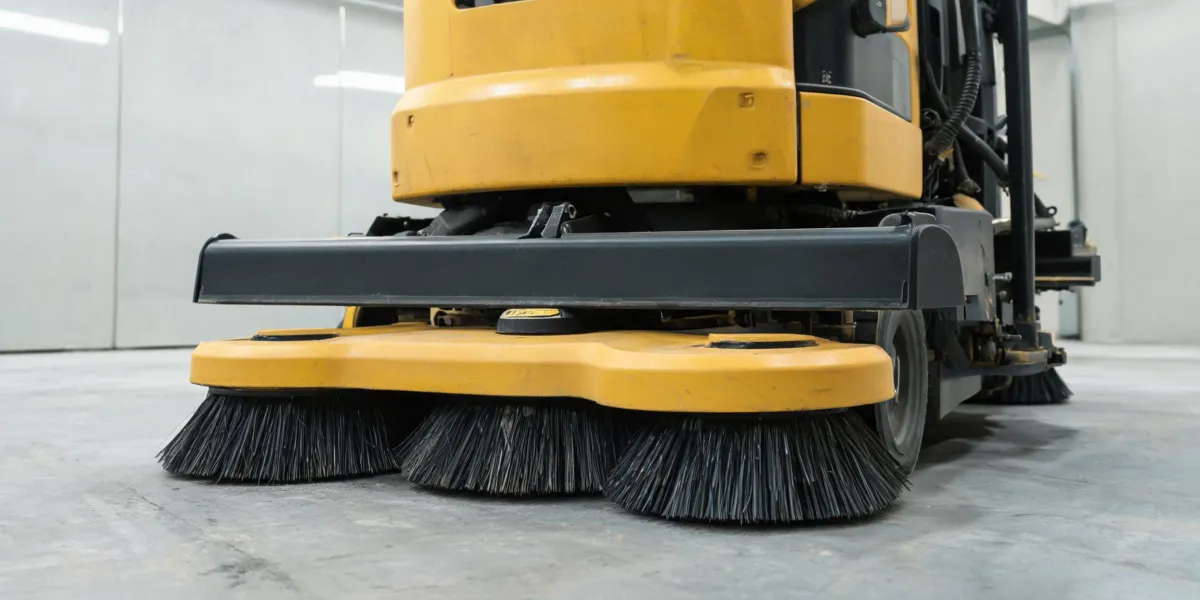
If you push a broom and the stuff that comes off the floor is dry, start with a dust floor sweeper. That includes dust from cardboard, sand tracked in from trailer yards, loose fibers, sawdust, and dry spills. A dust floor sweeper brushes debris into a hopper and uses a filter to keep dust out of the air. It does not need water, and you do not have to wait for the floor to dry.
From the outside, a bigger machine with water looks more capable. The reality is that a scrubber can make a dry dust condition worse by turning dust into mud in the squeegee.
I remember renting a scrubber for a storage warehouse that was mostly dust. The machine worked, but it left water lines and the crew had to wait before they could walk on the floor. A dry sweeper solved the real problem in about one third of the time.
If you only have dry contaminants, I would not let anyone sell you a scrubber yet. Sweep it dry first. That is the honest starting point.
2. Grease, tire marks, and sticky stains: look at floor sweeper scrubbers
Now we are in a different world. A dry sweeper will not remove an oil film, black tire marks, or sticky syrup residue. If your floor has that kind of buildup, you need chemicals, scrubbing pads, and a vacuum system to pull the dirty water off the floor. That is where floor sweeper scrubbers earn their keep.
One thing that surprises first-time buyers: floor sweeper scrubbers still need to be used in the right order. If the floor has loose cardboard boxes or heavy packaging debris, you or the machine may need to remove those solids before scrubbing. Otherwise, large pieces get dragged across the pad and leave streaks.
I helped a small machine shop near Brookfield with this exact issue. Their aisles were narrow, and a huge ride-on scrubber would have been dangerous around the CNC machines. A compact floor sweeper scrubber that could turn in the aisle made more sense. The shop rented one first and bought only after confirming it fit.
If your floor has oil stains and rubber marks, that is not a job for a dust broom. That is a job for scrubbing chemistry and a machine that can rinse and recover.
3. Occasional scrubbing? Rent one and do not apologize
Here is the hardest lesson for people who hate monthly expenses: if you only need a floor scrubber a few times per year, rent it. Some of the best warehouse floor scrubber rental Brookfield has to offer are compact walk-behind units, not oversized ride-ons. A one-week rental before an audit can be cheaper than the battery replacement alone on an owned machine that sits idle.
If you are trying to decide, calculate roughly how many hours you will actually use the machine each year. If the number is under fifty, I would rent or hire a contract cleaning crew. If you are using it every day, owning makes more sense. In between, rent before you buy and track how often you reach for it.
A quick thought about small customers: some vendors seem to treat a one-time rental or a small parts order as a nuisance. That never made sense to me. My first orders were small, and I still remember the companies that answered those small questions with respect. Several of them later received much bigger orders from us.
Do not be embarrassed about renting. Rent is a tool, not a failure.
4. Already own the equipment? Get the factory-cat GTX parts manual straight before ordering parts
A lot of people search for new machines when they actually have a maintenance problem. If you own a Factory-Cat GTX or another sweeper, the parts manual is your first checklist. Before you order anything by photo, search for the factory-cat GTX parts manual that matches your serial number.
I learned this the hard way. In 2023, I ordered a replacement brush by appearance. It looked identical in the online photo. It was not identical when it arrived. The price difference mattered less than the downtime: we waited another week because I did not verify the part number from the manual. If I remember correctly, the total loss was around $180, but I remember the delay more clearly.
What most people do not realize is that parts manuals are not only for repairs. They are planning documents. If you can see which brushes, filters, and squeegee blades the machine takes, you can order replacements before a small issue becomes a full work stoppage.
Another advantage: Factory-Cat support is concentrated around Wisconsin and Kentucky, so if you are in the Brookfield area, local parts access can be fast. But support people still need the right information from you. Give them the model and serial number. Have the manual open. That turns a guess into a confirmed order.
Which one is actually your situation?
I use three questions before I recommend anything.
- Sweep one section by hand. Does the floor look clean after dry sweeping, or are there oil stains and sticky marks left behind? If dry debris is the only issue, look for a sweeper.
- Look at your calendar. How many times in the last year did you deep clean the floor? If the answer is only a handful, start with rental.
- Measure your aisles and doorways. A wide ride-on scrubber will not fix the problem if it cannot turn around where the dirt is.
If you still cannot decide, rent the smaller machine for one week. Watch the operators. Ask them if it made the shift easier. If they ignore the machine and it stays parked in the corner, that is your answer.
Bottom line: no floor cleaning machine is good if it does not solve a problem you actually have. A dust floor sweeper that gets used daily beats a large scrubber that only gets attention when someone checks the budget. Start with the floor condition, not the brochure.

Leave a Reply