-
Here's the Answer First: In Toronto, Pick Your Parts Channel Before You Pick the Scrubber
-
Why I Get Asked About This
-
The Spec Nobody Compares: Parts Lead Time vs Tank Capacity
-
When a Cordless Walk-Behind Is the Right Call
-
Factory Cat vs Aztec vs the Rest: How I'd Actually Compare Them
-
When This Approach Doesn't Apply
Here's the Answer First: In Toronto, Pick Your Parts Channel Before You Pick the Scrubber
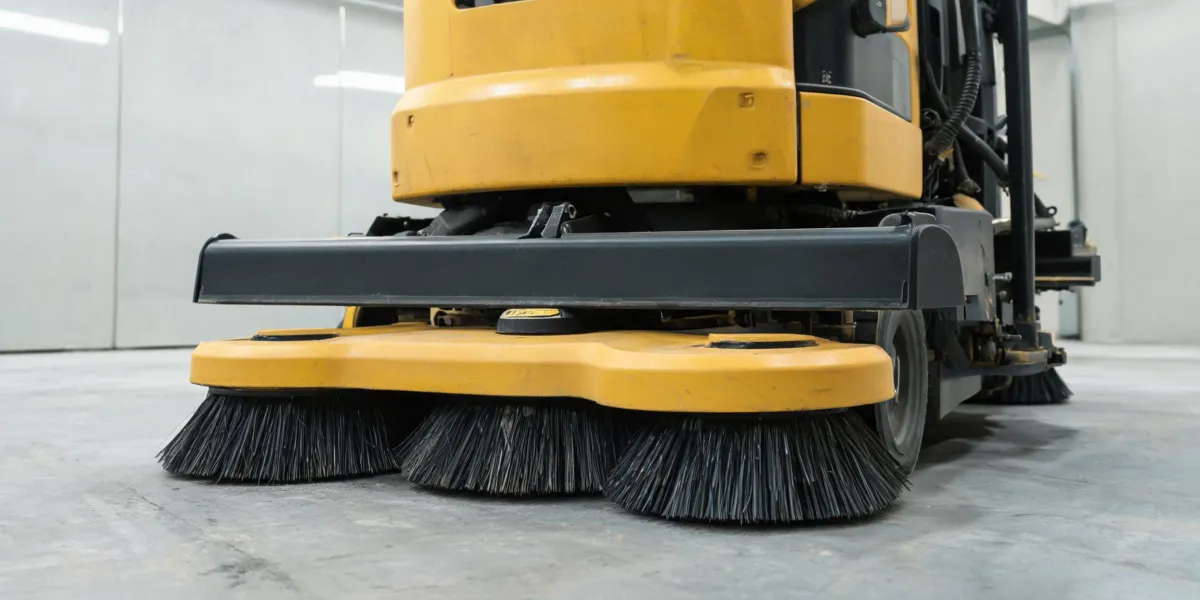
If you're specifying a Toronto floor scrubber and the first thing you're comparing is battery runtime or cleaning path width, you've got the order backward. The three questions that actually decide your total cost of ownership are: can I get parts within 72 hours, who services the machine, and will it survive Toronto road salt tracked in from November through March? Only after those have answers does comparing a Factory Cat 34 to a cordless walk-behind make sense.
Using that filter, most GTA facilities in the 5,000–80,000 sq ft range end up with a rider or large walk-behind from the Factory Cat family as the primary machine. Cordless walk-behinds win in narrow, low-square-footage scenarios. Aztec is a legitimate second option when local stock and budget are the deciding factors. The machine on the spec sheet is rarely the reason a facility regrets its purchase — the parts channel is.
For context on why downtime matters operationally: OSHA 29 CFR 1910.22 requires walking-working surfaces to be kept clean and dry. A scrubber that's down for a week isn't just an inconvenience — it's a compliance and slip-risk issue. Source: osha.gov.
Why I Get Asked About This
I'm a quality and brand compliance manager at a commercial equipment distributor. My job is reviewing deliverables before they reach customers — roughly 220 items annually, ranging from full scrubber systems down to single gasket orders. In our Q1 2024 audit I rejected about 12% of first deliveries, and the single most common defect was mislabeled parts compatibility, not machine quality.
Two experiences shaped how I spec floor equipment now. The first: a quote that listed a drive motor assembly as "3–5 days" — it arrived in 19 because a squeegee pivot was sitting in a Kentucky warehouse. The second: I didn't ask about local technician response time before signing a service agreement. That mistake cost us a client who ended up replacing us after one night-shift breakdown. A $1,800/month service contract gone over a question I just didn't ask.
Every spec sheet we send now includes a parts lead time. Not "in stock" — an actual number of days from a specific warehouse to a specific facility.
The Spec Nobody Compares: Parts Lead Time vs Tank Capacity
Every buying guide you'll read leads with tank capacity, cleaning width, and battery runtime. Those matter. But in practice, the number that decides your uptime is the distance between your machine and the nearest parts warehouse, and that's something most spec sheets don't tell you.
Here's the part that surprised me: a bigger brand name often means a slower parts channel, not faster. Larger brands run multi-tier distribution — regional depot, provincial warehouse, then local dealer — and each layer adds a day or two of buffer. Smaller brands that ship factory-direct can actually move a squeegee blade faster than a national brand can. In one case I tracked, a squeegee blade from a manufacturer's Kentucky warehouse reached a Toronto facility in 4 days; the same week, a comparable part from a Canadian distributor quoted 11 days.
I don't have hard data on scraper blade failure rates across brands. What I can say anecdotally, after four years of orders, is that squeegees and squeegee pivots are the parts that take machines off the floor most often — more than motors or pumps. So the lead time on a $40 pivots is the number that actually drives your cost-per-hour of downtime.
When I started in this role I assumed battery chemistry would be the failure point on most machines. It isn't. It's rubber and pivots — the cheapest parts on the machine, and the ones nobody stocks locally.
When a Cordless Walk-Behind Is the Right Call
Cordless walk-behind floor scrubbers work well in retail, clinics, and restaurants — no cord management, low noise, minimal operator training. If your floors need 30–60 minutes of scrubbing a day and you don't have long continuous corridors, it's a reasonable pick.
The part that's badly underestimated: battery degradation and replacement cost. Most cordless units lose noticeable runtime somewhere between 18 and 30 months, and an OEM replacement battery can run a third of the machine's original price. For facilities using scrubbers as production equipment — warehouses, logistics hubs, plants with large hard-floor areas — that math stops working. Cordless is a light-duty, non-continuous tool. Anyone telling you a cordless walk-behind replaces a rider either hasn't run the total cost of ownership or is selling cordless machines.
Factory Cat vs Aztec vs the Rest: How I'd Actually Compare Them
Aztec has GTA distribution and typically prices below Factory Cat, with strong parts commonality on older walk-behind models. If budget is tight or you need a backup machine with local stock, Aztec is a fair second option.
Factory Cat's strengths are consistent across three areas: model coverage (34, XR, Magnum, Micro HD — a wide enough spread to match facility size instead of forcing a fit), error-code support and manual availability, and the factory parts shipping path I described earlier. The trade-offs are also clear: it's not the cheapest option on the market, and lead times on certain models can run longer than a locally stocked Aztec. If you need a machine running this week, a stocked Aztec may beat a Factory Cat you have to wait on.
What I won't do is rank brands in the abstract. "Which is better" isn't a real question. The real question is which specific model, in your building, with your usage pattern, has a parts and service path you can actually rely on. I've seen all three categories — Factory Cat, Aztec, cordless — work well, and I've seen each of them fail for a buyer who never asked where the parts come from.
When This Approach Doesn't Apply
If your space is under 3,000 sq ft, or if most of your floor is polished concrete or epoxy that needs careful handling, a rider scrubber may be too much machine — a cordless or small walk-behind is the better fit. If your budget is under $4,000 and you can't wait, used equipment or a rental program is the honest answer. Don't force a new machine into a number that can't hold it.
One more exception worth naming: if your facility doesn't have anyone who'll actually maintain the machine — squeegee changes, filter cleaning, battery checks — a rider can become a liability rather than an asset. In that case, outsourcing the floor cleaning is often the cheaper decision. I don't have solid data on industry-wide defect rates, so I won't claim one machine is more durable than another. But from what I've reviewed over four years, far more downtime comes from skipped maintenance than from manufacturing defects.
And a note on small orders: don't assume you're too small to expect good service. Starting with a rental or a used walk-behind to test your workflow before committing to a new rider is a completely legitimate path. If a supplier won't return a call on a single-machine quote, that's a red flag — and it has nothing to do with how much you're spending. Small doesn't mean unimportant. It means potential.

Leave a Reply