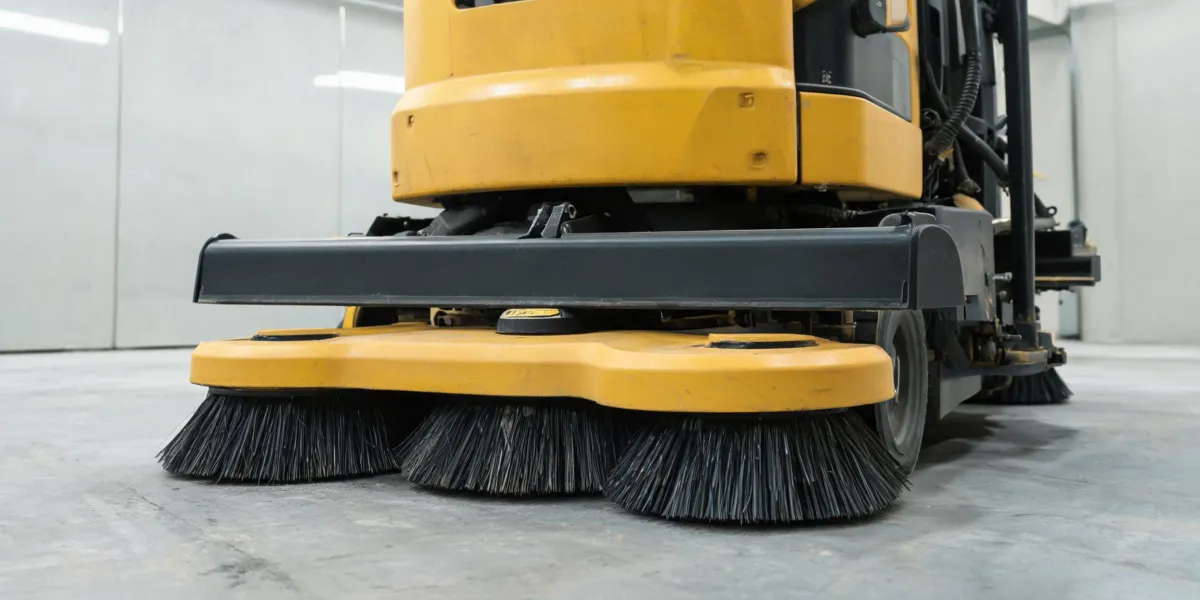
There's No Single Best Factory Cat — It Depends on Your Situation
I've coordinated emergency equipment orders for industrial facilities for about six years now. In that time, I've handled somewhere north of 400 rush requests — everything from a single replacement squeegee blade to a full ride-on sweeper delivered across state lines in 48 hours.
Here's what I've learned: the question "Which Factory Cat should I buy?" doesn't have one answer. It has three, depending on which scenario you're in.
Before you call anyone, figure out which of these three situations matches yours:
- Scenario A: Your machine died. Production is at risk. You need something running this week.
- Scenario B: You've been planning a replacement. You have a few weeks, maybe a month, to decide.
- Scenario C: You're expanding or standardizing a fleet. No fire, but the clock is ticking.
Most buyers skip this step and jump straight to price comparison. That's usually where the expensive mistakes start.
Scenario A: The Machine Just Died
This is the phone call I get most often. A facility manager in Beloit or New Berlin calls at 6:45 AM. The ride-on scrubber threw an error code overnight, the floor crew is standing around, and there's a client walkthrough at 2 PM.
In this scenario, speed beats optimization. Every hour your floor crew isn't working is a real cost — labor sitting idle, overtime later, or a compliance problem if it's a food-grade or healthcare facility.
What actually works here:
- Call the regional service network first. Factory Cat's parts and service concentration in Wisconsin and Kentucky isn't marketing fluff — it means a dealer in New Berlin can often get you a loaner or a replacement unit faster than anyone else in the region. I've seen same-day swaps on a Factory Cat Mini HD when the facility was within about 90 minutes of the dealer.
- Consider a used unit, but only from a dealer who'll stand behind it. A used Factory Cat floor scrubber in New Berlin from a regional dealer usually comes with some service history. From a random online listing, it's a gamble. I've watched two clients learn this the hard way in 2023 — one saved $2,800 upfront, then paid $3,400 in repairs within six months. The other paid more and had zero downtime.
- Match the machine to the actual floor area you need cleaned today, not your ideal fleet. If your 5,000 sq ft warehouse is down, you don't need to replace the 40-inch ride-on. A 26-inch walk-behind gets you through the walkthrough.
One thing to watch: error codes aren't always fatal. I've seen three cases where a "critical fault" was a clogged filter or a loose battery terminal. If you have a manual (and Factory Cat manuals are widely available), spend 15 minutes before you spend $15,000.
Scenario B: Planned Replacement, Real Deadline
This is where the decision gets more interesting. You've known for a while the old Advance or Tennant is on its last legs. You've got maybe 30-60 days. You want to do this right.
In this scenario, total cost of ownership should drive the decision, not the sticker price. I know that sounds like something a salesperson says, so let me make it concrete.
Take a professional floor sweeper comparison. A new entry-level ride-on might quote at $18,000. A used Factory Cat ride-on sweeper in comparable condition might be $11,000. On paper, the used unit saves $7,000. But now add:
- Parts availability (Factory Cat's regional concentration helps here)
- Service response time (a dealer two hours away vs. one eight hours away changes the math fast)
- Expected remaining battery life (a used electric unit at 3 years old may need a $2,500 battery pack within 12 months)
- Downtime cost per day (I've seen facilities where one day of downtime costs more than the entire machine)
When I ran this comparison for a client in Q4 2024, the used unit was still the better call — but the gap was $1,200, not $7,000. That's a very different decision.
One counterintuitive thing I've found: wholesale floor sweeper pricing isn't always better than regional dealer pricing when you factor in freight and setup. If you're buying one or two units, the freight cost on a wholesale order can erase the discount. Wholesale makes sense at fleet scale (5+ units), not for a single replacement.
For Scenario B, the Mini HD floor scrubber is often the sweet spot. It's small enough to maneuver in tight aisles but built for industrial duty cycles. If your facility is under 15,000 sq ft with mixed floor types, it's probably the right machine.
Scenario C: Fleet Expansion or Standardization
This is the scenario where wholesale pricing and regional service concentration actually compound in your favor.
You're not replacing one machine. You're either adding capacity (new facility, new contract) or standardizing a mixed fleet (I've seen facilities running four different brands across six buildings — a maintenance nightmare).
In this scenario, the questions change:
- Can one dealer support all your locations? If you're operating in Wisconsin and Kentucky, a dealer with parts and service in both states is worth more than a 5% price difference. Parts availability is the hidden variable that kills fleet standardization projects.
- Do you standardize on one model or one brand? Standardizing on one brand (Factory Cat, in this case) gives you parts commonality and service familiarity. Standardizing on one model is more restrictive but simplifies training and consumables. Most midsize facilities I've worked with standardize at the brand level.
- What's the error code support look like? This matters more than people think. A fleet of six machines will generate roughly 3-4 error events per quarter. If your team can't clear them without a service call, you're paying $200-400 per incident. Factory Cat's manual availability is genuinely better than some competitors here.
For fleet buyers, the ride-on floor sweeper in Beloit and the surrounding region typically comes through a regional dealer, not a national distributor. That's not a limitation — it's usually an advantage on service response time.
How to Tell Which Scenario You're Actually In
Here's the honest part: most people misclassify their own situation. They think they're in Scenario B because they've been "thinking about it," when really they're in Scenario A with a slower-moving crisis.
Ask yourself these three questions:
- What happens if I do nothing for 30 days? If the answer involves production stoppage, compliance risk, or a client complaint — you're in Scenario A. If the answer is "we keep limping along," you're probably in B. If the answer is "nothing changes," you're in C.
- How many decision-makers need to approve this? One person (you) = Scenario A speed. Two or three = Scenario B timeline. A committee or capital budget cycle = Scenario C.
- Do you know your floor area, floor type, and daily runtime? If you don't know these numbers, you're in Scenario B at best. Scenario A buyers usually know exactly what they need because they're replacing something specific.
The Mini HD floor scrubber comes up most often in Scenario B. The used Factory Cat floor scrubber market in New Berlin is most active in Scenario A. And whole-fleet wholesale conversations belong in Scenario C, almost exclusively.
My experience is based on roughly 400 rush and planned equipment orders across industrial and commercial facilities in the upper Midwest. If you're working outside that region, or with very small facilities (under 5,000 sq ft), your experience might differ — regional service density changes the math significantly.
The one thing that holds true across all three scenarios: the lowest quote almost never turns out to be the lowest total cost. Not because cheap equipment is bad, but because the costs you don't see upfront — downtime, freight, service response, parts lead time — have a way of showing up later, often all at once.

Leave a Reply