-
My Rule: Never Quote the Cheapest Option First
-
Reason 1: Parts Availability Is the Price Tag Nobody Shows You
-
Reason 2: The Wrong Machine at a Great Price Is Still the Wrong Machine
-
Reason 3: Compatibility Specs Are Where Cheap Quotes Hide
-
"But What About My Budget?"
-
What I'd Actually Tell You to Do
-
The Bottom Line
My Rule: Never Quote the Cheapest Option First
I've spent eleven years in the industrial floor care space. Four years in parts distribution, seven in emergency order coordination. When a facility manager calls at 6 PM on a Friday because their only floor scrubber just died and the health inspector shows up Monday at 7 AM, I'm the person on the other end of that call.
Here's what a decade of those calls taught me:
The lowest quote is almost never the lowest cost. In industrial floor scrubbers, the machine priced at $3,000 less upfront can easily cost $9,000 more over three years — and that's before you factor in downtime.
I'm not saying this to justify expensive equipment. I've just watched it happen too many times to ignore the pattern. And it holds across almost every brand, model, and facility I've dealt with.
Here's why.
Reason 1: Parts Availability Is the Price Tag Nobody Shows You
When you buy a floor scrubber, you're not buying a machine. You're buying into a parts ecosystem.
A client of mine — a mid-sized distribution center — was comparing two scrubbers in 2023. The cheaper one won on paper. Similar specs, $2,800 less. The spreadsheet said go.
My gut said slow down. I couldn't pinpoint why at first. The vendor was just... evasive. Replies took three days. Follow-ups disappeared into a black hole.
So I told him to ask two questions before signing: Where do replacement parts ship from? What's the typical lead time?
Answer: overseas. Six to eight weeks.
He passed. We went with a Factory Cat floor scrubber instead. Parts ship from hubs in Wisconsin and Kentucky.
Fourteen months later, the cheaper machine — the one his buddy ended up buying — cracked its squeegee assembly. Eleven weeks without a replacement part. Eleven.
That $2,800 in savings? Gone in three weeks of emergency floor mopping. By week six, the facility was paying overtime for manual cleaning. By week eleven, that 'budget' machine had cost more than the Factory Cat would have.
This is why I ask about parts before I ask about price. Where are the hubs? What's the lead time on consumables? Is there a published parts catalog with model-specific SKUs?
For Factory Cat 34 parts specifically, the catalog is detailed enough that I can look up a brush or squeegee blade by model number and give a real ETA. That sounds boring. It's the most useful thing I do all day.
Reason 2: The Wrong Machine at a Great Price Is Still the Wrong Machine
I've watched this mistake burn more people than any other.
A facility manager needs a grout floor scrubber for a tile-heavy environment. He buys a general-purpose scrubber at a great price. Six months later, grout lines are still dark, his team is frustrated, and he's calling me to buy a second machine. Now he's out the full cost of the first scrubber plus the cost of the right one.
Grout floors need different brush pressure, different water flow, sometimes different brush material. A machine that doesn't match those specs isn't a bargain — it's a rental you paid full price for.
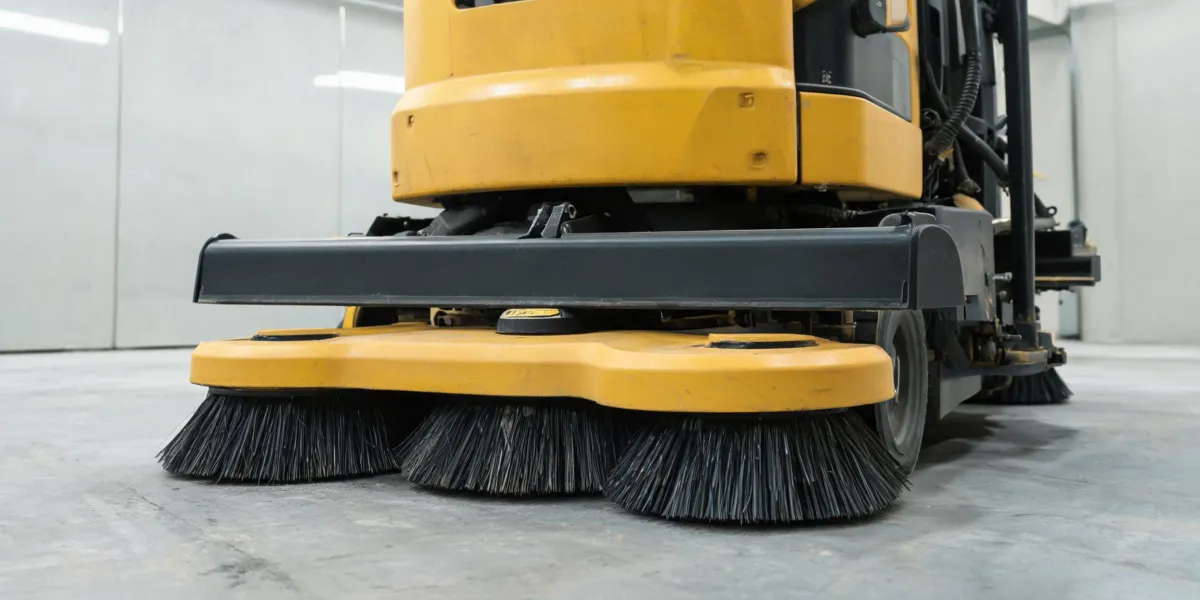
Same logic applies to floor sweeper brushes. Too stiff, you scratch the floor. Too soft, you leave debris behind. Most people don't think about brush durometer until they've already damaged $40,000 worth of flooring.
I'm not saying buy the most expensive option. I'm saying buy the right one. And the quote sheet doesn't tell you whether a machine matches your floor. You have to ask.
Reason 3: Compatibility Specs Are Where Cheap Quotes Hide
This one surprises people the most.
I once had a client ask for the best floor scrubber that connects to a water hose. He assumed every scrubber could do that. He'd already ordered one that technically could — but the hose port was behind a panel secured by four screws. Every time his crew wanted to hook up a hose, they had to partially disassemble the machine.
He returned it. Ate a restocking fee. Lost two weeks.
Not every scrubber has a standard hose fitting. Some use proprietary connectors. Some have tanks too small to make a hose connection practical. Some have a port that technically exists but is placed so awkwardly that nobody uses it. None of this shows up in the marketing photos.
That's the hidden cost of a 'good deal.' It's not just money. It's time, hassle, and the slow erosion of trust your team has in their equipment.
"But What About My Budget?"
This is the pushback I get every single time. And I get it. Facility budgets are fixed. You have a number and you have to hit it.
I'm not telling you to ignore your budget. I'm telling you to look at it differently.
You're not buying a floor scrubber. You're buying clean floors for the next 5-7 years. That's the product. The machine is just the delivery vehicle.
When you frame it that way, the question changes. It's not 'which machine costs the least?' It's 'which machine keeps my floors clean at the lowest total cost of ownership?'
Honestly, I'm not sure why some facility managers still fall for the low-bid trap. My best guess is that it's a reporting problem. A $12,000 purchase order is visible. A $9,000 repair bill spread across six months of downtime is not. The cheaper quote looks better on the quarterly report. The more expensive machine looks better in the building.
Here's the thing, though: most clients who fight me on this eventually come around. Not because I convinced them. Because they got burned once and remembered.
What I'd Actually Tell You to Do
If you're shopping for a floor scrubber right now, do these five things before you sign anything:
- Ask for the parts catalog. Not a brochure — the actual parts list for your specific model. If they can't produce it, that tells you something.
- Ask where the nearest parts hub is. If the answer involves a shipping container and a customs form, factor in 4-8 weeks of potential downtime.
- Ask if the machine matches your floor type. Grout, concrete, epoxy, tile — they all have different requirements. Bring a floor sample if you have to.
- Ask about hose connections and brush specs. Confirm the fitting type, port location, and brush durometer before purchase. Not after.
- Do the downtime math. Take the price difference between the cheap machine and the right machine. Divide by your hourly labor cost. That's how many hours of downtime it takes to break even. It's usually fewer than you think.
This was accurate as of Q4 2024. Factory Cat's parts pricing and availability can shift seasonally, and the industrial floor care market changes fast, so verify current specs before you commit to anything.
The Bottom Line
I don't care if you buy a Factory Cat. I care if you buy the right machine for the right reasons.
The cheapest quote on the table is almost always the one hiding something. Maybe it's a slow parts channel. Maybe it's an incompatible brush. Maybe it's a hose port behind four screws.
Ask what's not included. Then ask what it'll cost you when that thing breaks.
The answer usually changes the quote.

Leave a Reply