-
What this comparison is really about
-
Comparing apples to apples: XR40 vs. the rental fleet
-
Dimension 1: What does each option cost per year?
-
Dimension 2: Downtime and emergency response
-
Dimension 3: Abrasive floors and dust collection
-
Dimension 4: Parts, service, and the hidden rental tax
-
When to choose the Factory Cat XR40
-
When the rental is the smarter call
-
Bottom line
What this comparison is really about
I'm the person who gets called when a facility has to clean up fast—usually before an audit, a visit, or a safety complaint. In my role coordinating floor scrubbers, sweepers, and parts at an industrial equipment company, I've arranged same-day turnarounds and I've watched plans fall apart. Most of the time, when a facility manager calls me about a large area floor scrubber rental, the real question isn't what to rent. It's whether to rent at all.
A phrase I hear from maintenance guys is “long day Factory Cat”—shorthand for a machine that's still running when everyone else is done. That idea sticks with me. But whether it makes sense for your building comes down to how often your floors get dirty, not just how dirty they get.
This comparison is between owning a Factory Cat XR40 and renting a large-area scrubber when you need one. I'll use numbers from real quotes we've handled, and a few estimates where I don't have hard data.
OSHA's walking-working surfaces standard (29 CFR 1910.22) requires floors to be kept clean, dry, and free of hazards. That's the reason most of these phone calls happen in the first place. (Source: osha.gov)
Comparing apples to apples: XR40 vs. the rental fleet
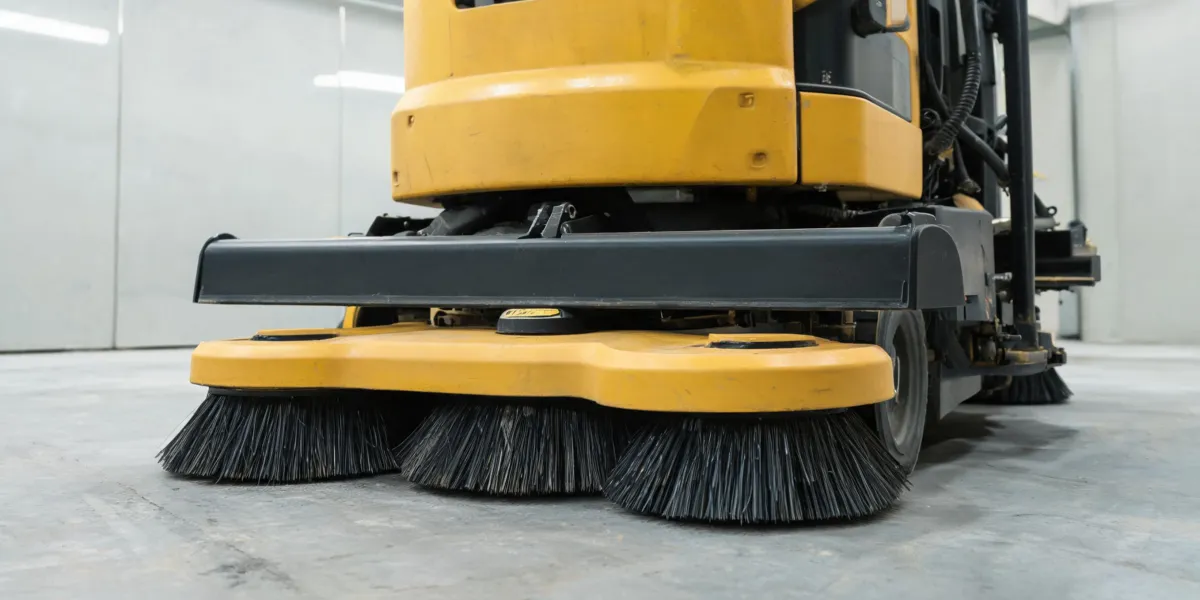
The Factory Cat XR40 is the model we spec most often for large facilities. It's a ride-on machine designed for daily production floor cleaning. The rental option I'm comparing it with is the typical ride-on scrubber from an industrial equipment rental company—usually a 36- to 40-inch machine. Don't hold me to that range, but it matches the units I see in the Midwest.
I'm not going to pretend rental is a bad choice. I've recommended it many times. But I've also seen facilities pay more over two years than they would have spent on a new machine. The problem isn't choosing one or the other. It's choosing without a clear picture of your cleaning schedule, your floor condition, and what happens when the equipment fails.
Dimension 1: What does each option cost per year?
Here's the number that surprises people. Based on quotes from regional equipment suppliers in the Midwest, January 2025, a large ride-on scrubber rental runs about $900 to $1,500 per week. That does not always include delivery, batteries, or pads. If you rent for a two-week deep clean every quarter, that's $7,200 to $12,000 a year. If you rent monthly, it's $10,800 to $18,000 a year.
An XR40 is a bigger upfront number. But if you own it, the weekly cost becomes labor, charging, and routine maintenance. I don't have hard data on national averages, but in my experience, a facility that rents a ride-on scrubber more than 10 or 12 times per year gets close to the cost of ownership. The math varies with your local rates and which options you need, but the pattern is consistent.
And don't forget the cost of the rental process itself. We had one customer rent a machine for a full season—maybe 14 weeks, I'd have to check the invoice—before they realized they'd spent roughly 60% of the price of a new XR40. They still rent, but now they know the real number.
Dimension 2: Downtime and emergency response
This is where my job gets interesting. If a facility loses its scrubber on a Tuesday and the floor needs to look good by Friday, a rental can be the fastest fix. But there's a catch: same-day large area floor scrubber rental is rare. I had a facility contact us at 4:30 on a Thursday needing a machine by Saturday morning. We found one two hours away, paid an extra $400 for transport, and the truck arrived without a charger. Looking back, I should have confirmed the charger and battery condition before dispatch. The emergency got solved because a neighboring plant loaned us a charger—but we lost half a day.
The conclusion here is not that rental is bad. It's that rental is only reliable if you verify the actual machine before it ships. In my opinion, owning the XR40 is more reliable for recurring needs because you know the history, the battery charge, and the maintenance state. A rental is a gamble—sometimes a good one, but still a gamble.
Dimension 3: Abrasive floors and dust collection
Let's talk about the floor itself. If your concrete is smooth and sealed, almost any ride-on scrubber will make it look decent. If your floor is abrasive—old concrete, exposed aggregate, or a coating that's worn through—the comparison changes. You need a machine with enough brush down pressure to pull dirt out of the surface, and a recovery system that can handle heavy grit. That's what I mean by an abrasive floor scrubber. A rental unit set up for average conditions might not get it clean. You'll run it, look at the floor, and run it again.
The same goes for fine dust. If your process creates concrete dust, cement dust, or bagging dust, you need a dust collector sweeper before the scrubber. Scrubbing wet over a layer of dry dust creates mud and drags it across the floor. I wish more facilities realized that before buying or renting. A Factory Cat XR40 can be set up with dust-control options or used alongside a dedicated sweeper. A rental often doesn't give you that choice.
Put another way: if your problem is dust, you're not shopping for a scrubber. You're shopping for a sweeper. If your problem is abrasive, worn concrete, you're shopping for down pressure. The decision between rental and ownership matters less than matching the machine to the contaminant.
Dimension 4: Parts, service, and the hidden rental tax
In my role, I see the after-sale side of equipment. With a Factory Cat, parts lookup is straightforward. You can get the model number, find the manual, order the right part, and have it shipped to Wisconsin or Kentucky in a day or two. The machine history is documented. You know what was replaced and when.
With a rental, you get whatever the previous renter left behind. I've seen machines delivered with pads worn down to the fiber, with the wrong pad driver for the floor type, and with battery gauges that read full but weren't. The third time that happened, I finally created a pre-rental checklist for our customers. It should have been obvious: check the pads, check the squeegee edge, check the charger connection, run the machine for five minutes before signing the paperwork.
This is not a knock on rental companies. It's a warning about the hidden cost of rental. The invoice shows the daily rate. What it doesn't show is the hour your crew spends getting familiar with a new machine, the hour spent re-cleaning a section, or the 30-minute wait for someone to answer a service question. On a short timeline, those hours are the real expense.
When to choose the Factory Cat XR40
There's no magic square-footage number, but in my experience the math starts to make sense when your floor is cleaned at least once a week, your facility is above roughly 80,000 square feet, or your floor is abrasive and needs consistent brush pressure and dust control. You also benefit from owning if you want the same machine, same parts, and same setup every time.
If those fit, the XR40 is worth a real quote. The rental costs show up on your P&L either way; ownership just moves the line from 'rent and equipment' to 'depreciation and maintenance.'
When the rental is the smarter call
- Rent if you need a machine only after construction, for a seasonal deep clean, or while your main machine is being repaired.
- Rent if your floor is sealed, smooth, and not that dirty.
- Rent if you're not sure whether a ride-on scrubber will actually fix your floor condition. A short rental is a low-cost trial compared with a capital purchase.
This is where context matters. This advice is based on the manufacturing and warehouse facilities I work with in the Midwest. If your operation is different—say, a distribution center with a new sealed slab and a light cleaning schedule—the rental calculus is different.
Bottom line
If you ask me, the real comparison isn't Factory Cat XR40 against every rental machine ever made. It's what the next 12 months of your floor look like. If you're cleaning weekly, the rental costs add up faster than people expect. If you're cleaning twice a year, the rental is the right answer. And if you're facing a real emergency, just remember: a rental is not a solution until you've verified the machine actually works. After a long day, Factory Cat is the name that gets mentioned affectionately by maintenance crews. But the best machine for you is the one that's ready when you need it—owned or rented.

Leave a Reply