-
Don't Let 'Ultra Compact' Fool You
-
Why the Squeegee Is the Machine
-
The Attachment Is Not an Afterthought
-
The 'Ultra Compact' Trap
-
What to Ask Before You Buy Floor Scrubber Squeegees
-
A Word on Aftermarket Squeegee Blades
-
The Green Squeegee Claim: Ask for Evidence
-
When a Vendor Says 'We Don't Do That,' That's a Green Flag
-
The 4:15 A.M. Test
-
So What Should You Actually Buy?
Don't Let 'Ultra Compact' Fool You
I don't care if a floor scrubber is ultra compact. There, I said it.
I'm the quality and brand compliance manager at Factory-Cat. I review every machine that goes out the door—roughly 200 unique items a year. Maybe 180; I'd have to check the log. In 2024, I rejected 7% of first deliveries, mostly due to squeegee alignment. That doesn't make me popular in the shop. It does make me the person you want reading over the specs before you spend money on a scrubber.
The label 'ultra compact' tells you the machine is small. It does not tell you the machine cleans well. And cleaning, not footprint, is the entire point.
Everything I'd read about compact scrubbers said smaller is easier in tight aisles. My experience with hundreds of units suggests otherwise. A compact machine with a badly matched squeegee leaves a wet film, and a wet film is a liability. A larger platform with the right floor scrubber attachment can handle a tight corner just as well, because the attachment is doing the hard work.
Why the Squeegee Is the Machine
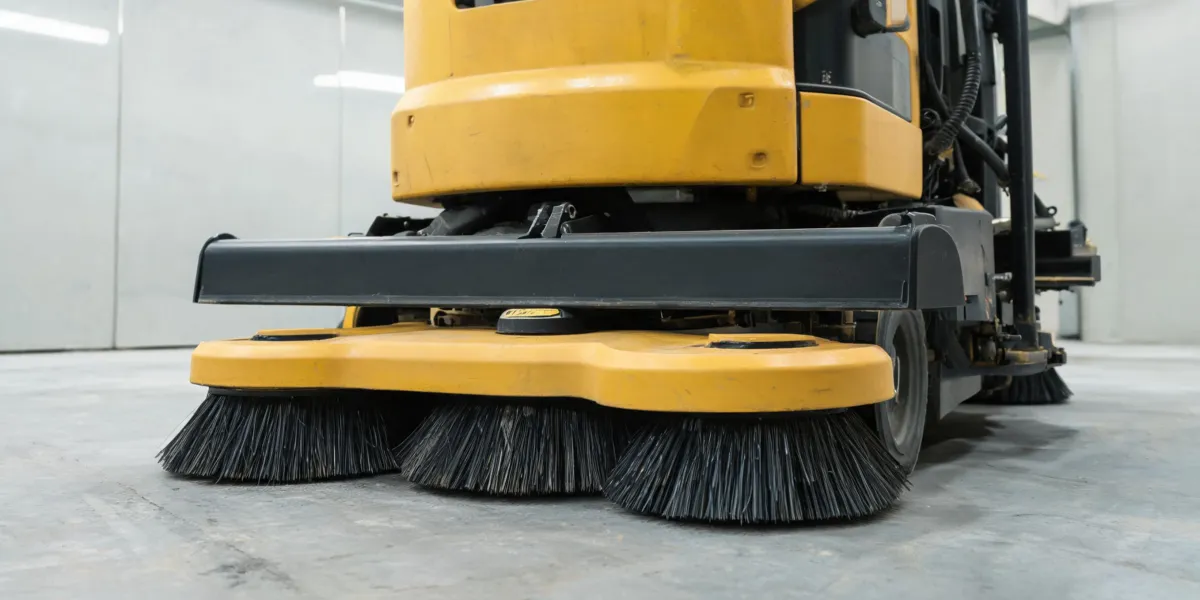
Floor scrubber squeegees are the last thing that touches the floor. If the blade isn't straight, if the down pressure is wrong, or if the durometer is too firm for the floor surface, the machine can scrub perfectly and still leave water, soap film, or a narrow dry lane.
In our Q1 2024 quality audit, we caught a shipment of 'universal' squeegees that were off by 1/16 inch on one end. Normal tolerance is 1/32 inch. The vendor said it was within industry standard. I told him our standard was the spec. We rejected the batch, and they redid it at their cost. Now every contract includes a detailed edge-contact requirement.
People ask why I'm so particular. It's because a squeegee failure isn't a small fail. It turns a $25,000 machine into a mop. Period.
One more thing: blades wear faster than most managers expect. In a high-traffic facility, a squeegee can start losing contact with the floor in four months. You can't see it with the naked eye, but the machine will leave a faint film. That film collects dust and becomes the next shift's slip hazard. A 15-minute check of the squeegee every week will save you a bigger problem later.
The Attachment Is Not an Afterthought
Most buyers look at model specs first—battery voltage, tank size, travel speed. I look at what the machine can mount. Can it accept the floor scrubber attachment that the job actually needs?
In the Factory-Cat lineup, the XR is the model I keep recommending. Not because it's flashy. Because the XR has been used with enough squeegee widths and attachment kits that we know exactly how it behaves. The specs are consistent, the parts are documented, and the error codes are available. For a facility manager or distributor, that predictability is worth more than a few inches of extra width.
I should add that this isn't a 'bigger is better' argument. The Factory-Cat 34 is a solid machine. The Magnum is there for larger square footage. The Micro HD gives you a true small footprint. But when someone asks which model I would put in front of a 50,000-square-foot plant, the answer is the XR. It's the balanced platform, and it's the one we can support fastest.
Don't buy a machine that can only use a single attachment width. If you have wide aisles and a narrow storeroom, you want the option to switch between a wider pick-up for the open areas and a narrower set-up for the corners. The XR supports that kind of flexibility. That is the practical meaning of 'floor scrubber attachment'—not an accessory, but a capability planner.
The 'Ultra Compact' Trap
Here's what the marketing doesn't say about an ultra compact floor scrubber: smaller tanks and narrower squeegees come with the territory. That means you stop more often to empty and fill. It means more passes through the same aisle. It means the machine is easy to store and inconvenient to run.
There is absolutely a place for compact machines. A small retail stockroom? Go compact. A convenience store with a tight back hallway? Sure. At least, that's been my experience with smaller commercial spaces. But if someone tells you 'ultra compact is always the answer,' they're selling the category, not the clean floor.
And don't get me started on water exchange. A small tank sounds fine until you realize that every time the machine stops for water, a person has to walk it to the nearest drain. In a big facility, that's not a minor stop; it's a labor event. The ultra compact category solves a storage problem but often ignores the operational problem.
The question isn't 'does it fit in the elevator?' The question is 'will it still clean well after it gets out of the elevator?'
What to Ask Before You Buy Floor Scrubber Squeegees
Before you order any squeegee blade, ask these three questions.
- What is the durometer? Softer blades conform to uneven floors, but they wear faster. Harder blades last longer, but they can skip on transitions.
- What is the exact edge profile? A rounded or beveled edge can change water pickup dramatically. If the supplier can't tell you, that's an answer.
- Is this model listed in the manufacturer's manual for your machine? A 'should fit' part is not a spec.
This is where Factory-Cat's manuals and error code support matter. A documented attachment is already tested. You are not the lab.
A Word on Aftermarket Squeegee Blades
I can already hear someone saying, 'But OEM parts are expensive.' True. And no-name blades are cheap for a reason. Since 2023, we've seen more failures from no-name universal parts than from used OEM parts. The failed parts weren't all defective on arrival—they just had no documented spec. If a supplier can't give you a dimensional drawing, a material composition, and a durometer value, you aren't buying a part. You're buying a hope.
That doesn't mean all aftermarket parts are bad. It means the paperwork has to come before the price tag. The upside of a cheap blade is maybe $30 in savings. The risk is a machine that leaves water right where a forklift turns. I know which one I would pick.
The Green Squeegee Claim: Ask for Evidence
If a supplier markets a squeegee or attachment as 'green' or 'recyclable,' the FTC Green Guides (16 CFR Part 260, via ftc.gov) say that claim has to be substantiated. You don't have to take their word for it. Ask for a datasheet. If the only evidence is a leaf icon on the package, that's a red flag.
The same logic applies to 'heavy-duty' or 'industrial-grade' labels. Proof is not optional. Not for a squeegee blade, not for an attachment, and not for a machine.
And remember, the lowest quoted price is never the full cost. Total cost of ownership includes the base price, freight, replacement parts, labor to install them, and the cost of a floor that isn't dry. I'd rather pay $15 more for a verified blade than explain to a production supervisor why their morning shift started late because of a wet patch.
When a Vendor Says 'We Don't Do That,' That's a Green Flag
One thing I've learned in quality is that a supplier with clear boundaries is safer than one who says yes to everything.
In 2021, a vendor told us a 'multi-surface' floor scrubber attachment would handle a floor with heavy expansion joints. It didn't. The failure cost us $22,000 in rework and delayed a launch. If they had been honest about the limitation, we would have picked a different attachment from the start. Instead, we lost $22,000 and a week of time.
That's why I respect a brand that says 'this isn't our strength.' Factory-Cat is a specialist. We focus on our machines, parts, and service hubs in Wisconsin and Kentucky. We are not the right answer for a nationwide autonomous fleet with 24/7 field technicians. If that's what you need, we should point you to someone else.
That honesty is a feature, not a flaw. The vendor who says 'this isn't our strength—here's who does it better' earns my trust for everything else.
The 4:15 A.M. Test
In April 2024, a facility manager called me at 4:15 a.m. They needed a replacement squeegee for a Factory-Cat machine, and the distributor said two different blades would 'probably fit.' I had 45 minutes to decide. Normally I'd run a water pickup test and measure the edge with a straight edge. There was no time. I went with the OEM listed part, because documentation beats instinct. In hindsight, I should have asked them to measure the old blade. But with a shift starting at 5:00, I made the best call with available information.
That might sound like a small thing. It's not. A bad squeegee on a 4 a.m. call can turn into a forklift incident by 6 a.m. I'll take the boring, documented choice over the clever shortcut. Every time.
So What Should You Actually Buy?
If you are searching for a factory cat floor scrubber for sale, stop starting with the word 'compact.' Start with the squeegee. Then the attachments. Then the service history. Then the model.
The Factory-Cat XR is the model that most often survives that checklist. Not because it's the biggest, or the smallest, or the flashiest. Because it is the most predictable. And predictability is the real feature.
Simple. Done.

Leave a Reply