The Day I Learned 'Cheap' Isn't Always Cheaper
It was a Tuesday in late September 2022. I was standing in a dusty warehouse in Janesville, staring at a floor scrubber that looked… off. The tank was dented. The label was a cheap sticker. The control panel had wires dangling.
I want to say I ordered it online from a private seller, but don't quote me on that. (Should mention: I'd been a facility manager for about 3 years at that point. Thought I knew enough. I didn't.)
The price was tempting: $1,800 for what was described as a "lightly used Factory Cat Magnum." A brand I'd heard of but never worked with. The seller was local—just outside Madison—so I skipped the usual due diligence. Big mistake. Huge.
What I Thought I Was Getting
In my head, this was a no-brainer. A used Factory Cat floor scrubber at half the retail price? For a 50,000 sq ft warehouse that needed daily cleaning? The math made sense. Or so I told myself.
I'd read somewhere that Factory Cat machines were modular—easy to repair, parts readily available. That was true, I later learned. But only if you're buying from an authorized dealer. Not a guy selling from a pickup truck behind a gas station.
Three things I didn't know then:
- The model number on the seller's listing was blurry. I assumed it was correct.
- The serial number was scratched off. I assumed it was just wear and tear.
- No manual was included. I assumed I could find one online. (I couldn't. Not for this Frankenstein.)
The $3,200 Mistake, Broken Down
The machine arrived on a Thursday afternoon. By Friday, I'd spent 4 hours trying to make it run. By Monday, I realized I'd been sold a collection of parts from three different models, assembled into something that barely resembled a floor sweeper.
Here's where it gets expensive:
- The scrub deck: Wrong size. Wouldn't fit our facility's aisles. Cost to replace: $450.
- The dust collector: Missing entirely. For a warehouse with fine dust from packaging? That's a health hazard. Aftermarket unit: $380.
- The batteries: Drained and damaged from improper storage. New set: $600.
- The error codes: None of them matched the manual I eventually found online. Why? Because the control board was from a 34, not a Magnum. Replacement: $320.
Total spent after the initial purchase: $1,900. Plus the original $1,800. Plus my time. Plus the embarrassment of explaining to my boss why we had a non-functional machine taking up space.
Period. That's it. I'd burned through nearly $3,200 and had nothing to show for it but a heap of mismatched parts.
The Moment Things Clicked
Around that time, I reached out to a parts supplier in Greenfield, WI—one that specialized in Factory Cat walk behind sweepers. I told them my story. The guy on the phone didn't laugh, but I could hear him smiling.
"You bought a salvage build," he said. "Not a used machine. There's a difference."
He explained that the real value of a brand like Factory Cat isn't just the machine itself—it's the standardization. When you buy a used Factory Cat from a reputable dealer (or even direct from the factory in Wisconsin or Kentucky), you get:
- A verified serial number that matches the model specs
- A real manual—not a photocopy or a PDF from a questionable site
- Access to OEM parts that actually fit
- Error code support that makes sense for your model
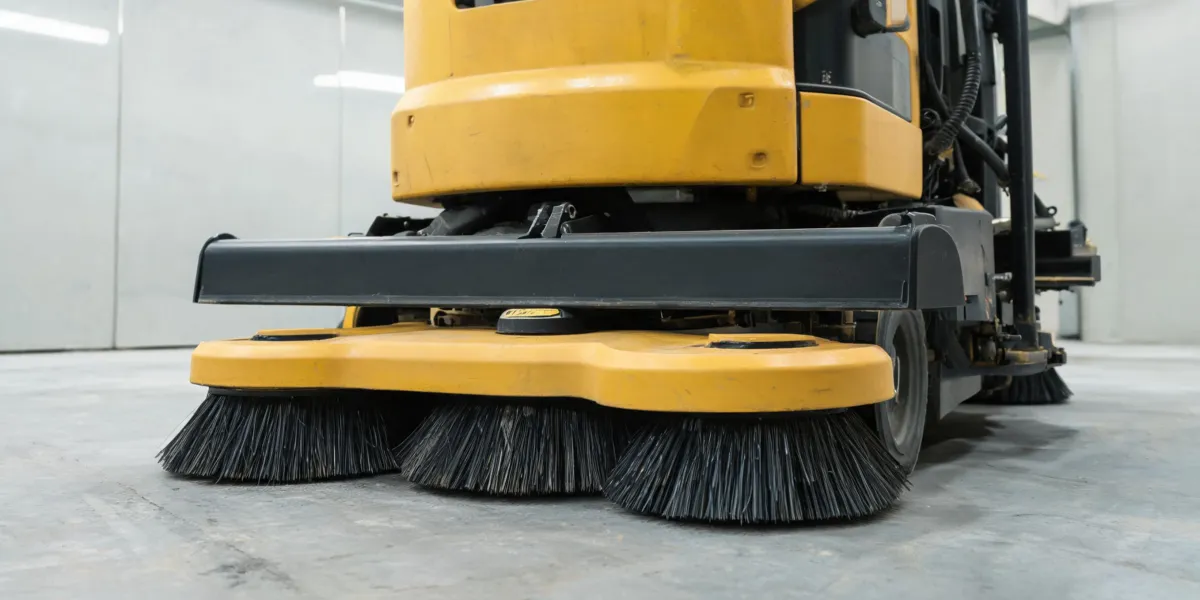
What I'd bought was a floor water sweeper in appearance only. In function, it was a paperweight.
I dismissed their advice at first. Thought they were just pushing their own service. But after the third quote for a repair that would have cost more than a new machine, I finally got it.
"Everyone told me to always check the serial number before buying used. I only believed it after skipping that step once and eating a $3,200 mistake."
Lessons That Are Now Our Team's Checklist
As of April 2025, I've personally documented 14 potential errors using the checklist we created after this disaster. That's 14 mistakes we avoided, averaging a conservative $600 saved each. Do the math: roughly $8,400 in prevented losses.
Here's what we check now for every used industrial equipment purchase—especially floor scrubbers and sweepers:
- Serial number verification — Cross-reference with the manufacturer (Factory Cat, in this case). If it's scratched off or missing, walk away.
- Model consistency — Does the control board match the label? Are the scrub deck, dust collector, and motors from the same model family?
- Error code history — Request a diagnostic readout. A machine that throws random codes or has none at all might be a rebuilt composite.
- Parts availability — Can you order a replacement scrub deck or dust collector within a week? If not, the 'deal' isn't a deal.
- Geographic service access — Having a parts hub in Greenfield, WI (or nearby) made a huge difference. Local support matters more than you think.
The 'Local Is Always Faster' Myth
This was true 20 years ago when logistics were slower and parts were harder to ship. Today, a well-organized dealer in Kentucky can often beat a disorganized local seller on speed and price.
What matters now is network density. Factory Cat's concentration in the Wisconsin/Kentucky corridor means their parts supply is efficient. But a local private seller with a single beat-up machine? No network at all.
What I'd Do Differently (And What I'd Recommend)
If I were back in September 2022, fresh-faced and overconfident, here's what I'd do:
- Buy from a known dealer — Not a random online listing. Even if it costs more upfront.
- Demand proof of origin — Serial number, model name, manufacturing year. No shortcuts.
- Ask about error code support — If the seller can't produce a manual or diagnostic tool, that's a red flag.
- Test the dust collector — For a low-noise university robot floor scrubber or a heavy-duty industrial sweeper, the dust management system is non-negotiable.
- Plan for total cost, not sticker price — The $1,800 'deal' became a $3,200 disaster. The $4,200 dealer unit would have cost me less in the long run.
Oh, and one more thing: I should have called Factory Cat directly. Their customer support team can verify a used machine's authenticity. I didn't. I paid the price.
Since then, I've helped two other facility managers in Greenfield avoid similar mistakes. One of them almost bought a walk behind sweeper from an unverified seller. The error code mismatch was the giveaway. We caught it. Saved him about $2,500.
Simple.
If you're looking for a used Factory Cat floor scrubber in Janesville—or any industrial floor water sweeper for that matter—do yourself a favor: verify the machine, not just the price. The quality of your equipment is the quality of your work. And in this industry, that's your reputation walking out the door.

Leave a Reply