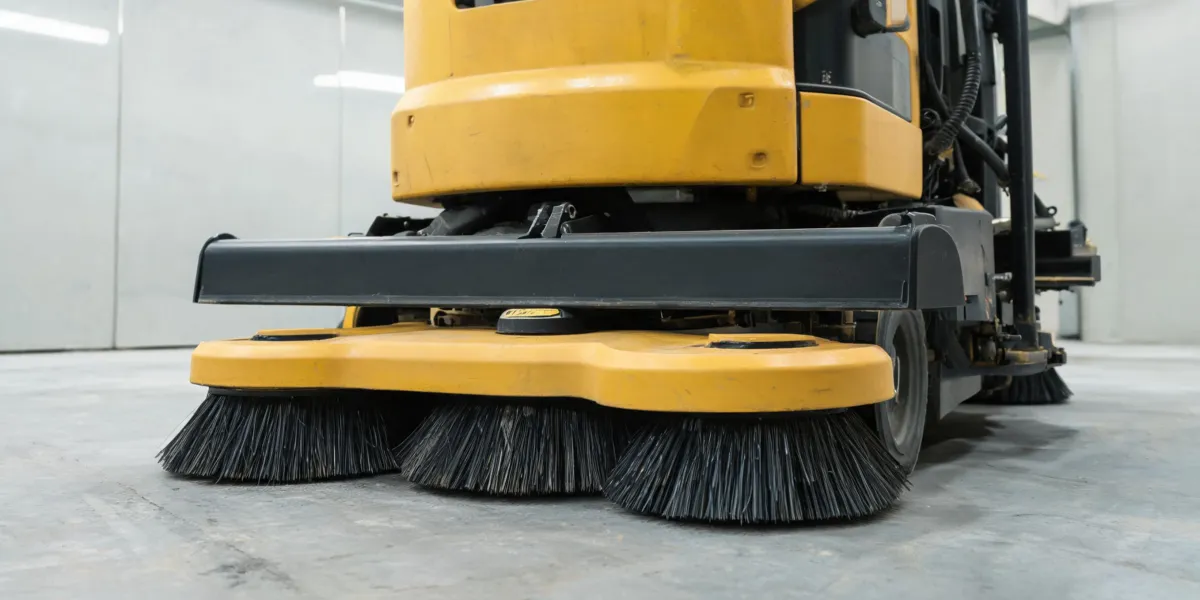
If you're about to order Factory Cat 34 parts, or you're weighing a lease floor scrubber for your facility, do yourself a favor before you click anything: get the machine's serial number, model code, and hour meter reading. That small step has saved us more money than any trade-in deal, discount code, or 'negotiation' I've ever been part of. I say this as the service coordinator who once sent ten squeegee assemblies to a customer for a Factory Cat 34 variant that didn't even exist.
That mistake happened in 2019, back when I thought '34' meant the whole machine. It cost $1,240 in return shipping and a week of frustrated voicemails. The customer ended up buying a used Factory Cat Magnum from another dealer two counties over. Honestly, I couldn't blame them. It's the reason I created a pre-order checklist that has caught 47 potential errors in the last 18 months.
When I tell people to take a photo of the ID plate, they think I'm being dramatic. But the plate is the only thing that doesn't lie after years of upgrades, repairs, and swapped decks.
I'm not a factory engineer, and I'm not going to pretend to be one. The design side of floor scrubbers is outside my expertise. What I can tell you from the parts-and-repairs side of the counter is exactly what goes wrong when people order parts based on a logo and a memory. This post is that checklist.
1. 'Factory Cat 34 Parts' Is Not a Part Number
The most common search phrase in this industry is 'factory cat 34 parts.' It sounds specific. It's not. Factory Cat has made multiple generations of 34-inch machines, and they don't share every part. A 2018 '34' is basically a different animal from a 2023 '34' when you get down to brush decks, squeegee arms, and wiring harnesses.
I've seen an order for a 'Factory Cat 34' that turned out to be a 34-inch walk-behind, but the customer had recently swapped the original brush deck for a rebuilt unit from a Magnum. So the 'Factory Cat 34 parts' that we shipped didn't fit the part of the machine that actually touched the floor. It cost $760 in restocking fees and almost a full shift of downtime. The lesson? Never assume '34' means the whole machine. Check the model code, not the width.
And if you're looking at a Factory Cat Magnum, the same rule applies. There are Magnum models that look identical but use different brake assemblies, different controller voltage, and different battery trays. The difference between a $350 part and a $1,150 part on a Magnum is often one letter in the serial number. We've had customers ask for 'factory-cat Magnum parts' without knowing whether their unit was a 36V or 48V system. The voltage isn't on the fender. It's on the controller or the ID plate.
So before you call, go find the metal ID plate near the battery compartment. Take a photo with your phone. You don't need to understand what it says. The person on the other end will.
2. The 'Floor Scrubber Spin' Diagnosis
The second biggest mistake I see is the 'floor scrubber spin' call. Someone says the brush deck won't spin under load. They've already searched for a new motor. They're surprised when we ask about the belt.
Here's a pattern we get at least twice a month: the machine spins fine when the deck is lifted, but when lowered, the brushes barely turn. Most people assume the motor is weak. Actually, it's usually a worn V-belt, a misadjusted tensioner, or a deck that's set too low. One customer replaced the motor on their Magnum before realizing the speed sensor magnet was dirty. The deck was spinning fine; the sensor was just sending a 'stall' error code to the display. Worse than expected, right?
The phrase 'floor scrubber spin' shows up in a lot of search queries. I think people imagine that the brushes just rotate and all you need is power. But the deck's spin rate affects how water is recovered, how much pressure you put on the pad, and how long the brushes last. It's a system, not a single button.
So before you buy any part for a spin issue, do three things: check the belt tension, raise the deck and test, then look at the error code history with the serial number in front of you. If you don't know the error code history, that's a problem. The factory service manual—or a dealer who doesn't assume you're an idiot—can walk you through it. This gets into diagnostic territory, which isn't my main skill. But the key point is that the 'spin' issue is rarely the first thing people think it is.
3. Lease Floor Scrubber: It's the Hours, Not the Monthly Payment
I used to think leasing was for businesses that couldn't qualify for financing. I was wrong. A lease floor scrubber is often the smartest way to get into a ride-on machine like the Factory Cat Magnum or a Sunmax RT70+ ride-on floor scrubber machine, especially if you're still learning your own facility's traffic patterns.
But here's the catch: the payment is not the contract. The hour cap is. I watched a customer with a Sunmax RT70+ on a 3,000-hour lease. They run two shifts. They hit the cap in 14 months. The overage charge ended up making the lease more expensive than a straightforward purchase. The sales rep did not bring that up during the handshake.
A lease isn't a rental. You can't walk away after a month. The length of the lease and the depreciation schedule are fixed. So if you're on the fence, ask for a 90-day trial with a used machine before signing a 60-month lease.
When you look at a lease, ask these three questions:
- What's the annual hour cap, and what's the overage rate? Do the math on your actual shift schedule, not the rep's 'average user' example.
- Are wear parts included? Brushes, belts, filters, and squeegee blades add up quickly on any ride-on machine. If the lease doesn't include them, that's a hidden cost you can project.
- What's the 12-month buyout number? If it's high, you may be better off buying a used Factory Cat Magnum and paying for maintenance out of pocket.
Now, about the Sunmax RT70+ specifically. I'm not a Sunmax expert. I've worked on a handful, and they're not built like toys. The RT70+ has a wide brush deck and a straightforward control layout that any mechanic can get used to. But the parts network is different from Factory Cat's, and that matters. Ask your dealer if the parts you're likely to need—belts, filters, paddle brushes—are stocked locally. If they have to order everything from overseas, your 'cheap' machine just got a lot more expensive in downtime.
4. Where I Draw the Line
I've been doing this for six years, not thirty. My experience is based on roughly 300 support tickets in the upper Midwest. That's a small sample compared to someone who services a national fleet. If your facility runs 24/7 in a humid climate, or you're handling chemicals that require special waste handling, your failure points will be different from ours.
There are also plenty of things I don't know about Factory Cat's design choices. I can tell you which parts come in the kit, and I can tell you what I've seen break. But I can't tell you why the engineers chose that specific fastener. That's not my lane.
If you're a distributor reading this, your stakes are even higher. A wrong part order might cost you a customer, not just a restocking fee. Use the same checklist. The photo of the plate is free.
What I do know is that the ID plate is the source of truth. Not the brochure, not the invoice, not the 'it looks like a Magnum' from the guy who used to work somewhere else. The plate, the serial, and the hour meter. That's the answer.

Leave a Reply