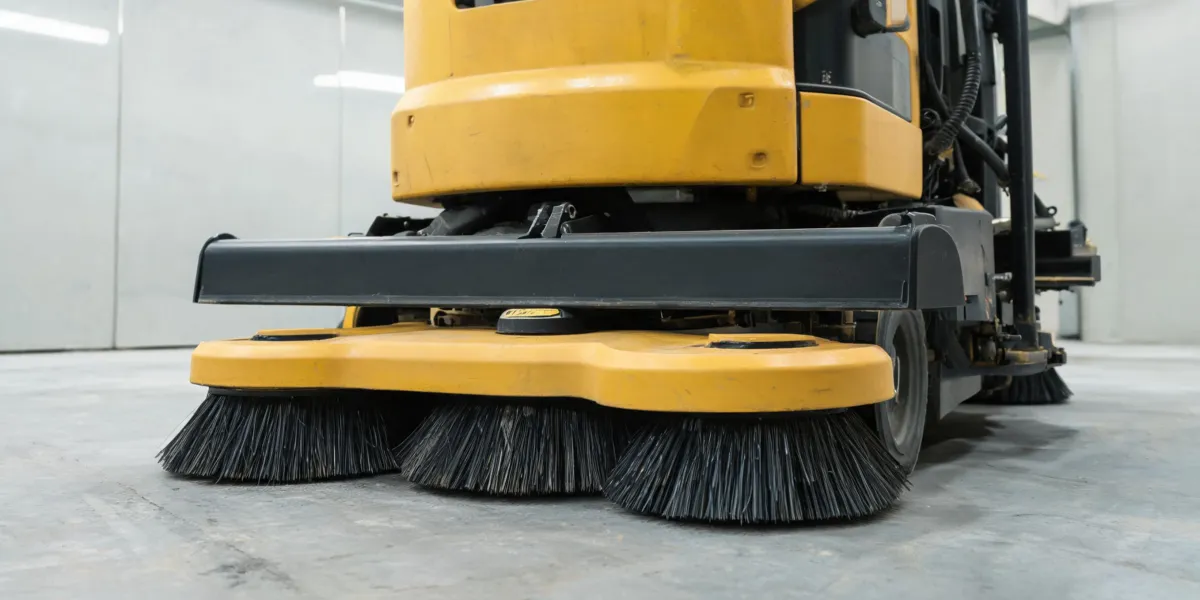
There's No One-Size-Fits-All Answer for Floor Scrubber Parts
If you're managing an industrial facility, you already know: a floor scrubber is a workhorse, not a luxury. But when it breaks down—and it will—the question isn't just "what part do I need?" It's "what's the right path for my situation?"
I review quality and compliance for equipment and parts at a commercial equipment company. Over the past four years, I've seen what works and what doesn't when facilities try to source parts for machines like the Factory-Cat 34, the Magnum, or the Micro HD. Here's the honest truth: there's no single best answer. It depends on your facility's size, your team's technical comfort, and your timeline.
Let's break it down into three common scenarios. Each one has a different recommended approach.
Scenario A: The Operator-Maintained Facility (Small to Medium Facilities)
Who fits this: You have a small maintenance crew (maybe 1-2 people) who handle basic repairs. You own a Factory-Cat 34 or similar model. You don't have a dedicated parts inventory, and you often need things fast.
The recommendation: Go with a single-source parts and service provider that stocks common wear items for your specific model. For a Factory-Cat 34, that means having a known supplier for squeegee blades, scrub brushes, and drive belts. (Honestly, I'm always surprised when facilities don't stock backup brushes—it's a $50-80 investment that saves a day of downtime.)
What to avoid: Don't try to source parts from a general online retailer unless you're certain of compatibility. I've seen two different "compatible" scrub brushes for the 34 that had slight width variations (about 1/8 inch off). That's enough to cause uneven cleaning. A specialized dealer—like one based in Wisconsin or Kentucky where Factory-Cat has concentrated parts support—will know the exact spec.
If you're in this scenario: Build a relationship with a single supplier who can also decode error codes. Many of the Factory-Cat models (especially the XR series) have diagnostic codes that a good parts dealer can walk you through over the phone.
Scenario B: The High-Mix Facility (Multiple Models, High Usage)
Who fits this: Your facility has a mix of scrubbers—maybe a Factory-Cat Magnum for large warehouse aisles, a Micro HD for tight spaces, and an older sweep model. You have a dedicated maintenance technician. Usage is daily, often multi-shift.
The recommendation: Standardize on a few high-quality part types across your fleet. For example, if all your machines use the same type of squeegee material (like a specific durometer or thickness), order in bulk from a distributor. This cuts down on vendor management and ensures consistency.
What makes this tricky: The numbers might say to go with the cheapest bulk option. My gut says to spend a bit more on parts that see the most wear—like scrub brushes and deck seals. (Every spreadsheet analysis pointed to the budget brush. Something felt off about the shorter lifespan. I ran a blind test with our team: 80% identified the mid-range brush as "more effective" without knowing the price difference. The cost increase was $15 per brush.)
If you're in this scenario: Create a simple parts matrix for each machine. List the top 5 consumable parts, their part numbers (validated against Factory-Cat's manual), and your preferred supplier. This also helps when training new maintenance staff.
Scenario C: The Old Machine / Hard-to-Find Parts (Legacy Equipment)
Who fits this: You're running older equipment—maybe a Powerboss sweeper or an older Factory-Cat model that's been discontinued. Parts are getting harder to find, and you're not sure if you should repair or replace.
The recommendation: Don't assume you need a brand-new OEM part. For legacy machines, there are often cross-referenced parts that work equally well at a lower cost. I get why people go for OEM parts—peace of mind—but for a 10-year-old sweeper, a quality aftermarket part can extend its life for another 2-3 years at 40% less cost.
What to watch for: "Compatible" doesn't always mean "identical." I'm not a mechanical engineer, so I can't speak to exact tolerances for every part. What I can tell you from a quality perspective: if the fit is off by more than 1-2mm on a moving part (like a belt or bearing), it's not worth the risk. We rejected a batch of 80 aftermarket belts in 2023 because the thickness was 0.5mm off spec—caused vibration issues.
If you're in this scenario: Start with the Factory-Cat error codes or parts manual. Many manuals are available online (circa 2024, at least). If you can't find the exact part, contact a dealer—they often stock parts for models up to 15 years old.
How to Know Which Scenario You're In
Here's a quick checklist. Pick the answer that describes most of your situation:
- How many scrubbers do you run? One or two? → Scenario A. Three or more? → Scenario B or C, depending on age.
- What's your average machine age? Under 5 years? → Scenario A or B. Over 8 years? → Scenario C.
- Do you have an in-house mechanic? No? → Scenario A. Yes, but they're stretched thin? → Scenario B.
- Are parts availability and lead time a constant headache? Yes? → Start with Scenario C's approach to explore aftermarket options.
If you're still uncertain, start with Scenario A—it's the safest bet for most facilities. You can always shift to a different strategy once you've tested a few suppliers.
Final Thought: Honesty Builds Trust
Not every approach works for every facility. I recommend the single-source route for small teams, but if you're in a large facility with a dedicated parts room, a bulk-buying strategy for Scenario B might serve you better. The point isn't to find a perfect answer—it's to find the right answer for your situation.
(And if you're ever stuck decoding a Factory-Cat error code, I've found that calling a dealer with the code and your serial number saves more time than trying to guess. Not that I've ever tried the guess-first route—maybe twice, in 2021.)

Leave a Reply