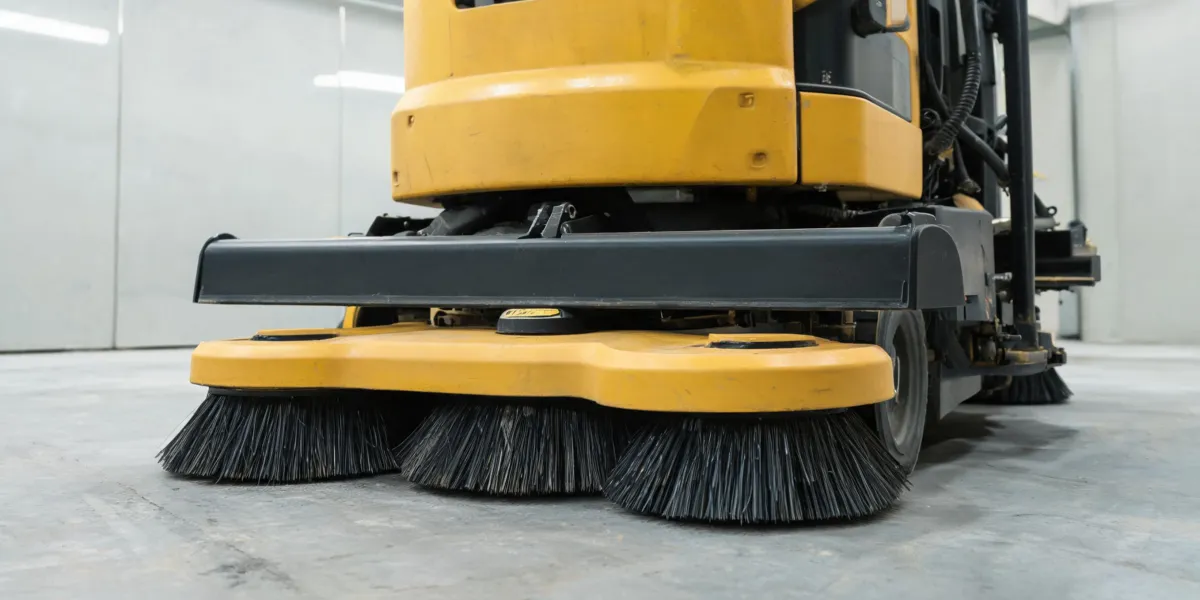
Back in March, a facilities manager named Dan called our West Allis shop. He had just bought a Factory Cat 34 from an online auction, and the listing said, 'Factory Cat 34 for sale, running condition, no warranty.' The asking price was $2,300. By the time he called us, he was already in for about $3,000 and the machine still wasn't working.
I'm the quality/compliance manager at Factory Cat. I review every remanufactured machine before it ships—roughly 200 units a year. In Q1 2024, I rejected 7 out of 53 service units for issues that had been listed as 'normal wear.' That's not me being picky. It's me making sure the next owner doesn't get Dan's problem.
When I first started in this role, I assumed the buying decision for a floor scrubber came down to horsepower, tank size, and price. Four years later, I've learned the real difference is usually in the parts and service process that nobody shows you before you buy.
Dan manages a 75,000-square-foot distribution center outside Milwaukee. He needed a walk-behind sweeper for the dock and aisle areas. He searched 'factory cat walk behind sweepers west allis wi' and found our service page. Then he found the auction listing and thought he'd save money.
A Tuesday Morning Call I Almost Took Lightly
When Dan first described the machine, I almost gave him the usual advice: check the battery, check the brushes, and look at the squeegee. But then he mentioned the error code on the display. That changed everything.
The listing had one photo, a one-sentence description, and no service records. The seller was not a dealer—it was somebody selling off equipment from a closed warehouse. That's not automatically a bad sign, but it means you have to be extra careful about what's included.
The $95 Squeegee That Didn't Fit
The first red flag was the floor scrubber squeegees. The unit arrived with one bent squeegee arm and a cracked rear blade. Dan ordered a replacement squeegee assembly from a parts listing that said 'fits Factory Cat 34.' It didn't. The mounting holes were about three-quarters of an inch off.
That's not an attack on aftermarket parts. Some aftermarket parts work fine. What matters is whether the seller gives you enough information to know what you're buying. The $95 cost became $95 plus $65 return shipping plus a day of lost productivity. The machine sat idle while he waited for the correct part.
Here's what I've learned about floor scrubber squeegees: they are the first thing I check on any used machine. A streaky floor after a scrubber is rarely a pump problem. It's usually a worn, bent, or incorrectly adjusted squeegee. On a 34-inch walk-behind, the squeegee assembly is designed to float and self-adjust. If a previous owner hit a dock plate or ran over debris, that alignment breaks. And no amount of new brush pressure fixes it.
What 'Service Floor Scrubber' Means in Practice
When someone types 'service floor scrubber' into a search engine, they usually mean repair or preventive maintenance. That's what we do in West Allis. We inspect the squeegee, check the brush deck for uneven wear, look at the recovery tank seal, and run the diagnostic menu. Most error codes are just the machine telling you a part is out of spec. You don't need a technician who guesses; you need one who has the manual and the parts in front of them.
Our Q1 2024 service audit found that 31 out of 53 units brought in for 'not cleaning right' had worn squeegees, uneven brush wear, or both. That's why those two items are on the first line of every checklist.
Dan's unit was showing an error code that the auction seller said was 'probably nothing.' We pulled the code through our Factory-Cat database and it pointed to the brush deck switch, not the squeegee. That's the value of service with access to serial numbers and manuals.
The Real Price of 'Cheap'
I've learned to ask 'what's NOT included' before 'what's the price.'
Dan paid $2,300 at auction, $420 in auction fees and freight, $95 for the wrong squeegee, $65 to return it, and $180 for a service visit that diagnosed the error code. That's $3,060 before we even gave him a repair quote. The quote for the full service—correct squeegee assembly, brush deck adjustment, brake adjustment, and new filters—was $740. Total so far: $3,800.
Meanwhile, a clean, factory-certified Factory Cat 34 with similar hours and a verified service history was listed at our West Allis dealer for $4,200. Dan's 'cheap' route was $400 shy of the machine with a warranty and a parts source. Plus, he had to rent a sweeper while the 34 sat waiting for parts. The difference disappeared.
What 'Factory Cat 34 for Sale' Actually Means
There are plenty of listings online under 'factory cat 34 for sale.' Some come from dealers, some from rental fleets, some from companies that just upgraded. The listing itself doesn't tell you if the prior owner changed blades regularly, washed out the recovery tank, or let the battery sit empty for six months. That's why the service history matters as much as the hour meter.
If you're looking at a used machine, ask for the serial number before you bid. Then call someone who can look it up. At Factory-Cat, we keep records for models we've serviced, especially for walk-behind sweepers in this area. Wisconsin and Kentucky are our parts hubs, so many parts can ship overnight.
The 34 is not the only machine in the lineup. The XR series suits larger warehouses, and the Magnum handles heavy-duty applications. But the 34 is the model people search for online and then assume they understand.
Where to Buy a Commercial Floor Sweeper Vacuum
People often ask me, 'where can I buy a commercial floor sweeper vacuum?' First, let's be clear about terms. A sweeper uses a rotating brush and a filter. A vacuum uses suction. If you need both dry and wet cleanup, a scrubber/sweeper hybrid like the 34 is a better answer. If you're only picking up dry dust, a walk-behind sweeper is lighter and cheaper. But the bigger issue is support after the sale.
So where do you buy one? From someone who will show up when it has a problem. If you search 'factory cat walk behind sweepers west allis wi,' you'll find our service center. If you're not near West Allis, look for an authorized Factory Cat distributor in your region. Ask about parts stocking, error code support, and turnaround time on repairs.
The Lesson I Keep Relearning
Dan approved the $740 repair. His crew used the 34 for eight weeks and then ordered a Factory Cat Micro HD for the smaller loading-dock area. He also put us on a quarterly maintenance schedule. Not because our price was the lowest—because he could see exactly what each part cost and when it would need replacing.
Dan told me later that he had read our advice about used floor machines and thought it was just marketing. It took the $3,800 bill to show him what I meant. That's what transparency gets you. The value of a machine isn't the sticker price. It's the certainty that the next repair will be the right repair.
So I'm glad Dan called before he bid on another used unit from the same auction site. He told me he almost did. Another 'factory cat 34 for sale' at a slightly lower price showed up two weeks later. It was a different model year with faded paint and no service records. The price wasn't a bargain. It was a mystery.
I'm not a finance expert, so I can't tell you lease vs. buy. What I can tell you from a quality perspective: if a deal can't survive a written list of included parts and service, it's not a deal. It's a gamble.
If you're looking at a floor sweeper or scrubber—new, used, or somewhere in between—ask the same questions Dan now asks:
- What exactly is included? Batteries, charger, squeegee blades, manuals?
- Who has the service history?
- Can someone in my region get parts and diagnose error codes?
- What does the total cost look like with freight and setup?
That's not a fun way to shop. But it's a lot cheaper than learning the hard way.

Leave a Reply