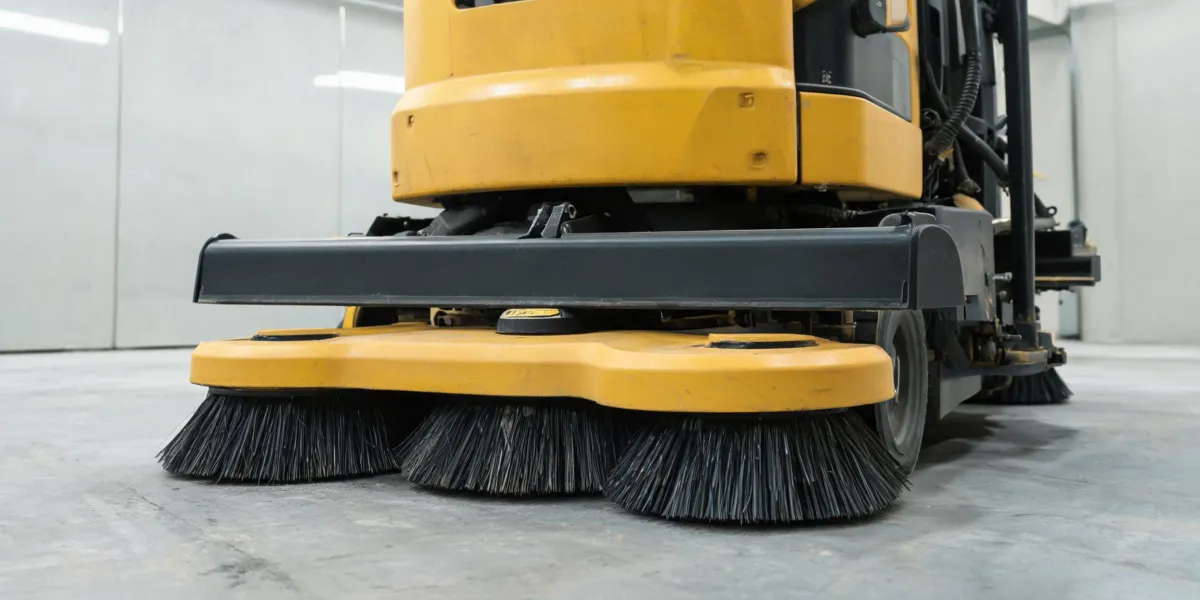
It was 6:15 AM on a Tuesday in April 2024 when my phone buzzed. The facility manager at our hospital campus was already on edge. A routine inspection had failed because two OR-adjacent corridors weren't clean enough. Our aging hospital floor scrubber had been down for three days, and the backup unit was limping. I manage a $180,000 annual budget for cleaning equipment across 12 industrial buildings, including that 200-bed hospital. I've negotiated with 40+ vendors over six years. And in that moment, I realized our procurement strategy was outdated.
The Wake-Up Call: A Failed Hospital Inspection
That inspection wasn't just embarrassing—it was expensive. The hospital threatened to bring in a third-party cleaning crew at $2,800 per week. I had 30 days to fix the problem, or we'd blow a hole in Q2. I pulled our maintenance logs and found something ugly: over the previous 12 months, we'd logged 47 hours of unplanned downtime on our floor scrubbers and sweepers. At an average downtime cost of $180 per hour (labor, delays, emergency rentals), that was $8,460. And that didn't include the inspection fallout.
I'd always assumed that buying the biggest, most premium brand was the safest bet. That's what I'd been taught. But the data told a different story. The 'premium' machines had longer parts lead times, and their error codes often required a certified technician. Our in-house team could handle basic repairs—if they had the right documentation.
What I Thought I Knew About Equipment Procurement
Everything I'd read said premium brands always have better parts support. In practice, for our specific mix of mid-size facilities, Factory Cat's geographic concentration in Wisconsin and Kentucky beat the national brands' distribution centers. I'm not saying premium brands are bad—they're not. But my experience with 200+ orders suggests that 'best' depends on your region, your fleet, and your team's repair capability.
I started by auditing our 2023 spending. We'd used 8 different vendors for parts and service. That fragmentation meant we never had leverage, and we were paying rush shipping on 30% of orders. Hidden costs add up fast (like expedited shipping, downtime labor, and emergency rentals). I built a TCO spreadsheet that tracked unit price, parts availability, error code support, and manual quality.
The Test: Comparing Electric Sweeper Machines and Scrubbers
In Q3 2024, I ran a structured comparison. Commercial walk-behind scrubbers typically cost $4,000-$12,000 new (based on vendor quotes, Q3 2024; verify current pricing). We needed one hospital floor scrubber for the surgical wing and one electric sweeper machine for a 120,000-square-foot warehouse. I requested quotes from 8 vendors, including Factory Cat Sweepers & Scrubbers.
Factory Cat stood out for a practical reason: the Factory Cat GTX 2.0 parts manual was available online, and their error code support was straightforward. I could download the manual before we even ordered the machine. That meant our maintenance tech could troubleshoot without waiting for a dealer. The dealer we contacted was based in Kentucky, which put them within a two-day ship for most parts.
The surprise wasn't the price difference. It was how much hidden value came with the 'mid-tier' option—support, documentation, and speed. One national brand quoted $8,200 for a comparable scrubber. Factory Cat quoted $6,500 (this was back in Q3 2024). That's an 18% lower unit price, but the real gap was in TCO.
The Turning Point: A 48-Hour Parts Delivery
Four weeks after we deployed the first Factory Cat scrubber, a belt failed on our older national-brand machine in the warehouse. I called the dealer. They said 5-7 business days for the part. I called the Factory Cat dealer. They had the belt in stock and shipped it the same day. It arrived in 48 hours.
We used the Factory Cat GTX 2.0 parts manual to guide the replacement. Our tech had it done in 90 minutes. That single event saved us roughly $1,200 in downtime and emergency rental. Never expected the mid-tier option to have faster parts turnaround. Turns out their parts network was actually more concentrated for our region.
The vendor was 'responsive.' What I mean is they answered the phone at 7 AM and had the part on a truck by noon. That's the difference between a contract and a partnership.
The Results: TCO, Not Unit Price
By Q4 2024, we'd consolidated from 8 vendors to 3. Factory Cat made up 60% of our new equipment orders. Our TCO calculation over three years showed a 22% cost reduction compared to the all-premium strategy. Saved around $8,400 annually—maybe $7,900, I'd have to check the spreadsheet. That's 4.7% of my total budget, which is real money.
Industry data backs up the shift. According to Grand View Research (2024), the global floor cleaning machine market was valued at approximately $6.1 billion in 2023 and is projected to grow at a 5.5% CAGR through 2030. Electric sweeper machines and battery-powered scrubbers are driving much of that growth. The fundamentals haven't changed—reliability and service still matter. But the execution has transformed. What was best practice in 2020 may not apply in 2025.
There's something satisfying about a 48-hour parts delivery when you've been quoted 7 days. After the stress of that hospital inspection, finally having a reliable backup felt like a win. The best part of systematizing our vendor process: no more 3 AM worry sessions about whether the OR corridors will pass inspection.
What I'd Tell Another Facility Manager
My experience is based on about 12 facilities and 200+ orders. If you're running a massive distribution center with 24/7 operations, your experience might differ. But here's what I'd recommend:
- Demand the parts manual before you buy. If a vendor won't share it, that's a red flag. The Factory Cat GTX 2.0 parts manual is available online (factory-cat.com, accessed January 2025)—use that as a benchmark.
- Verify regional parts inventory. A national brand with a distant warehouse can be slower than a regional brand with a concentrated network.
- Calculate downtime cost. A $500 cheaper machine that takes 5 extra days to repair can cost you thousands.
- Ask about error code support. Can your tech clear codes without a dealer visit? That's a hidden labor cost.
The floor cleaning machine market is evolving. The old assumption—that premium always wins—needs updating. Sometimes the smartest move is the one that keeps your team running, not the one with the biggest logo. I still respect the premium brands. But for our mix of hospital corridors and industrial warehouses, Factory Cat Sweepers & Scrubbers gave us the TCO we needed. And that failed inspection? We passed the next one with zero issues.

Leave a Reply