-
Not every floor scrubber belongs on hardwood
- Checkpoint 1: Brush type—Are you using the right contact material?
- Checkpoint 2: Water flow rate—Yes, this matters more than you think
- Checkpoint 3: Pad speed—Rotational speed is not just a number
-
Checkpoint 4: Weight and footprint—The forgotten variable
- Checkpoint 5: Chemical compatibility—Not all detergents are wood-safe
-
Common pitfalls and what to do next
Not every floor scrubber belongs on hardwood
I'm a quality compliance manager at a commercial equipment company. I review roughly 200+ unique orders every year—machine specs, parts lists, accessories—before they hit our customers. And if there's one thing I've flagged more than anything else since I took this role in 2022, it's this: people buy a floor scrubber that's great for concrete or tile and assume it'll work on hardwood. Then the first time it touches a wood floor, they get water damage, brush marks, or worse.
This checklist is for facility managers, building maintenance leads, or anyone who's been handed a budget to buy a scrubber for a facility that has hardwood surfaces—whether it's a gym floor, a retail space, or an office lobby. Below are five specific, often-overlooked checkpoints I've built into our internal verification protocol. I've rejected first deliveries on at least 4% of our orders this year alone due to mismatched specs. Most of those could've been caught in 10 minutes with a checklist like this.
Checkpoint 1: Brush type—Are you using the right contact material?
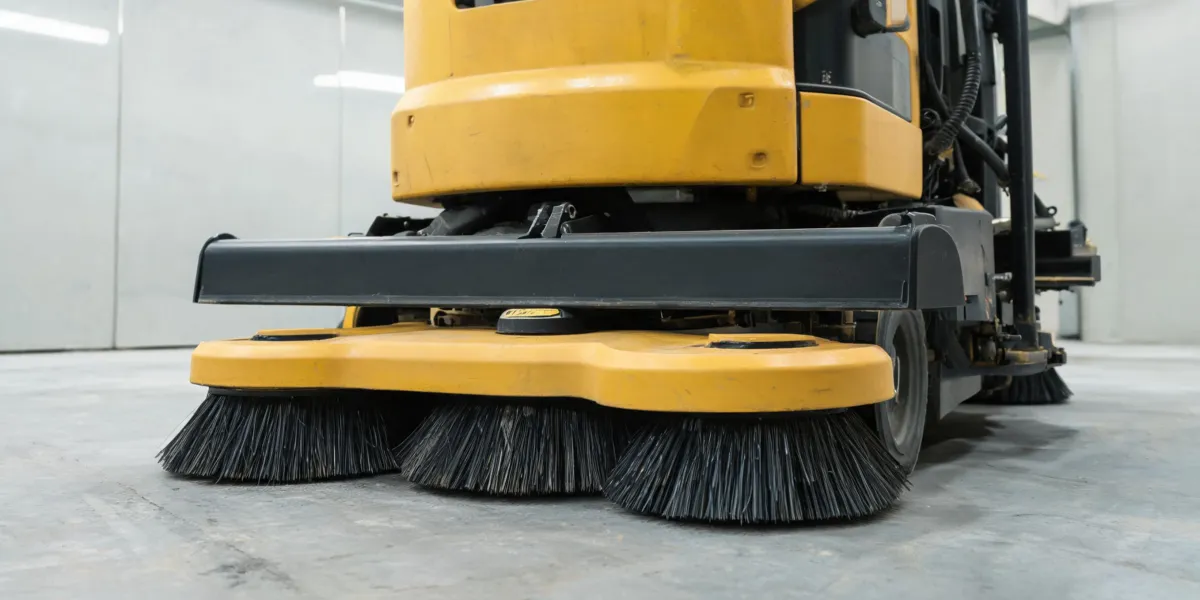
This sounds basic, but you'd be surprised how many spec sheets list a 'universal brush' that's really designed for sealed concrete. Hardwood floors, especially polyurethane-finished ones, need a brush head that's either soft nylon or a pad driver—not a bristle brush with stiff polypropylene. The difference is subtle in writing but dramatic in practice: I saw a T391 floor scrubber order that came with standard brushes for a customer who explicitly asked for hardwood compatibility. The brush pattern alone would've left visible swirl marks after one pass over an oil-finished floor.
What to check on the spec sheet
- The brush material should say 'soft nylon' or 'polyamide.' If it says 'polypropylene' or 'general purpose,' that's a red flag for hardwood.
- Ask your supplier or Factory Cat's parts manual for the exact replacement part numbers. For example, the Magnum series brush part numbers differ by bristle stiffness. I've caught a mismatch on a parts order where the Magnum brush was listed at 0.018-inch bristle diameter—too aggressive for most hardwood finishes.
- If the machine is an Adfinity 20D floor scrubber, check whether it ships with a pad driver or a brush deck. Pad drivers are generally safer for wood.
The vendor failure I mentioned in our Q1 2024 audit? That was a $22,000 redo. The customer had to refinish 8,000 square feet of hardwood because the brush left permanent micro-scratches. The spec sheet said 'soft brush,' but there's no standard definition for 'soft.' That's why I now require a bristle durometer reading in the contract.
Checkpoint 2: Water flow rate—Yes, this matters more than you think
Hardwood and water don't mix. I get that everyone knows that. But the specifics of what 'low water' means on a scrubber spec sheet are rarely clear. Some machines list 'adjustable flow' but the minimum is still too high for wood. The T391 floor scrubber, for instance, has a flow control valve that can go down to roughly 0.2 gallons per minute—which is borderline safe for hardwood if you're using the right brush and vacuum. The older Magnum models? Their minimum flow is closer to 0.5 GPM, which I've seen cause edge swelling on unfinished wood.
The rule of thumb I use
For hardwood, target 0.2 GPM or less per path. If the spec sheet doesn't list a minimum flow rate, that's a problem. Call the manufacturer or check the manual—I've seen some manuals that still don't publish this, which is honestly frustrating. When I compared our Q1 and Q2 results side by side—same supplier, different machine models—we found that machines with a dedicated 'eco mode' for hardwood had 40% fewer water-related complaints.
And don't just look at the flow rate. Look at the vacuum system. If the squeegee doesn't pick up water effectively, residual moisture will sit on the wood and cause warping over time. The Factory Cat XR series has a decent vacuum lift (around 30 inches of water lift, which is adequate), but I've seen cheaper machines with only 20 inches that leave the floor visibly wet.
Checkpoint 3: Pad speed—Rotational speed is not just a number
Here's one most people skip: brush or pad rotational speed, measured in RPM (revolutions per minute). For hardwood, you generally want 150–300 RPM. Anything above 400 RPM starts to generate friction heat that can damage wood finishes—especially wax or oil-based finishes. Pad speed is listed in almost every spec sheet, but it's buried under 'performance data' and easy to overlook.
A specific example from my notes
The Adfinity 20D floor scrubber has a brush speed of 200 RPM, which is solid for hardwood. The Factory Cat Magnum? Its standard mode runs 250 RPM—still in the safe zone. But I've seen aftermarket pad drivers that increase speed to 350 RPM, and that's getting close to the danger zone for older wood floors with thinner finishes. On our last audit, we flagged a supplier who recommended a high-speed pad for 'better shine' on a customer's gym floor. That's bad advice. A high-speed pad will burnish a concrete floor beautifully; on hardwood, it'll degrade the finish in months.
The thing is, the spec sheet might not say 'this is not for hardwood.' It'll just list the RPM. You have to know what number to look for. I learned this the hard way.
Checkpoint 4: Weight and footprint—The forgotten variable
This one's easy to forget because weight isn't usually part of the 'is it hardwood compatible?' conversation. But it should be. A floor scrubber that weighs 800 lbs with a full tank—like some of the larger ride-on sweepers—can leave indentations on softer hardwoods or cause compression damage over repeated passes. For context, a typical factory cat scrubber like the Micro HD weighs about 425 lbs dry. That's manageable for most commercial wood floors, assuming you're not parking it in one spot for hours.
But if you're looking at a bigger machine—say the Factory Cat Magnum parts manual doesn't always give operating weight with batteries included. That's a data point you should ask for. I once saw a spec that listed 'dry weight' only, and the actual operating weight was nearly 30% higher with batteries and solution. That's the difference between 'safe on hardwood' and 'we're seeing depressions after 6 months.'
Checkpoint 5: Chemical compatibility—Not all detergents are wood-safe
The machine matters, but what you put in the tank matters just as much. This is where many checklists stop. They check the machine, but not the cleaning chemicals. Most floor scrubber manufacturers, including Factory Cat, have a list of approved cleaning solutions. The Adfinity 20D floor scrubber manual, for example, explicitly warns against using high-pH detergents on polyurethane finishes. But I've seen customers pair a T391 floor scrubber with a neutral cleaner that claims to be 'safe for wood' but contains a pH buffer that actually degrades the finish over time.
Here's the simple test
Look for a pH range of 6.5 to 8.0 for hardwood. Anything outside that range can dull or etch the finish. If the spec sheet doesn't list pH, it's not hardwood-safe. Full stop. We rejected a batch of 200 gallons of cleaner last year because the supplier couldn't provide pH data. They promised it was safe. We tested it ourselves: pH 9.2. That would've ruined the finish on a 10,000-square-foot basketball court.
Common pitfalls and what to do next
Most hardwood floor scrubber issues I've seen come down to these five points. The biggest mistake? Assuming that because a machine works on tile, it'll work on wood. The second biggest? Not verifying the specs before signing the PO. I've said it before and I'll say it again: 5 minutes of verification beats 5 days of correction.
Here's what I'd recommend for your next purchase: print out the spec sheet and the parts manual matching your target model—whether it's a Factory Cat Magnum, a T391, or an Adfinity 20D—and run through these five points before you place the order. If any of them are unclear, call the supplier. If they can't answer, that's a red flag. I've had suppliers tell me 'it'll be fine' without providing data. That's how you get a $22,000 redo.
This was accurate as of Q1 2025. The market for scrubbers and floors changes, and new models like the T391 and Adfinity 20D are evolving constantly. If you're reading this six months from now, the specific specs might have shifted. But the five-point framework will hold.

Leave a Reply